925 Sterling Silver vs Stainless Steel Jewelry: Which Is Better?
Choosing between 925 sterling silver and stainless steel jewelry affects more than material cost. For jewelry brands, wholesalers, retailers, and e commerce businesses, material selection can influence product positioning, design possibilities, durability, finishing, wholesale pricing, and customer expectations.
Both materials are widely used in jewelry, but they serve different purposes.
925 sterling silver is a precious metal commonly used for fine jewelry, demi fine jewelry, gemstone designs, custom jewelry, and collections where silver content is part of the product value. Stainless steel is commonly used for durable everyday jewelry where corrosion resistance, low maintenance, and lower material cost are important.
So, is sterling silver better than stainless steel for jewelry?
There is no universal answer. The better material depends on your product design, target customer, retail price, desired positioning, durability requirements, and manufacturing needs.
For B2B buyers, the goal is not simply to choose the cheaper or more durable material. It is to choose the material that fits the collection and business model.

925 Sterling Silver vs Stainless Steel: Key Differences
The most important differences between 925 sterling silver and stainless steel jewelry include material composition, appearance, durability, tarnish resistance, customization, finishing, cost, and brand positioning.
| Factor | 925 Sterling Silver | Stainless Steel |
|---|---|---|
| Material | 92.5% silver with alloy metals | Iron based alloy containing chromium and other elements |
| Jewelry positioning | Fine jewelry, demi fine jewelry, premium collections | Fashion and everyday jewelry |
| Appearance | Soft white precious metal appearance | Clean metallic appearance |
| Tarnish | Can tarnish and requires appropriate care | Generally more resistant to corrosion and tarnishing |
| Material cost | Generally higher | Generally lower |
| Customization | Suitable for detailed custom jewelry | Suitable for many durable designs |
| Stone setting | Widely used for gemstone jewelry | Depends on design and manufacturing process |
| Plating | Gold, rose gold, rhodium and other finishes | PVD and other surface finishes |
| Brand positioning | Precious metal and silver focused collections | Durability and value focused collections |
| Maintenance | Requires appropriate care | Generally lower maintenance |
Neither material is automatically better for every jewelry collection.
Instead, B2B buyers should evaluate how the material supports the product’s design, target market, pricing strategy, and expected use.
What Is 925 Sterling Silver?
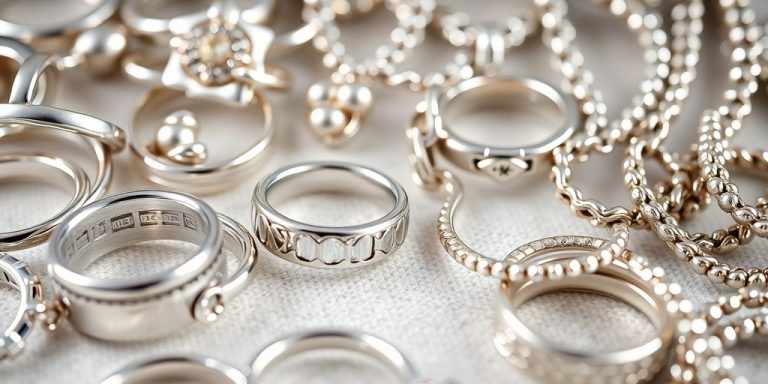
925 sterling silver contains 92.5% pure silver and alloy metals that improve strength and workability.
Pure silver is relatively soft, so sterling silver is widely used for jewelry because its alloy composition provides a practical balance between silver content, strength, appearance, and workability.
In jewelry manufacturing, 925 sterling silver can be processed through casting, polishing, stone setting, engraving, electroplating, E coating, and other finishing processes.
This makes it suitable for many jewelry categories, including:
- Rings
- Earrings
- Necklaces
- Bracelets
- Pendants
- Gemstone jewelry
- Personalized jewelry
- Custom jewelry
If you want to understand silver purity and the different types of silver used in jewelry, see our guide to Types of Silver Jewelry: Grades, Purity & Complete Guide.
For brands developing a silver focused collection, understanding the material specification before production is important. The agreed material should be clearly defined in the product specification and quotation.
What Is Stainless Steel Jewelry?
Stainless steel is an iron based alloy containing chromium and other alloying elements. Its composition provides strong resistance to corrosion and makes it suitable for products designed for frequent everyday use.
Stainless steel jewelry can be polished and finished in different ways. Some products also use PVD or other surface treatments to achieve specific colors and finishes.
The manufacturing processes, equipment, and finishing methods used for stainless steel can differ from those used for sterling silver jewelry.
For B2B buyers, this means that a supplier’s experience with the specific material and production process should be considered when evaluating a manufacturer.
925 Sterling Silver vs Stainless Steel for Brand Positioning
Material choice can influence how a jewelry collection is positioned in the market.
925 Sterling Silver for Premium and Silver Focused Collections
925 sterling silver is commonly selected by brands that want to build collections around a precious metal.
It can be particularly suitable for:
- Fine jewelry
- Demi fine jewelry
- Gemstone jewelry
- Custom jewelry
- Personalized jewelry
- Private label silver jewelry
- Premium fashion jewelry
- Collections where silver content is part of the product story
Sterling silver also provides flexibility for different surface finishes. Depending on the product requirements, manufacturers can use rhodium plating, gold plating, rose gold plating, polishing, or protective coatings.
For a brand that wants the material itself to contribute to the perceived value of a collection, sterling silver provides a different positioning from stainless steel.
Stainless Steel for Everyday and Durability Focused Collections
Stainless steel can be suitable for brands that prioritize durability, corrosion resistance, everyday wear, and relatively low material cost.
It is commonly considered for:
- Everyday fashion jewelry
- Minimalist jewelry
- Contemporary designs
- Unisex jewelry
- Price sensitive collections
- Products designed for frequent wear
This does not mean stainless steel is a lower quality choice. It means the material can support a different product strategy.
For B2B buyers, the important question is whether the material matches the intended customer and product positioning.
Durability and Tarnish: Sterling Silver vs Stainless Steel
Durability is one of the most important considerations when comparing sterling silver vs stainless steel.
Does 925 Sterling Silver Tarnish?
Yes. Sterling silver can naturally tarnish when exposed to moisture, sulfur compounds, chemicals, air, and some personal care products.
Tarnishing does not mean that sterling silver is unsuitable for everyday jewelry.
Manufacturers can use appropriate polishing, plating, protective coatings, packaging, and quality control processes to help reduce surface oxidation and maintain the appearance of the finished product.
For example, rhodium plating and E coating can provide additional surface protection depending on the design and product requirements.
If you are developing a sterling silver collection, it is useful to specify the required finishing and surface protection before sampling.
Is Stainless Steel More Resistant to Tarnishing?
Stainless steel is generally more resistant to corrosion and tarnishing than untreated sterling silver.
This makes it attractive for jewelry designed for frequent everyday use and customers who prefer relatively low maintenance products.
However, the performance of finished stainless steel jewelry still depends on the specific material, manufacturing quality, design, surface treatment, and usage conditions.
For B2B buyers, durability should therefore be evaluated at the finished product level rather than based only on the material name.
Plating and Surface Finishing
The base material is only one part of a jewelry product. Surface finishing can significantly affect appearance, durability, and customer expectations.
925 Sterling Silver Plating Options
Common finishing options for sterling silver jewelry include:
- Rhodium plating
- 14K gold plating
- 18K gold plating
- Rose gold plating
- E coating
- Polishing
Rhodium plating can create a bright white finish and provide additional surface protection.
Gold plating can change the appearance of sterling silver while maintaining sterling silver as the underlying material.
E coating can add another protective surface layer and can be considered for collections where additional protection against tarnishing and wear is required.
For more information about this process, see our guide to E Coating Jewelry: Process, Benefits, Durability & Manufacturing Guide.
When sourcing custom sterling silver jewelry, buyers should confirm:
- Plating type
- Plating color
- Plating thickness where applicable
- Surface preparation
- E coating requirements
- Final appearance
- Sample approval standards

Stainless Steel Surface Finishing
Stainless steel jewelry can also receive different surface treatments, including polishing and PVD finishing.
The appropriate treatment depends on the desired color, appearance, durability requirements, and product construction.
This is why buyers should compare the complete finishing specification rather than comparing untreated materials alone.
Customization: 925 Sterling Silver vs Stainless Steel
Material choice can also influence how a custom jewelry design is developed and manufactured.
Custom 925 Sterling Silver Jewelry
925 sterling silver is widely used for custom jewelry because it can support processes such as:
- CAD development
- Casting
- Stone setting
- Polishing
- Engraving
- Custom logos
- Electroplating
- E coating
- Custom packaging
This makes sterling silver suitable for brands developing original collections instead of simply purchasing standard designs.
A brand may provide a sketch, reference product, CAD file, or design specification. The manufacturer can then develop the design, create a sample, and proceed to bulk production after approval.
For brands interested in creating branded collections, our Private Label Silver Jewelry Manufacturer Guide explains the typical development process from product selection and material confirmation to sampling and bulk production.
Custom Stainless Steel Jewelry
Stainless steel can also be customized, but the appropriate production process depends on the design.
Before starting development, B2B buyers should confirm whether the manufacturer has experience with:
- The required stainless steel material
- Design complexity
- Production process
- Surface finishing
- Dimensional requirements
- Logo application
- Packaging
The key consideration is not simply whether a supplier can work with a particular material. It is whether the manufacturer’s production capabilities match the specific product requirements.
Stone Setting and Gemstone Jewelry
For brands developing gemstone jewelry, material selection should also be considered together with the stone setting process.
925 sterling silver is widely used for:
- Gemstone rings
- Stone set earrings
- Pendant necklaces
- Gemstone bracelets
- Personalized gemstone jewelry
A manufacturer should be able to control factors such as:
- Stone dimensions
- Setting structure
- Prong or bezel construction
- Surface polishing
- Stone security
- Final inspection
Stainless steel can also be used for selected stone set designs, but suitability depends on the design and manufacturing method.
For complex jewelry designs, buyers should evaluate actual samples rather than relying only on a general material comparison.
Cost: 925 Sterling Silver vs Stainless Steel
Material cost is an important part of wholesale jewelry pricing, but it should not be the only factor used to compare suppliers.
925 Sterling Silver Jewelry Cost
The cost of sterling silver jewelry can be affected by:
- Silver market price
- Jewelry weight
- Product dimensions
- Design complexity
- Gemstones
- Plating
- Surface finishing
- Labor
- Packaging
- Order quantity
Because sterling silver is a precious metal, changes in silver prices can influence production costs.
For B2B buyers, it is therefore more useful to compare the complete quotation rather than looking only at the raw material price.
Stainless Steel Jewelry Cost
Stainless steel generally has a lower raw material cost than sterling silver.
However, the final wholesale price can still depend on:
- Design complexity
- Manufacturing process
- Surface finishing
- Labor
- Packaging
- Order quantity
- Customization requirements
A lower raw material cost does not automatically mean that every stainless steel design will have a lower total production cost.
For more information about wholesale silver pricing, see our 925 Sterling Silver Jewelry Wholesale Cost Guide.
Which Material Fits Different Jewelry Collections?
The right material depends on your product strategy.
| Product Requirement | 925 Sterling Silver | Stainless Steel |
|---|---|---|
| Precious metal positioning | Strong fit | Not a precious metal |
| Premium silver collection | Strong fit | Not applicable |
| Gemstone jewelry | Strong fit | Depends on design |
| Custom jewelry | Strong fit | Depends on manufacturing process |
| Everyday wear | Suitable with appropriate finishing and care | Strong fit |
| Tarnish resistance | Requires appropriate protection and care | Generally strong |
| Gold plated jewelry | Widely used | Possible with suitable finishing |
| Private label silver collection | Strong fit | Not applicable |
| Price sensitive collection | Higher material cost | Often more cost efficient |
| Silver focused brand identity | Strong fit | Not applicable |
This comparison shows why the question “Which is better, sterling silver or stainless steel?” is too broad for B2B purchasing.
The more useful question is:
Which material matches your product, target customer, retail price, design requirements, and brand positioning?
What Should B2B Jewelry Buyers Ask a Manufacturer?
Before choosing a material and manufacturer, ask practical questions about the complete production process.
1. What Material Will Be Used?
Confirm the exact material specification rather than relying only on terms such as “silver” or “steel.”
For sterling silver jewelry, confirm that the product is made from the agreed 925 sterling silver specification.
2. What Finishing Options Are Available?
Ask about:
- Plating type
- Plating color
- Plating thickness where applicable
- E coating
- Polishing
- Surface preparation
The finishing specification can significantly affect the appearance and performance of the finished jewelry.
3. Can the Manufacturer Develop Samples?
Sampling allows buyers to evaluate:
- Dimensions
- Weight
- Material
- Color
- Plating
- Stone setting
- Surface finish
- Logo placement
- Overall craftsmanship
Sample approval should take place before bulk production.
4. What Is the MOQ?
MOQ can vary according to:
- Design complexity
- Material
- Customization
- Plating
- Packaging
- Production requirements
For smaller brands, it is useful to ask whether the manufacturer can support lower quantities for initial product testing.
5. How Is Quality Controlled?
Ask how the manufacturer checks:
- Material specifications
- Product dimensions
- Surface finishing
- Plating
- Stone setting
- Logo details
- Packaging
- Final product appearance
A clear quality control process helps reduce inconsistencies between samples and bulk production.
For a more detailed sourcing checklist, see our 925 Sterling Silver Jewelry Quality Checklist for B2B Buyers.
Why Material Specific Manufacturing Experience Matters
A manufacturer does not need to produce every type of jewelry material to be a suitable supplier.
For brands sourcing 925 sterling silver jewelry, relevant silver manufacturing experience can be more important than simply finding a supplier that lists many different materials.
A silver focused manufacturer should understand the production requirements associated with sterling silver, including:
- Casting
- Polishing
- Stone setting
- Plating
- Surface finishing
- Quality inspection
- Packaging
This is especially important for custom collections where material, design, finishing, and quality control need to work together.

Why Choose a 925 Sterling Silver Jewelry Manufacturer?
If your collection is specifically built around sterling silver, working with a manufacturer experienced in the material can simplify product development and production communication.
At Endless Jewellery, we are a B2B jewelry manufacturer based in Guangzhou, China, supporting brands, wholesalers, retailers, designers, and e commerce businesses with OEM, ODM, and private label jewelry manufacturing.
Our production capabilities include 925 sterling silver jewelry manufacturing, CAD development, casting, polishing, stone setting, electroplating, logo engraving, quality inspection, and custom packaging.
For custom projects, MOQ can be discussed according to the design and production requirements. Typical sample development takes approximately 7 to 10 days, while bulk production commonly takes around 20 to 30 days after sample approval.
Actual timelines can vary depending on product complexity, customization, material, plating, and order quantity.
If you are comparing 925 sterling silver vs stainless steel jewelry because you are developing a new collection, the most useful approach is to provide the manufacturer with your target product category, design requirements, material preference, estimated quantity, plating requirements, and packaging specifications.
This allows the production team to evaluate the project based on the actual product rather than material price alone.
925 Sterling Silver vs Stainless Steel: B2B Decision Checklist
Before placing an order, compare both materials against your actual business requirements.
Product Requirements
- What is the target retail price?
- Is the collection positioned as premium, fashion, or everyday jewelry?
- Does the design require gemstones?
- Does the product need a precious metal?
- How important is tarnish resistance?
- How frequently is the jewelry expected to be worn?
Manufacturing Requirements
- Can the manufacturer produce the required design?
- Does the manufacturer have experience with the selected material?
- Can it provide CAD development and sampling?
- What plating and finishing options are available?
- Can it control stone setting and polishing?
- What quality control procedures are used?
Commercial Requirements
- What is the MOQ?
- What is the sample lead time?
- What is the bulk production lead time?
- What packaging options are available?
- What is included in the quotation?
- Can the manufacturer support future collection development?
Answering these questions before production makes it easier to select a material based on business requirements rather than material price alone.
FAQ
Is sterling silver better than stainless steel for jewelry?
Neither material is universally better. 925 sterling silver is suitable for brands seeking a precious metal and silver focused product positioning, while stainless steel can be suitable for collections where durability, corrosion resistance, everyday use, and lower material cost are important.
Is 925 sterling silver more expensive than stainless steel?
Generally, 925 sterling silver has a higher raw material cost because it contains a high proportion of silver. However, the final wholesale price also depends on jewelry weight, design complexity, gemstones, finishing, labor, packaging, and order quantity.
Does 925 sterling silver tarnish more than stainless steel?
925 sterling silver can naturally tarnish when exposed to moisture, sulfur compounds, chemicals, and other environmental factors. Stainless steel is generally more resistant to corrosion and tarnishing.
Can 925 sterling silver be gold plated?
Yes. 925 sterling silver can be finished with gold, rose gold, or other plating options. Rhodium plating and E coating can also be used depending on the desired appearance and protection requirements.
Is 925 sterling silver good for custom jewelry?
Yes. 925 sterling silver is widely used for custom jewelry and can support processes such as CAD development, casting, stone setting, polishing, engraving, plating, and custom packaging.
Which material is better for a premium jewelry collection?
The answer depends on the brand’s positioning and product strategy. 925 sterling silver is particularly suitable when the collection requires a precious metal and silver based premium positioning.
Which material is easier to maintain?
Stainless steel is generally more resistant to corrosion and tarnishing and can therefore require less maintenance. Sterling silver can also be suitable for everyday jewelry, but it may require cleaning and appropriate storage to manage natural tarnishing.
What should I check before ordering 925 sterling silver jewelry?
Confirm the material specification, design dimensions, jewelry weight, plating, finishing, stone setting, logo requirements, MOQ, sample approval process, production timeline, packaging, and quality control requirements before bulk production.
Add Your Heading Text Here
The choice between 925 sterling silver and stainless steel jewelry depends on the requirements of your collection, including material positioning, durability, design, and target market.
925 sterling silver is a strong choice for brands developing precious metal collections, gemstone jewelry, custom designs, and private label silver jewelry. Stainless steel may be more suitable when durability, low maintenance, and cost efficiency are the primary considerations.
For brands developing 925 sterling silver jewelry, working with an experienced manufacturer can help maintain consistent control over material specifications, design development, finishing, sampling, and quality inspection.
Endless Jewellery is a B2B jewelry manufacturer in Guangzhou, China, providing OEM, ODM, and private label jewelry manufacturing for brands, wholesalers, retailers, and designers.
If you are developing a 925 sterling silver collection, share your design and requirements with our production team for sampling and bulk production.
Have a jewelry design idea or some questions?