How to Untangle a Tangled Necklace Easily at Home
Table of Contents
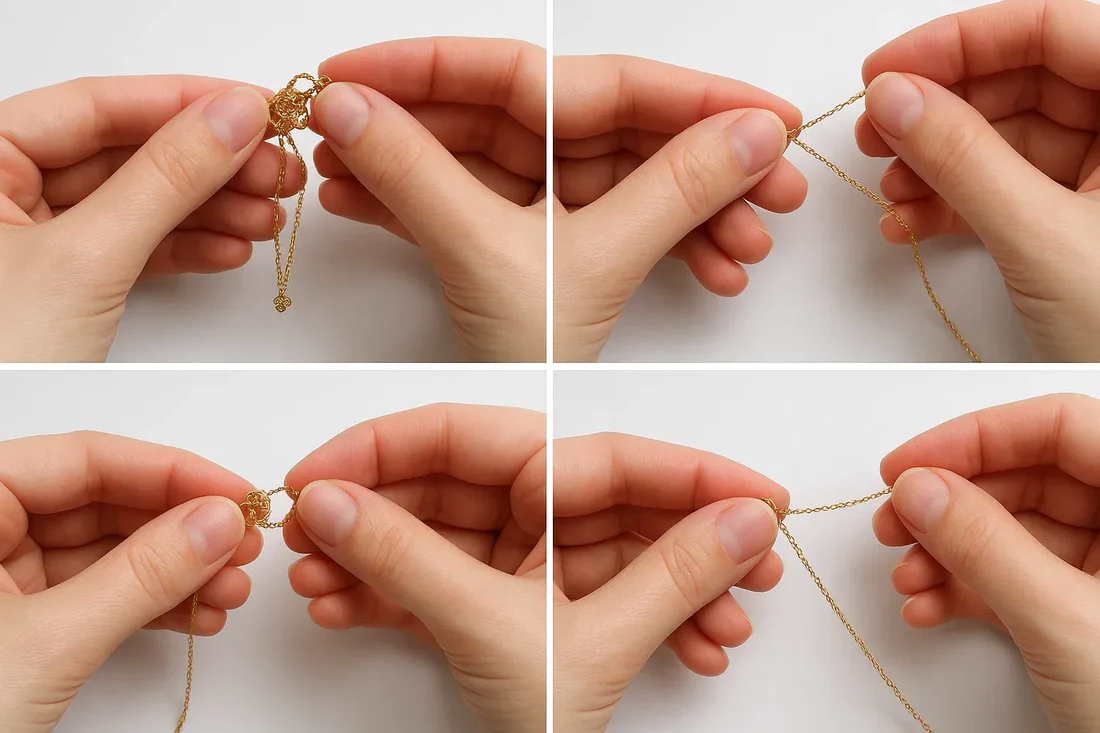
A tangled necklace can usually be fixed in just a few minutes using simple household tools like sewing needles, baby powder, or olive oil. The key is to loosen the knot gently instead of pulling the chain tighter. In this guide, you will learn the safest ways to untangle delicate necklaces without damaging gold, sterling silver, or plated jewelry.
Quick Answer: What Is the Fastest Way to Untangle a Necklace?
The fastest way to untangle a necklace is to place it on a flat surface, apply a small amount of baby powder or olive oil to reduce friction, and gently loosen the knot using two sewing needles. Avoid pulling the chain directly, as this usually tightens the knot and can damage delicate jewelry.
What Should You Do Before Untangling a Necklace?
Before touching the knot, it is important to prepare a proper workspace. Think of this step as the setup that makes the whole process easier. Skipping preparation can quickly turn a simple task into a long and frustrating one. The goal is to clearly see the knot and keep the necklace as stable as possible.
- Choose a Flat Surface with Good Contrast:Place the tangled necklace on a smooth, solid surface. A light colored table, marble countertop, or a sheet of white paper works well. The contrast between the chain and the background helps you see tiny loops and twists more clearly.
- Improve the Lighting:Good lighting makes a big difference. Natural light is helpful, but a focused light source is even better. Use a desk lamp or your phone flashlight to shine directly on the knot so you can clearly see how the chain is tangled.
- Open the Clasp:Always unclasp the necklace before you begin. When both ends are free, the chain will have less tension, which makes it easier to work on the knot without accidentally tightening it.
- Be Patient:Take your time and avoid rushing. Give yourself at least a few minutes of uninterrupted focus. Untangling a necklace requires gentle and careful movements, and patience will help prevent damage to the chain.
Tools You May Nee
- Two sewing needles or safety pins
- Baby powder or olive oil
- A microfiber cloth
- A bright desk lamp
- A flat surface with good lighting
How to Untangle a Necklace Using the Needle Method
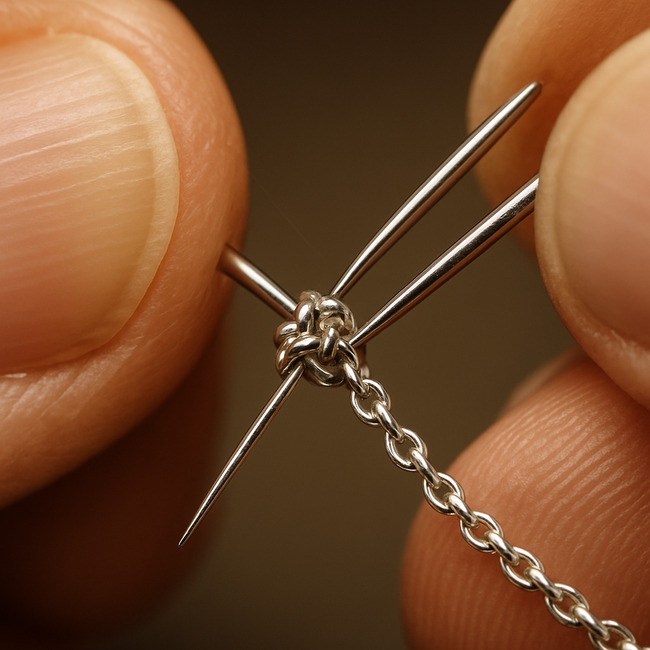
The needle method is one of the most accurate ways to untangle delicate chains, especially fine sterling silver necklaces or thin gold chains. Avoid using thick tools such as toothpicks, because they can stretch or damage the tiny chain links. Instead, use two thin sewing needles or pins. These allow you to gently manipulate the knot without pulling directly on the chain.
- Find the Center of the Knot:Look closely and locate the middle of the knot where the chain is most tightly looped. This point is usually where the chain threads through itself and will be the starting point for loosening the tangle.
- Hold and Separate the Chain:Use the tip of the first needle to lightly hold the chain just outside the knot to keep it stable. Then use the second needle to carefully insert into the center of the knot. The goal is to lift or push a small loop away from the knot so the structure begins to loosen.
- Gently Wiggle Instead of Pulling:Once a small gap appears, slowly move the needle back and forth to reduce the tension in the knot. Work around the knot little by little, pushing outer loops outward from the center. Avoid pulling on the ends of the necklace because that will tighten the knot further.
- Untangle Step by Step:After one loop loosens, move on to the next section. As each loop releases, the knot will slowly come apart. Stay patient and work carefully, since applying too much force can bend or damage the metal links.
How to Loosen a Tight Necklace Knot Using Baby Powder or Oil
Sometimes a necklace knot becomes so tight that the metal links create too much friction to move freely. In this situation, using a lubricant can help. Substances such as baby powder (talcum powder) or natural oils can reduce friction between the small chain links, allowing them to slide apart more easily. When applying a lubricant, focus only on the knot itself rather than covering the entire necklace.
| Feature | Talcum Powder | Baby or Olive Oil |
|---|---|---|
| Primary Mechanism | Reduces friction by coating the metal links. | Lubricates the chain and helps links slide more easily. |
| Best For | Very tight knots and thin chains. | Knots that are slightly loose or thicker chains. |
| Clean-up | Requires gentle brushing or blowing with minimal residue. | Needs a gentle wash with soap and warm water. |
| Pros | Less messy and makes the knot easier to see. | Highly effective for strong friction between links. |
| Cons | Powder can be difficult to work into very small knots. | Oily residue must be cleaned quickly to protect stones or gems. |
The Process:
- Apply the Lubricant:If you are using powder, lightly sprinkle a small amount directly onto the knot and gently brush it into the tiny gaps with a soft makeup brush. If you are using oil, place a single small drop on the knot so it can spread between the chain links.
- Loosen the Knot:Gently roll or rub the knot between your thumb and forefinger to help the lubricant work its way into the tight areas. As the friction reduces, you may notice the knot beginning to loosen slightly.
- Use the Needle Technique:Once the lubricant has penetrated the knot, go back to the two needle method. The knot that was previously too tight should now respond more easily to the gentle pushing and separating motion of the needles.
Critical Post-Treatment Step: Always clean your necklace immediately after using oil or powder. A quick wash with a mild dish soap and warm water is essential to remove residues that can attract dirt and harm softer gemstones.
How to Untangle Different Types of Necklaces Safely
Sterling Silver Necklaces
Gold Necklaces
Gold necklaces, especially thin chains, can kink permanently if forced. Lubricants such as baby oil help reduce friction safely.
Plated Jewelry
Avoid harsh chemicals when untangling plated necklaces because strong cleaners may damage the surface finish or plating layer.
Effortless Tips for Untangling Many Necklaces Simultaneously
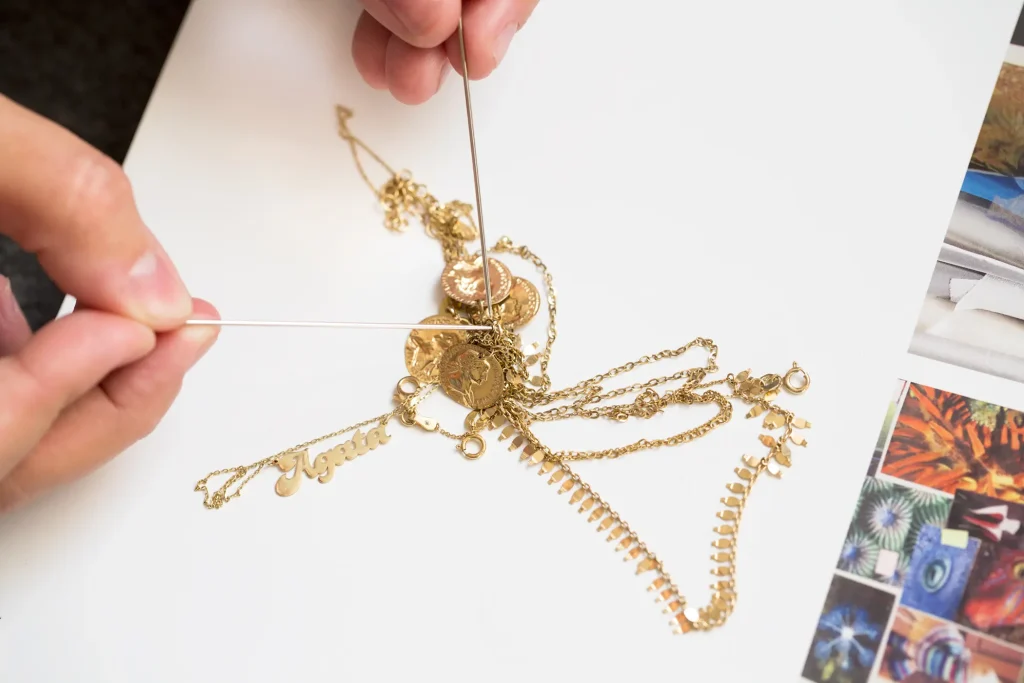
Dealing with a clump of intertwined necklaces is a whole different level of frustration. This often happens after traveling or when a jewelry box gets jostled. The worst thing you can do is yank one chain free—this usually tightens the knots into a permanent, painful tangle. Professionals recommend using the Anchor and Decouple Strategy, which lets you isolate each chain and regain control.
- Anchor the Clasps: Lay all the tangled necklaces flat. Find each clasp and secure it to the edge of your workspace with masking or painter’s tape. Anchoring the chains prevents them from moving, which is crucial for successful untangling.
- Identify the Culprit: With the chains anchored, you can clearly spot the main loop that’s causing the knot. Focus your needle or lubricant technique on this critical loop first.
- Decouple One by One: Once a chain loosens enough to move, gently pull its free end toward its anchor. After it’s fully freed from the central knot, re-tape it further down the surface, away from the active entanglement, keeping things organized as you go.
- A Note on Quality: If your chains frequently arrive tangled—even new—it could indicate a supplier quality issue. Reputable jewelry manufacturers, such as Endless, professionally package and secure every piece to prevent transit damage, reflecting their commitment to quality from factory to customer.
If you want, I can also make a more concise, punchy version suitable for a blog or social media post that emphasizes the “step-by-step untangling hack” angle. This usually performs better for readers who want quick, actionable tips. Do you want me to do that?
How to Free a Knotted Necklace Using Only Your Hands
Sometimes you discover a knot while traveling, or you simply don’t have a needle nearby. In these moments, a little ingenuity can help—just remember the golden rule: never pull on the chain ends.
- Use Gravity: Hold the necklace by one end and let the pendant or chain gently pull on the knot. Often, this gentle weight is enough to slightly shift the tangle and reveal a point to start loosening.
- Fingernail or Toothpick Substitute: If you don’t have a needle, your fingernail can act as a precise tool. Carefully push into the center of the knot, mimicking a needle’s motion. A thin toothpick can also work, but handle it carefully to avoid breaking it inside the chain.
- Friction on a Flat Surface: Place the knot on a clean, flat table. Apply light, circular pressure with your thumb or forefinger directly on the knot. These small rotations can help the loops loosen, making it easier to separate the chain.
What to Do When a Necklace Knot Won’t Budge
Sometimes, even after using a needle or applying lubricant, a knot simply won’t move. At this point, forcing the chain can cause serious damage—especially with softer metals or intricate designs.
The Risks of Forcing It:
Pulling or twisting a tight knot can create kinks—sharp bends that permanently ruin a chain’s smooth flow. You also risk scratching gold or sterling silver finishes or loosening delicate gemstones set near the knot.
The Professional Solution:
The safest approach is to stop and bring the necklace to a professional jeweler. They have specialized tools, such as micro-tweezers and ultrasonic cleaners, that can carefully loosen even the most stubborn knots without harming the metal or stones. Paying for a simple untangling service is far cheaper than repairing a chain damaged by forcing it at home.
How to Stop Necklace Knots Before They Happen
The easiest way to deal with necklace knots is to prevent them in the first place. Most tangles happen because chains are allowed to move freely during storage. Controlling that movement is the key to keeping your necklaces smooth and knot-free. Below are some of the most effective strategies, ranging from simple, low-cost hacks to specialized storage solutions.
| Strategy | Method | Pros | Cons |
|---|---|---|---|
| The Straw Method | Thread the chain through a plastic straw and clasp the end. | Very low cost; 100% effective for single chains. | Not practical for thick pendants or large collections. |
| The Hang-Up | Use a vertical jewelry tree or wall hooks to hang each necklace individually. | Allows for quick access and viewing; very effective. | Takes up wall/table space; chains can still swing and hit each other. |
| The Individual Pouch | Store each chain in its own small velvet or fabric pouch. | Protects from dust, scratches, and tangles; great for travel. | It can be time-consuming to find and retrieve necklaces. |
Bonus Tip: Always Fasten the Clasp Before Storing
Before putting a necklace away, make sure its clasp is fully closed. An open chain is far more likely to wrap around other items and form knots. By making this a habit, you limit the chain’s movement and significantly reduce the risk of tangles—saving time and frustration later.
FAQs
1.Can baby oil damage a necklace?
No. A small amount of baby oil is generally safe for most necklaces, but the jewelry should be cleaned afterward to remove residue.
2.What is the easiest way to untangle a tight necklace knot?
The easiest method is using two needles together with baby powder or oil to reduce friction inside the knot.
3.Can tangled necklaces break?
Yes. Pulling too hard can bend or snap delicate chains, especially thin sterling silver or gold necklaces.
4.How do you keep necklaces from tangling?
Store necklaces separately, fasten the clasp before storage, and use necklace organizers or soft pouches.
Conclusion
Untangling a necklace can feel intimidating, but with the right approach, it’s entirely manageable. The secret is patience—never force the chain. Whether you use the precise two-needle technique, apply a bit of oil or powder, or let gravity do the work, your goal is to gently coax the knot open, not yank it apart.
Good storage habits go a long way in preventing tangles. Tricks like threading chains through straws or hanging them individually reduce friction and keep necklaces knot-free. Handle your jewelry with care, and remember: the best way to untangle a necklace is to prevent the knot from forming in the first place.
Have a jewelry design idea or some questions?