How Much Does Custom Jewelry Manufacturing Cost? A B2B Pricing Guide
If you are planning to launch a jewelry collection, expand an existing product line, or develop a private label jewelry brand, one of the first questions you will probably ask is:
How much does custom jewelry manufacturing cost?
There is no single fixed price for custom jewelry. A manufacturer’s quote can vary significantly depending on the material, product weight, design complexity, CAD development, tooling, gemstones, plating, labor, packaging, order quantity, and customization requirements.
For B2B buyers, understanding these cost factors is more useful than looking for a single “average” price. It helps you compare jewelry manufacturer pricing, prepare a realistic product budget, and avoid unexpected costs during development and bulk production.
In this guide, we explain the main components of custom jewelry manufacturing cost, how MOQ affects unit pricing, why samples can cost more than bulk orders, and what information you should provide to a jewelry manufacturer for an accurate quotation.
What Is Included in Custom Jewelry Manufacturing Cost?
A custom jewelry quotation usually consists of several cost components rather than one simple manufacturing fee.
A simplified pricing structure can be represented as:
Custom Jewelry Cost = Material + Design/CAD + Tooling + Stones + Plating + Labor/Production + Packaging + Other Customization
Not every project includes every cost. For example, an existing CAD file may reduce development work, while a simple product may not require complex tooling or gemstone setting.
| Cost Factor | What Usually Affects the Cost |
|---|---|
| Material | Metal type, purity, product weight, material loss |
| CAD & Design | Design complexity, engineering, revisions |
| Mold & Tooling | Manufacturing method and design structure |
| Stones | Type, size, quality, quantity, setting |
| Plating | Plating material, thickness, finish |
| Labor | Assembly, polishing, stone setting, finishing |
| Packaging | Box, pouch, cards, labels, custom branding |
| MOQ | Order quantity and setup cost allocation |
| Customization | Logo, engraving, special components, packaging |
This is why two jewelry pieces that look similar can have very different manufacturing prices.
Material Cost
Material is often one of the most important factors in jewelry manufacturing cost.
The same design can have a significantly different cost depending on whether it is produced in 925 sterling silver, brass, stainless steel, gold, or another material.
925 Sterling Silver
For sterling silver jewelry, the cost is influenced by:
- Silver market price
- Metal purity
- Product weight
- Casting or manufacturing loss
- Product construction
- Required finishing
A heavier sterling silver ring, for example, generally requires more metal than a lightweight version of the same design.
For B2B buyers, it is therefore more useful to compare material specification and estimated product weight rather than comparing material names alone.
Gold and Gold-Plated Jewelry
Gold jewelry pricing is particularly sensitive to the underlying metal and gold content.
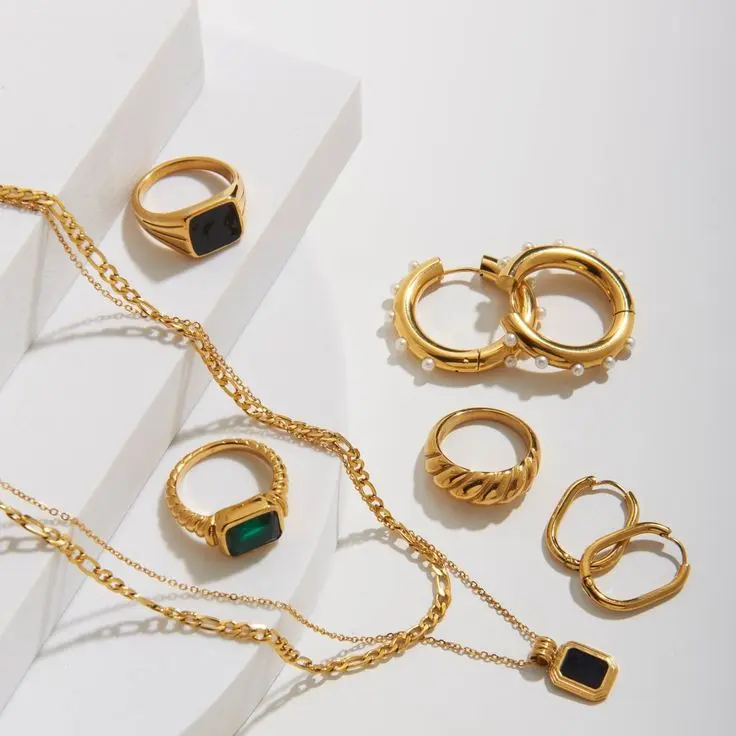
For gold-plated jewelry, the base material, product weight, plating specification, and finishing requirements all contribute to the final cost.
A gold-plated brass pendant and a gold-plated sterling silver pendant may have a similar appearance but very different manufacturing costs.
If you are sourcing gold-plated products, you should confirm:
- Base metal
- Gold karat
- Plating thickness
- Plating color
- Surface finish
- Quality requirements
This makes supplier quotations easier to compare accurately.
CAD and Design Cost
CAD, or computer-aided design, is another potential component of custom jewelry cost.
CAD allows a manufacturer to turn a concept, sketch, or reference into a detailed three-dimensional model that can be reviewed and prepared for production. GIA notes that CAD/CAM is used to create jewelry models, render designs, and connect digital designs with manufacturing processes.
When Does CAD Increase Custom Jewelry Cost?
CAD-related costs can depend on:
- Whether you provide a production-ready CAD file
- Whether the manufacturer creates the CAD model
- Design complexity
- Engineering requirements
- Number of revisions
- Custom dimensions
- Special engraving or logo requirements
A simple pendant may require relatively little development work, while an intricate ring with multiple stone seats, moving components, or detailed textures can require substantially more CAD engineering.
For this reason, when asking how much does custom jewelry cost, you should specify whether CAD development is included in the quotation.

Mold and Tooling Cost
Some custom jewelry projects require molds or other tooling before repeat production can begin.
For casting-based production, molds can be used to reproduce consistent wax models from a master model. GIA describes molds as an important part of reproducing jewelry designs consistently in mass manufacturing.
Does Every Custom Jewelry Design Need a Mold?
No.
The tooling requirement depends on the manufacturing method and product structure.
A manufacturer may use different methods such as:
- Casting
- CNC machining
- Stamping
- Laser processing
- Hand fabrication
- Other specialized production methods
Therefore, mold cost should not automatically be added to every custom jewelry project.
Why Can Tooling Affect Unit Cost?
Suppose a custom design requires a tooling investment before production.
If you order a small quantity, that initial cost is distributed across fewer pieces.
With a larger order, the same development or tooling expense can be spread across more units.
This is one reason why custom jewelry production cost per piece can decrease as order quantity increases.
Stone Cost
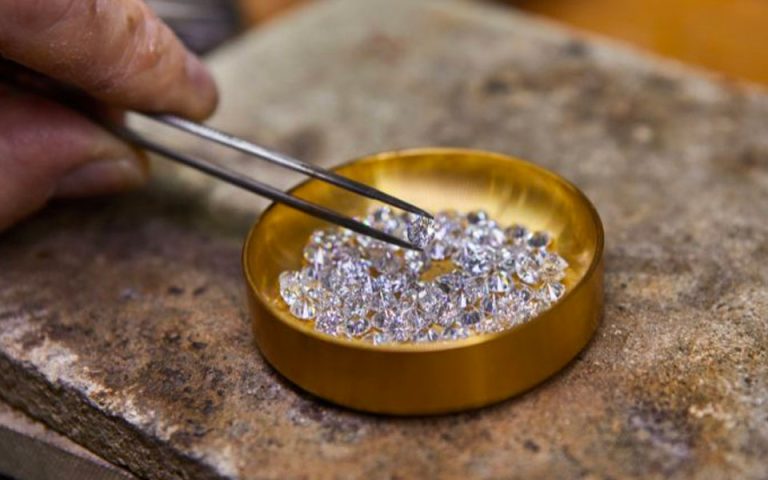
Gemstones can significantly affect jewelry manufacturing cost, especially for products with multiple stones or larger center stones.
The cost of stones depends on factors such as:
- Stone type
- Natural or laboratory-grown origin
- Size
- Cut
- Color
- Clarity
- Quantity
- Matching requirements
- Setting method
For example, a design using standard cubic zirconia may have a very different stone cost from one using moissanite or natural gemstones.
Stone Setting Also Affects Cost
Stone cost and stone-setting cost should be considered separately.
A simple design with a few stones may require limited setting work. A tennis bracelet or pavé ring with many individual stones can require considerably more labor and quality control.
For B2B jewelry buyers, the quotation should ideally specify whether the stone price includes:
- Stone supply
- Sorting or matching
- Setting
- Inspection
- Replacement allowance
This makes supplier comparisons more transparent.
Plating and Surface Finishing
Plating is another factor that can influence custom jewelry pricing.
Depending on the product, finishing may include:
- Gold plating
- Rose gold plating
- Rhodium plating
- Polishing
- Brushing
- Texturing
- Other surface treatments
For plated jewelry, the final price can vary according to the base metal, plating material, plating specification, surface preparation, and required finish.
Why Can Two Gold-Plated Jewelry Products Have Different Prices?
Because “gold plated” does not describe every production specification.
Two products may differ in:
- Base material
- Gold karat
- Plating thickness
- Surface preparation
- Product weight
- Finishing requirements
- Quality-control requirements
For European B2B buyers, compliance requirements can also be relevant. EU rules include restrictions concerning substances such as nickel and cadmium in certain jewelry applications, so material and surface specifications should be discussed with the manufacturer before production.
Labor and Production Cost
Labor is not simply the hourly wage of the workers making the jewelry.
For manufacturers, production cost can include multiple operations such as:
- Casting
- Cutting
- Soldering
- Assembly
- Polishing
- Stone setting
- Plating preparation
- Inspection
- Rework
- Final quality control
The more complex the product, the more production operations it may require.
Design Complexity Can Increase Manufacturing Cost
For example, these characteristics can increase production effort:
- Very thin structures
- Intricate details
- Multiple components
- Moving parts
- Numerous stones
- Complex stone settings
- Difficult polishing areas
- Multiple finishing requirements
- Tight dimensional tolerances
This is why a product with a low material weight is not necessarily inexpensive to manufacture.
Manufacturing complexity matters as much as material quantity.
Packaging and Branding Cost
For B2B jewelry brands, packaging is often part of the overall custom jewelry production cost.
Standard packaging may have a relatively small impact on unit cost, while fully customized packaging can add additional development and production expenses.
Possible packaging requirements include:
- Jewelry boxes
- Pouches
- Jewelry cards
- Logo printing
- Custom labels
- Barcode labels
- Care cards
- Retail packaging
- Individual packaging
If you are building a private label jewelry collection, it is better to discuss packaging at the quotation stage rather than adding it after production has already started.
How MOQ Affects Custom Jewelry Manufacturing Cost
MOQ, or minimum order quantity, can have a significant effect on jewelry manufacturer pricing.
A custom project may involve fixed or semi-fixed development expenses such as:
- CAD development
- Tooling
- Production setup
- Sampling
- Packaging development
When these costs are spread across a larger number of pieces, the resulting unit cost can become lower.
A low MOQ can increase the cost per piece because fixed development and setup costs are distributed across fewer units.
At the same time, low MOQ can be valuable for new brands because it reduces inventory risk.

Sample Cost vs. Bulk Production Cost
One of the most common questions from B2B buyers is:
Why is the sample more expensive than the bulk production price?
The reason is that a sample may carry development expenses that do not repeat in the same way during mass production.
Custom Jewelry Sample Cost
A sample may involve:
- CAD development
- Prototype production
- Tooling
- Special setup
- Stone sourcing
- Plating
- Hand finishing
- Additional inspection
Bulk Production Cost
Once the design has been approved, the manufacturer can move into repeat production.
Production becomes more efficient because:
- CAD has already been developed
- Tooling may already be completed
- Production specifications are established
- Materials can be purchased or prepared in larger quantities
- Manufacturing operations can be repeated
As a result, the bulk jewelry manufacturing cost per piece is often lower than the initial sample development cost.
This is also why comparing a sample quotation directly with a bulk unit price can be misleading.
Example: How a Custom Jewelry Quote Is Calculated
Instead of asking only:
“How much does it cost to make custom jewelry?”
A B2B buyer should think about the quotation as a combination of specifications.
For example, imagine a brand wants to develop a custom sterling silver ring with:
- 925 sterling silver
- Approximately 5 g finished weight
- CZ stones
- Rhodium plating
- Custom logo engraving
- 100 pieces
The manufacturer may evaluate the project through the following categories:
| Cost Component | Information Required |
|---|---|
| Material | 925 sterling silver |
| Weight | Approximate finished weight |
| CAD | Existing file or manufacturer development |
| Tooling | Required production method |
| Stones | CZ type, size and quantity |
| Setting | Number and complexity of settings |
| Plating | Rhodium plating specification |
| Labor | Assembly, polishing and finishing |
| Logo | Engraving method and location |
| Quantity | 100 pcs |
| Packaging | Standard or custom packaging |
The final quotation is then calculated based on the actual production specifications.
This is why a professional jewelry manufacturer normally needs product details before providing an accurate price.
What Should You Send a Jewelry Manufacturer for an Accurate Quote?
If you want an accurate custom jewelry manufacturer pricing estimate, provide as much of the following information as possible.
Product Information
- Jewelry type
- Reference images
- Sketches
- Existing CAD files
- Product dimensions
- Target weight, if available
Material Information
- 925 sterling silver
- Brass
- Stainless steel
- Gold
- Other materials
- Base metal requirements
Stone Information
- Stone type
- Stone size
- Stone quantity
- Natural or lab-grown
- Quality requirements
Finishing Information
- Gold plating
- Rose gold plating
- Rhodium plating
- Polishing
- Surface texture
- Plating requirements
Branding Information
- Logo
- Laser engraving
- Custom tags
- Packaging
- Jewelry cards
Order Information
- Target quantity
- MOQ requirements
- Sample quantity
- Expected repeat orders
- Target market
The more complete the specification, the more accurately a manufacturer can calculate the cost to manufacture jewelry.
How to Reduce Custom Jewelry Manufacturing Cost Without Sacrificing Quality
Reducing cost does not necessarily mean choosing the cheapest material or supplier.
For jewelry brands, the better approach is to optimize the design and production specification.
1. Optimize Product Weight
For precious-metal jewelry, unnecessary weight can increase material cost.
An experienced manufacturer can often help optimize the structure while maintaining the required appearance and durability.
2. Simplify Overly Complex Designs
Complex structures may require more CAD development, tooling, finishing, assembly, and inspection.
A design that is easier to manufacture can sometimes provide a better balance between appearance and cost.
3. Use Standardized Stones Where Appropriate
Standard stone sizes can simplify sourcing and production.
This may be especially useful for collections containing multiple designs.
4. Plan Plating Requirements Early
Instead of deciding plating specifications after development, define the required finish during the quotation stage.
This helps the manufacturer calculate the project more accurately.
5. Increase Order Quantity When Demand Supports ItRequirements Early
Larger orders can distribute development and setup costs across more pieces.
However, brands should balance lower unit costs against inventory requirements.
6. Reduce Unnecessary Design Revisions
A clear initial specification can reduce repeated CAD revisions and development time.
7. Consider Existing Manufacturing Capabilities
A manufacturer with established production capabilities, equipment, and experienced teams may be able to develop a product more efficiently than a supplier that needs to outsource multiple processes.
How to Compare Jewelry Manufacturer Pricing
The lowest quotation is not always the lowest total cost.
When comparing suppliers, look at the complete specification.
| Factor | What to Compare |
|---|---|
| Material | Type, purity and weight |
| CAD | Included or additional |
| Tooling | Included or charged separately |
| Stones | Type and quality |
| Plating | Type and specification |
| Labor | Included production operations |
| QC | Inspection standard |
| Packaging | Standard or customized |
| MOQ | Minimum quantity per design |
| Lead Time | Sample and bulk production |
| Compliance | Relevant market requirements |
| Shipping | Included or separate |
For example, Supplier A may quote a lower price but use a lighter product weight, thinner plating specification, different stones, or exclude packaging.
A meaningful comparison should therefore be made on an apples-to-apples specification basis.
What Makes a Reliable Custom Jewelry Manufacturer?
Price is only one part of supplier evaluation.
For a long-term B2B relationship, brands should also consider:
- Manufacturing experience
- Material expertise
- CAD capability
- Production capacity
- Quality-control procedures
- Sampling process
- MOQ flexibility
- Communication
- Lead times
- Packaging capabilities
- Compliance support
- OEM and ODM experience
A manufacturer should be able to explain why a product costs what it costs, rather than simply providing a single unexplained number.
GIA’s jewelry manufacturing education also emphasizes the relationship between CAD engineering, manufacturing methods, design constraints, and product durability, illustrating why a jewelry quotation should be evaluated together with technical requirements rather than price alone.
Custom Jewelry Manufacturing at Endless Jewellery
Endless Jewellery works with jewelry brands, wholesalers, retailers, and e-commerce businesses looking for OEM, ODM, private label, and custom jewelry manufacturing.
Our production capabilities cover materials and finishes including:
- 925 sterling silver
- Gold-plated jewelry
- Brass jewelry
- Stainless steel jewelry
- Gemstone jewelry
- Custom jewelry designs
For custom projects, we can support the process from design development and CAD to sampling, production, finishing, quality control, and packaging.
Our typical B2B production specifications include:
| Production Item | Typical Specification |
|---|---|
| MOQ | From 30 pcs/design |
| Sample Time | About 7–10 days |
| Bulk Production | About 20–30 days |
| Material | Nickel-free 925 sterling silver and other materials |
| Plating | Rhodium, 14K gold, 18K gold, rose gold |
| Branding | Laser engraving and custom branding |
| Packaging | Custom packaging available |
| Services | OEM / ODM supported |
Actual pricing and lead time depend on the product design, material, customization, quantity, and production requirements.
For a more accurate quotation, provide your reference image or CAD file, material, dimensions, stone requirements, plating, logo requirements, packaging, and target quantity.
Frequently Asked Questions
How much does custom jewelry cost?
There is no universal price for custom jewelry. Custom jewelry cost depends on material, weight, design complexity, CAD, tooling, stones, plating, labor, packaging, MOQ, and other customization requirements.
How much does it cost to manufacture jewelry?
The cost to manufacture jewelry varies by product and manufacturing specification. A simple piece made from a lower-cost material may have a very different manufacturing cost from a heavy sterling silver design with gemstones and complex finishing.
What is included in custom jewelry manufacturing cost?
A custom jewelry quotation may include material, CAD and design, tooling, stones, plating, labor, production, packaging, and other customization. However, not every project requires every cost component.
Does MOQ affect jewelry manufacturing cost?
Yes. MOQ can affect unit pricing because development, tooling, setup, and other fixed costs may be distributed across the order quantity. Larger production runs can therefore reduce the cost per piece.
Is custom jewelry more expensive than ready-made jewelry?
Not necessarily. Custom jewelry can involve additional development and tooling costs, but B2B bulk production can reduce unit costs once the design is approved and production is established.
Why is a custom jewelry sample more expensive?
A sample may include CAD development, prototyping, tooling, special setup, stone sourcing, finishing, and additional labor. These development costs may not apply in the same way to subsequent bulk production.
Does every custom jewelry design require a mold?
No. Tooling requirements depend on the product and manufacturing method. Some designs require molds for casting, while other manufacturing methods may use different tooling or production techniques.
How can I get an accurate custom jewelry manufacturing quote?
Provide the manufacturer with your product design, material, dimensions, estimated weight, stone requirements, plating, logo or engraving details, packaging requirements, and target order quantity. Complete specifications allow the manufacturer to calculate pricing more accurately.
Final Takeaway
The answer to “How much does custom jewelry manufacturing cost?” is not a single number. For B2B buyers, the better question is:
“What specifications are driving my jewelry manufacturing cost?”
Material, product weight, CAD development, tooling, gemstones, plating, labor, packaging, MOQ, and customization can all affect the final quotation.
If you are developing a new collection or comparing custom jewelry manufacturers, provide complete product specifications rather than requesting a price based only on a reference photo. This makes it easier to compare jewelry manufacturer pricing, control custom jewelry production costs, and build a more predictable budget.
Have a jewelry design idea or some questions?