Custom Jewelry Mold Making: Cost, Process and Buyer Requirements
Table of Contents
Launching a jewelry business no longer requires ordering thousands of pieces upfront. Today, many manufacturers offer low MOQ jewelry wholesale, allowing startups, boutique stores, and independent designers to build their collections with lower investment and reduced inventory risk.
However, not every custom jewelry design requires a separate production mold. The right manufacturing method depends on the design structure, material, production process, and expected order quantity.
This guide explains how custom jewelry mold making works, what affects mold costs, and what buyers should confirm with a jewelry manufacturer before approving tooling and samples.
1. When Does Custom Jewelry Need a Mold?
A custom jewelry mold is commonly used when a design needs to be reproduced consistently across multiple pieces. It can help manufacturers repeat specific shapes and details during production.
Whether a mold is necessary depends on the manufacturing method and the design requirements.
When Is a Jewelry Mold Needed?
A production mold may be suitable for:
Custom rings, pendants, charms, and earrings made through casting.
Original designs that require consistent reproduction across multiple production runs.
Jewelry with repeated shapes, decorative details, or specific structural features.
Private label collections that need the same design for future wholesale orders.
For example, a jewelry brand developing a custom 925 sterling silver pendant may need a mold or other tooling to reproduce the approved design efficiently.
The exact requirements depend on the casting method and production setup.
When Can Jewelry Be Made Without a Mold?
Some jewelry products can be manufactured using alternative processes, including:
CNC machining: Suitable for certain precisely machined components and designs.
Metal stamping: Commonly used for flat or relatively thin metal components.
Direct fabrication: Suitable for designs made by assembling, cutting, bending, or forming metal components.
3D printing: Can produce prototypes directly or create patterns for certain casting processes.
A 3D printed prototype does not automatically eliminate the need for production tooling. The next step depends on whether the printed part is a sample, a casting pattern, or the intended finished product.
For jewelry brands ordering small quantities, ask the manufacturer to compare the available production methods before committing to a mold.
2. How Jewelry Mold Making Works
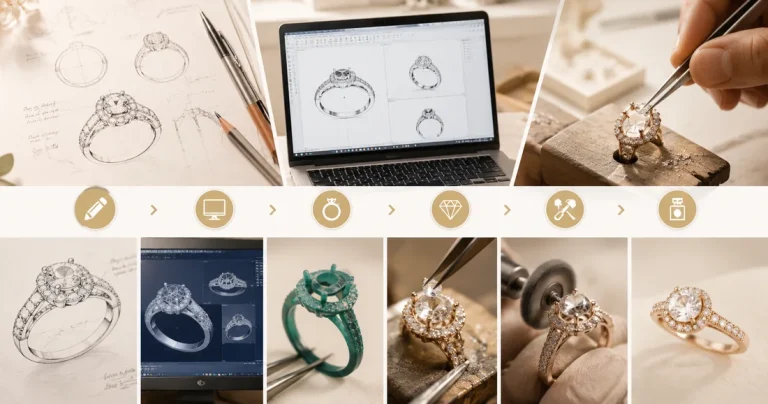
The jewelry mold making process varies according to the material and manufacturing method. For cast jewelry, development commonly involves CAD design, prototype production, mold preparation when required, and checks before production begins.
Step 1: Confirm the CAD Design
The manufacturer develops or reviews the 3D CAD model based on the buyer’s sketch, reference image, technical drawing, or existing design file.
Before approval, confirm:
Overall dimensions and product thickness.
Ring size or other required measurements.
Stone sizes and setting positions.
Structural details and component connections.
Logo placement and engraving requirements.
Approved CAD files provide a reference for subsequent development and help reduce avoidable design changes.
Step 2: Produce a Prototype or Master Pattern
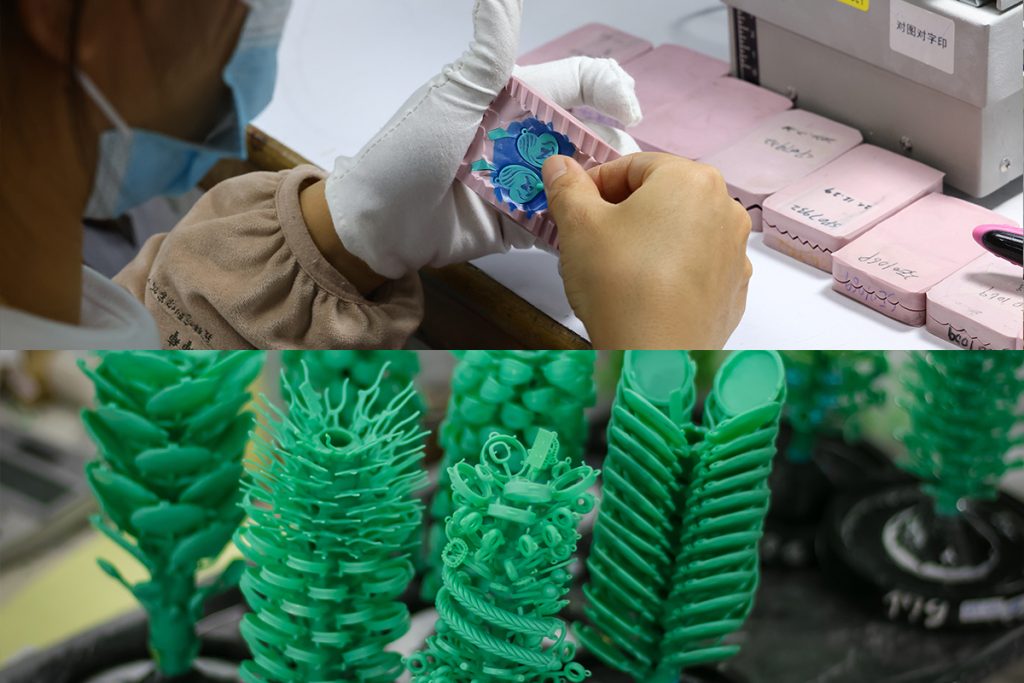
Depending on the production method, the manufacturer may use 3D printing, wax carving, or another suitable technique to create a physical model.
The prototype or master pattern helps verify the design’s dimensions, proportions, and structural details before further tooling or production work.
Step 3: Prepare the Appropriate Mold or Tooling
The tooling method depends on the manufacturing process.
For some cast jewelry designs, a master pattern is used to create a reusable production mold, often made from suitable rubber or another material. This mold can then be used to reproduce wax patterns for subsequent casting.
Other designs may use different tooling or direct manufacturing methods.
It is important to distinguish between three terms:
Wax pattern: A temporary model used in processes such as investment casting.
Production mold: A reusable mold that may be used to reproduce wax patterns or other intermediate components.
Investment casting mold: A refractory mold formed around a pattern and used to cast metal. In conventional lost wax casting, it is typically broken after casting rather than reused as a permanent production mold.
These components serve different purposes and should not be treated as interchangeable.
Step 4: Check Dimensions and Production Readiness
Before proceeding, the manufacturer should verify that the tooling or resulting patterns are suitable for the intended production process.
Depending on the design, checks may include dimensions, wall thickness, stone setting geometry, fine details, and structural integrity.
For buyers developing a new collection, it is important to confirm whether the physical sample will be produced before bulk manufacturing and which sample or specifications will serve as the approved production reference.
For a broader overview of the complete process, see our jewelry manufacturing process guide.
3. What Affects Custom Jewelry Mold Cost?
There is no single standard price for custom jewelry mold making. The cost depends on the design, tooling method, production requirements, and work needed to prepare the design for manufacturing.
A product image alone is usually insufficient to determine the exact mold development cost.
Design Complexity and Structural Details
Simple shapes may require less development work than intricate designs with fine textures, undercuts, multiple components, or complex connections.
Detailed jewelry may also require additional prototype checks or design adjustments before production tooling can be finalized.
Product Size and Dimensions
The size of a jewelry piece can affect material usage, tooling dimensions, and the time required for development.
However, size alone does not determine cost. A small ring with complicated stone settings may require more technical work than a larger, simpler pendant.
Mold Material and Manufacturing Method
Different production methods require different tooling approaches.
The choice depends on the jewelry material, design structure, required accuracy, and expected production volume. A mold used to reproduce wax patterns for casting has different requirements from tooling used for metal stamping or another forming process.
Number of Components and Required Tooling
A design consisting of several separate components may require multiple molds or specialized tooling.
For example, a pendant with a separate decorative frame, backing component, and custom attachment may involve more development work than a one piece design.
Design Revisions and Repeat Production
Changes made after CAD or tooling approval may require additional development work.
Buyers should also ask whether the same tooling can be used for future production runs, how it will be stored, and whether maintenance or replacement charges may apply.
The following table summarizes the main cost factors.
| Cost Factor | What Buyers Should Confirm | |
|---|---|---|
| Design complexity | Fine details, undercuts, and structural requirements | |
| Product dimensions | Size, thickness, and tooling dimensions | |
| Manufacturing method | Casting, stamping, CNC, or other processes | |
| Components | Number of separate parts and required tooling | |
| Revisions and reuse | Revision charges, storage, maintenance, and replacement |
| Cost Item | What It Covers | What to Ask |
|---|---|---|
| Mold or tooling fee | Required mold or production tooling development | Is tooling charged separately, and what does the fee include? |
| Sample fee | Physical sample production and any included development work | Are CAD, tooling, materials, and revisions included? |
| Bulk production cost | Manufacturing the agreed quantity of finished jewelry | Does the unit price include finishing, plating, and agreed packaging? |
For example, a custom sterling silver pendant project may involve CAD development, a prototype, production tooling, sample finishing, and bulk manufacturing. Some activities may be included in a supplier’s development package, while others may incur separate charges.
Do not assume that paying a sample fee means the mold is included, or that a mold fee includes unlimited design revisions.
Request an itemized quotation so you can compare suppliers on the same specifications.
5. What Should Buyers Confirm Before Mold Making?
For jewelry brands, wholesalers, and private label businesses, confirming tooling terms before production can help prevent unexpected costs and misunderstandings during repeat orders.
Use this checklist when working with a custom jewelry manufacturer.
Confirm the Final Design and Dimensions
Ensure the CAD model, measurements, materials, stone specifications, and other essential details are approved before tooling begins.
Ask whether changes after approval will require additional CAD work, new tooling, or another sample.
Clarify Mold and Sample Charges
Request a breakdown of the costs for CAD development, mold making, sampling, revisions, and bulk production.
Confirm which services are included and which may be billed separately.
Establish Mold Ownership and Usage Rights
Mold ownership is a contractual matter and should not be assumed from payment alone.
Confirm in writing:
Who owns the physical mold and any associated tooling.
Whether the buyer can request its transfer to another manufacturer.
Whether the design and CAD files are covered by separate intellectual property terms.
Whether the supplier may use the tooling for other customers.
What happens to the tooling if cooperation ends.
These terms may vary by supplier and agreement. Buyers should review the contract before paying development fees.
Establish Mold Ownership and Usage Rights
A reusable production mold may support future orders, but reuse depends on its condition, storage, compatibility with the manufacturing process, and the supplier’s policies.
Ask how the mold will be stored, whether storage fees apply, and whether repeat orders require additional setup charges.
Also confirm whether a new mold may be needed after wear, damage, design changes, or a change in production method.
Agree on Quality Inspection Requirements
Before bulk production, establish which sample or technical specifications will be used to evaluate finished jewelry.
Depending on the product, inspection may cover dimensions, structure, surface finish, stone setting, plating, and other agreed requirements.
For more details, see our jewelry quality control process.
6. Frequently Asked Questions
1.How much does a custom jewelry mold cost?
Custom jewelry mold cost varies according to design complexity, product size, tooling material, manufacturing method, and the number of components involved. Some designs require relatively simple tooling, while others need more extensive development. Request a quotation based on your CAD file or design reference, material, dimensions, and estimated production quantity.
2.Does every custom jewelry design need a mold?
No. Some cast jewelry designs require reusable production molds or other tooling, while CNC machining, stamping, direct fabrication, and certain 3D printing applications may use different methods. The best approach depends on the design, material, manufacturing process, and expected order quantity.
3.Who owns the mold after production?
Mold ownership depends on the agreement between the buyer and manufacturer. Before production begins, confirm ownership of the physical tooling, rights to the CAD files and design, storage arrangements, transfer conditions, and whether the mold can be reused for future orders. Request written confirmation rather than relying on verbal assurances.
Custom Jewelry Mold Making for B2B Orders
Endless Jewellery is a B2B jewelry manufacturer based in Guangzhou, China, supporting custom jewelry development and production for brands, wholesalers, retailers, and e-commerce businesses.
Our capabilities include CAD development, mold making where required, casting, polishing, stone setting, electroplating, quality inspection, and customized production. We work with materials including 925 sterling silver, gold, brass, and other materials based on project requirements.
For suitable projects, CAD development typically takes 24 to 48 hours, sample development takes around 7 to 10 days, and bulk production takes approximately 20 to 30 days. Actual timelines depend on the design, materials, revisions, order quantity, and production requirements.
If you are developing a new jewelry collection, share your design drawings, reference images, preferred materials, and estimated order quantity with our team.
We can review your requirements and discuss the appropriate manufacturing method, tooling needs, sampling process, and bulk production quotation.
Explore our custom jewelry sampling service to learn more about developing a design before bulk production.
Contact Endless Jewellery to discuss your custom jewelry development project and B2B manufacturing requirements.
Similar Posts
Bracelet | brass jewelry | Earrings | Endless Jewelry | Gold Jewelry | Gold Plated Jewelry | Gold Vermeil Jewelry | Jewelry | jewelry factory | jewelry manufacturer | NecklaceHow Influencers Launch Successful Jewelry Collections That Actually Sell
Table of Contents Influencer jewelry collections are becoming one of the fastest growing ways to launch a jewelry brand online. However, most
Bracelet | Earrings | Endless Jewelry | Gold Jewelry | Jewelry | jewelry factory | jewelry manufacturer | Necklace | ring | Silver JewelryWhat Is Bonded Gold? Meaning, Methods and Jewelry Buying Guide
Table of Contents The term bonded gold is used in different contexts to describe gold combined with another material. However, it does
Bracelet | Earrings | Endless Jewelry | Gold Jewelry | Jewelry | jewelry factory | jewelry manufacturer | Necklace | ring | Silver JewelryUnderstanding Fine, Demi-Fine, and Semi-Fine Jewelry: Differences and Similarities
Table of Contents In the jewelry industry, fine, demi fine, and semi fine jewelry represent different levels of materials, craftsmanship, pricing, and
Endless Jewelry | Gold Jewelry | Jewelry | jewelry factory | jewelry manufacturer | Necklace | ring | Silver JewelryRecycled or Recyclable? A Guide to Sustainable Jewelry 101
Today, people are increasingly aware of how their choices affect the environment—even when it comes to creating or buying jewelry. As a
Bracelet | Earrings | Endless Jewelry | Jewelry | jewelry factory | jewelry manufacturer | Necklace | ring | Silver JewelryHow to Choose the Right Custom Silver Jewelry Manufacturer for Your Brand
Table of Contents Finding the right custom silver jewelry manufacturer is an important step for brands developing their own jewelry collections. Beyond
Can You Shower with a Silver Chain? Sterling Silver Care Guide
Table of Contents Can You Shower with a Silver Chain? Sterling Silver Care Guide Yes, you can shower with a sterling silver
Your Order
No products in the cart.