Jewelry Manufacturing Process: From Design to Final Inspection
Table of Contents
The jewelry manufacturing process transforms a design concept into a finished product through a series of production and quality control stages. For jewelry brands, wholesalers, retailers, and e-commerce businesses, understanding these steps helps set realistic expectations for product quality, sampling, lead times, and bulk orders.
At Endless Jewelry, a B2B jewelry manufacturer based in Guangzhou, China, we support custom jewelry development and production using materials such as 925 sterling silver, brass, gold plating, and gemstones. The exact manufacturing process depends on the design, material, construction, and finishing requirements.
What Are the Main Steps in Jewelry Manufacturing?
Low MOQ jewelry wholesale refers to wholesale purchasing with a relatively small minimum order quantity.
Design development and specification confirmation
CAD modeling and technical review
Prototyping and sample approval
Material preparation and casting or forming
Surface refining and polishing
Stone setting and decorative finishing
Plating and final surface treatment
Quality inspection and packaging
Not every jewelry design requires every step. For example, a simple metal pendant may not need stone setting, while a gemstone ring may require additional setting and inspection procedures.
1. Design Development and Specification Confirmation
The first step is to define the product requirements before production begins.
Buyers usually provide a design drawing, reference image, existing sample, or initial concept. The manufacturer then reviews the design and confirms the details that may affect production.
Important specifications include:
- Base material and alloy requirements
- Product dimensions and weight targets
- Gemstone type, size, and setting method
- Plating color and surface finish
- Logo placement and branding requirements
- Packaging and labeling specifications
Clear specifications help reduce misunderstandings during sampling and bulk production. They also provide a reference for checking whether the finished jewelry matches the approved design.
2. CAD Modeling and Technical Review
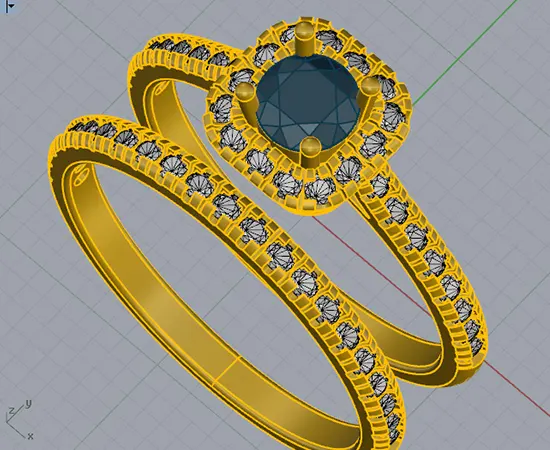
For many custom jewelry projects, computer aided design (CAD) is used to create a three dimensional model before a physical sample is produced.
The CAD model allows the manufacturer and buyer to review dimensions, proportions, stone positions, metal thickness, and structural details. Potential production issues can often be identified before materials are committed to manufacturing.
At this stage, buyers should check the overall dimensions, decorative details, stone placement, and logo position carefully. Any revisions should be confirmed before the project moves to sampling.
For suitable projects, Endless Jewelry can prepare initial CAD designs in approximately 24 to 48 hours. Actual timing depends on design complexity and the information available.

3. Prototyping and Sample Approval
A prototype or sample allows buyers to evaluate the physical product before placing or approving a bulk production order.
Depending on the design and manufacturing method, a sample may be produced using a resin model, a metal prototype, or another suitable process.
Buyers should review:
- Overall appearance and proportions
- Dimensions, weight, and wearing comfort
- Stone size and setting position
- Surface finish and plating color
- Logo details and functional components
- Consistency with the approved design
A sample is an important reference for bulk production. If changes are required, they should be documented and approved before mass manufacturing begins.
Sample development at Endless Jewelry typically takes around 7 to 10 days, depending on design complexity, materials, and approval requirements.
4. Material Preparation and Casting or Forming
Once the design and sample requirements are confirmed, the manufacturer prepares the specified materials and begins the appropriate production process.
Casting is commonly used for jewelry with detailed shapes, decorative structures, or complex three dimensional forms. In a typical lost wax casting process, a wax or resin pattern is used to create a mold. Molten metal is then introduced into the mold to form the jewelry component.
Other designs may use stamping, cutting, forming, or machining, depending on the material and product structure.
After the metal component is produced, it is removed from the mold or tooling and prepared for subsequent finishing operations. The manufacturing team checks for visible defects and structural issues before the product moves to the next stage.
The correct production method depends on the design, material, expected quantity, and required level of detail.
5. Surface Refining and Polishing
After casting or forming, jewelry components may have excess material, rough edges, or uneven surfaces that require additional finishing.
Manufacturers use appropriate refining and polishing methods to improve the surface and prepare the product for its final appearance.
Typical checks include:
- Surface smoothness and consistency
- Removal of unwanted casting marks and sharp edges
- Shape accuracy and edge definition
- Preparation for plating or other surface treatments
Polishing quality affects both appearance and subsequent finishing. If the underlying surface is uneven, plating may not produce the expected visual result.
For this reason, surface preparation should be checked before the jewelry moves to plating or final assembly.

6. Stone Setting and Decorative Finishing
For gemstone jewelry, stone setting secures each stone within the metal structure.
Common methods include prong, bezel, pavé, and channel setting. The appropriate method depends on the stone shape, design, metal structure, and intended appearance.
During production, the manufacturer checks stone alignment, setting security, and the surrounding metal structure. Decorative components and other assembly work may also be completed at this stage.
Not all jewelry requires stone setting. Plain metal jewelry may proceed directly to the next finishing stage once its surface and structural requirements have been met.
7. Plating and Final Surface Treatment
Plating and other surface treatments help achieve the specified color, appearance, and finish.
Depending on the product, the process may include rhodium plating, gold plating, rose gold plating, or other agreed surface treatments. The base material and required finish determine the appropriate preparation and treatment process.
Before bulk production, buyers should confirm the approved plating color, finish, and applicable coating requirements.
Quality checks may include:
- Color consistency with the approved reference
- Surface coverage and visible uniformity
- Absence of obvious stains, peeling, or exposed base metal
- Compliance with agreed coating specifications, where applicable
Plating performance depends on the base material, surface preparation, coating system, and production conditions. Specific durability or coating thickness claims should be supported by the agreed specifications and suitable testing.
8. Quality Inspection and Packaging
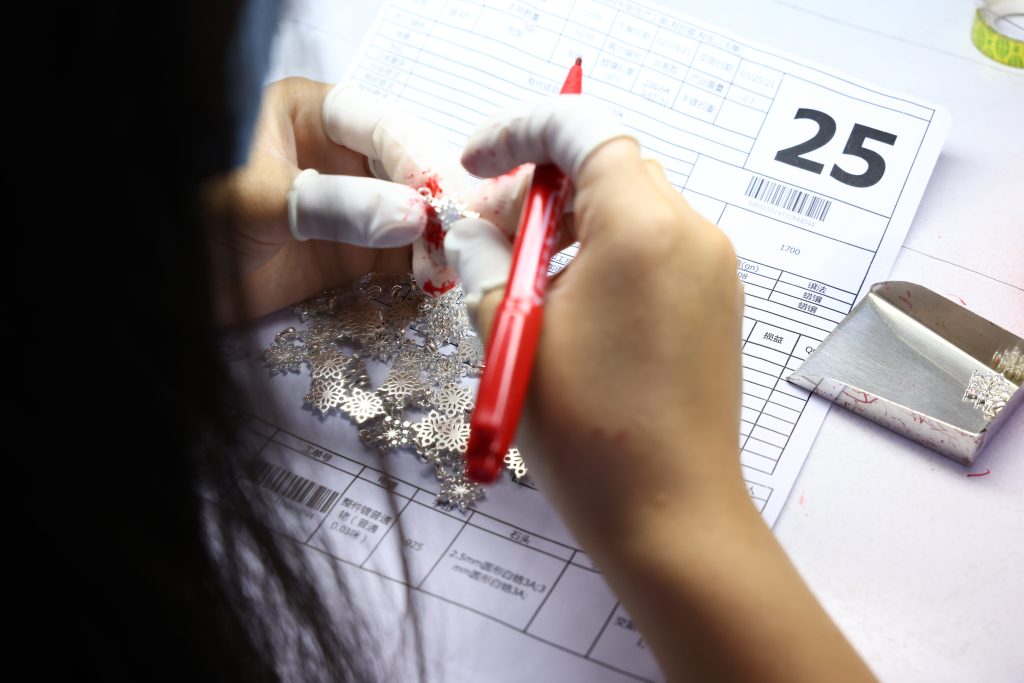
The final inspection checks whether finished jewelry meets the approved product specifications and agreed acceptance criteria.
Depending on the product and order requirements, inspection may cover dimensions, appearance, stone security, surface finish, plating color, functional components, and logo accuracy.
For wholesale orders, buyers should establish clear inspection criteria before production. These criteria help both parties understand which defects are acceptable, which require correction, and how the finished batch will be evaluated.
Where chemical compliance or metal composition testing is required, the relevant products and test methods should be agreed separately. Visual inspection alone cannot confirm compliance with chemical safety requirements.
After inspection, approved products are prepared for packaging. Packaging may include individual bags, branded boxes, labels, barcodes, or other buyer specified materials.
For more details about manufacturing inspections, see our jewelry manufacturing services and the applicable quality control requirements.
How Long Does the Jewelry Manufacturing Process Take?
Production time depends on the design, material availability, sample approval, order quantity, and manufacturing requirements.
For reference, the typical timelines for suitable projects at Endless Jewelry are:
| Production Stage | Typical Lead Time |
|---|---|
| CAD development | 24 to 48 hours |
| Sample development | 7 to 10 days |
| Bulk production | 20 to 30 days |
These are estimated timelines rather than guaranteed delivery dates. Complex designs, additional revisions, special materials, testing requirements, and delayed approvals may extend the schedule.
Buyers can help keep projects on track by providing complete specifications, approving samples promptly, and confirming packaging and branding requirements before bulk production.
What Should Buyers Prepare Before Production?
Before requesting a custom jewelry quotation, buyers should prepare as much of the following information as possible:
- Design drawings, reference images, or an existing sample
- Preferred material and product dimensions
- Gemstone specifications, if applicable
- Plating color and surface finish requirements
- Target order quantity and expected reorder volume
- Logo, packaging, and labeling requirements
- Applicable quality inspection and testing criteria
- Target delivery date and destination market
Complete information helps the manufacturer assess feasibility, recommend a suitable production method, and provide a more accurate quotation and schedule.
For brands developing their own collections, private label jewelry manufacturing may also be relevant when logo application, branded packaging, and product presentation are part of the project.
Frequently Asked Questions
1.What is the jewelry manufacturing process?
The jewelry manufacturing process includes design development, CAD modeling when required, prototyping, material forming or casting, finishing, stone setting when applicable, surface treatment, quality inspection, and packaging.
2.How long does custom jewelry manufacturing take?
As a general reference, CAD development may take 24 to 48 hours, sample development around 7 to 10 days, and bulk production around 20 to 30 days. The actual schedule depends on design complexity, order quantity, materials, and approval requirements.
3.Why should buyers approve a sample before bulk production?
Sample approval gives the buyer and manufacturer a shared reference for the design, dimensions, materials, finish, and other product requirements. It helps identify necessary revisions before larger quantities are produced.
4.What affects jewelry manufacturing costs?
Manufacturing costs depend on the base material, product weight, design complexity, gemstone specifications, production quantity, surface treatment, labor requirements, packaging, and testing needs. A detailed product specification helps the manufacturer provide a more accurate quotation.
Work With a Jewelry Manufacturer on Your Next Collection
Choosing a manufacturing partner involves more than comparing unit prices. Buyers should also evaluate design communication, sample accuracy, production capabilities, quality control procedures, and the manufacturer’s ability to follow agreed specifications.
Endless Jewelry is a B2B jewelry manufacturer based in Guangzhou, China, supporting custom jewelry development and production for brands, wholesalers, retailers, and e-commerce businesses.
If you are planning a new collection or sourcing a custom jewelry order, share your design, material preferences, target quantity, and product requirements with our team to discuss the next steps.
Have a jewelry design idea or some questions?