How to Identify High Quality Gold Filled Jewelry: A B2B Buyer’s Guide
Gold has always been treasured as a precious metal and is widely used in jewelry making. Since pure gold is naturally soft, it is commonly mixed with other metals to enhance its strength and durability. This process creates different levels of purity with the most common being 10k, 14k, 18k, 22k and 24k.
For jewelry brands, wholesalers, and retailers, knowing how to identify high quality gold filled jewelry is essential when evaluating samples, comparing suppliers, and preparing products for bulk production.
The most reliable approach is to verify the material specification, examine the gold layer and surface finish, review supporting documentation, and assess the manufacturer’s quality control process. Appearance alone cannot confirm whether a piece meets the stated gold filled specification.
1. Verify the Gold Content and Material Specification
The first step is to confirm what the supplier means by gold filled.
Gold filled jewelry generally uses a substantial layer of gold alloy mechanically bonded to a base metal. This differs from conventional gold plated jewelry, where gold is applied through an electroplating or another surface coating process.
Under the commonly used US FTC guidance, a product may be described as gold filled without a fractional weight disclosure when the mechanically applied gold alloy layer meets the applicable requirements, including a minimum of one twentieth of the item’s metal weight. The gold alloy must also meet the relevant karat and durability conditions.
For example, a marking such as 1/20 14K GF indicates a stated weight ratio and a 14K gold layer. The marking should be assessed alongside the supplier’s material specification and applicable labeling requirements.
When sourcing gold filled jewelry, ask the manufacturer to confirm:
-
The karat of the gold alloy used in the outer layer
-
The stated gold weight ratio
-
The base metal composition
-
The bonding method and product construction
-
Any available material declarations or supporting test documentation
These details provide a more reliable basis for comparing products than color or price alone.
Our guide to gold plated jewelry, solid gold, and gold filled jewelry explains how these materials differ in construction and positioning.
2. Check Gold Filled Markings Without Relying on Them Alone
Jewelry markings can help identify a product’s stated material, but a stamp is not independent proof of authenticity.
Common markings include GF, 14K GF, and 1/20 14K GF. Their meaning depends on the complete marking and the applicable product labeling requirements.
When checking a sample, confirm that the marking is legible and consistent with the supplier’s specification. If the product is sold as 14K gold filled, the stated karat and construction should match the documentation provided.
For wholesale orders, request written confirmation of the material specification before approving production. Where the product’s composition is uncertain, independent testing may be appropriate.
A useful distinction is that a marking communicates a claim about the product, while supporting documentation and appropriate testing help verify that claim.
For a broader explanation of jewelry markings, see our guide to gold jewelry stamps and their meanings.”
3. Examine the Gold Layer and Bonding Quality
The construction of the gold layer is one of the most important factors when evaluating gold filled jewelry.
Unlike conventional electroplating, gold filled construction generally involves mechanically bonding a gold alloy layer to a base metal. The quality of the finished product depends on the materials, bonding process, design, and finishing work.
Inspect samples for the following signs:
-
Uneven color or visible differences between adjacent surfaces
-
Peeling, lifting, or separation around edges and joints
-
Exposed base metal in areas that should be covered
-
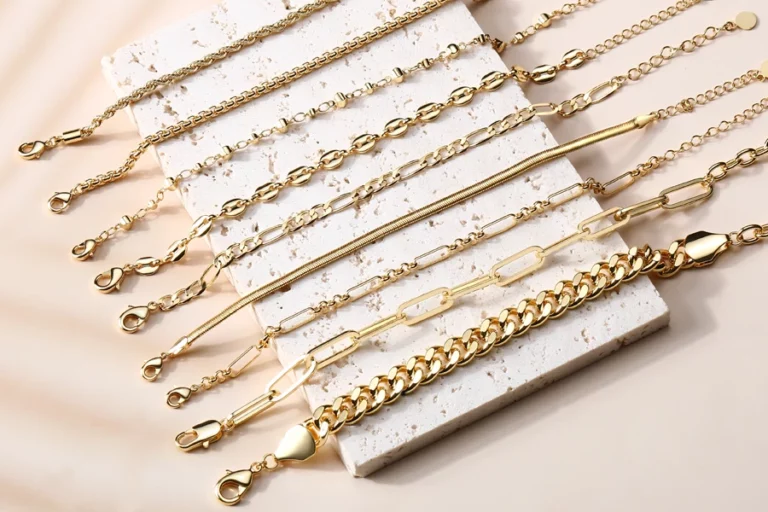
Poor finishing around links, clasps, bends, and connection points
-
Visible defects where components meet
A visual inspection can identify possible manufacturing defects, but it cannot establish the gold weight ratio or prove the quality of the bond throughout the product.
For higher value or repeat production orders, agree on the required material specification and acceptance criteria before mass production. If there is a concern about the gold layer, consult a qualified laboratory about a suitable testing method for the specific construction.
4. Assess Surface Finish, Color, and Craftsmanship
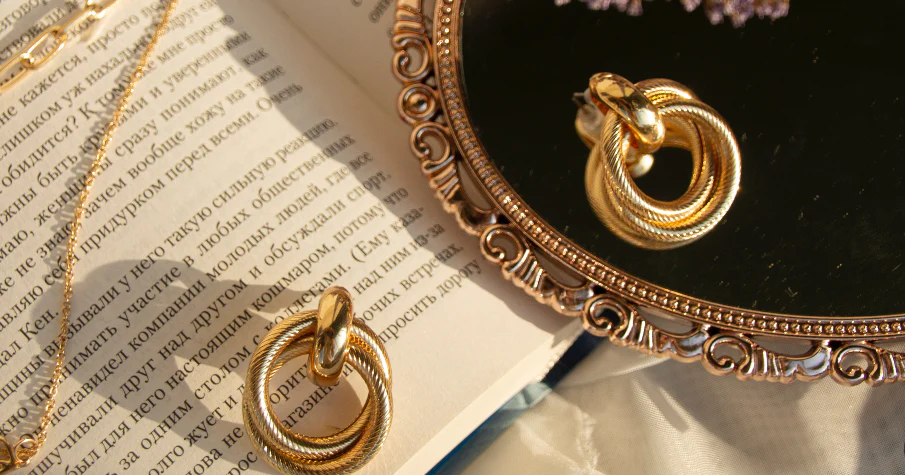
High quality gold filled jewelry should have a consistent finish that matches the approved sample and product specification.
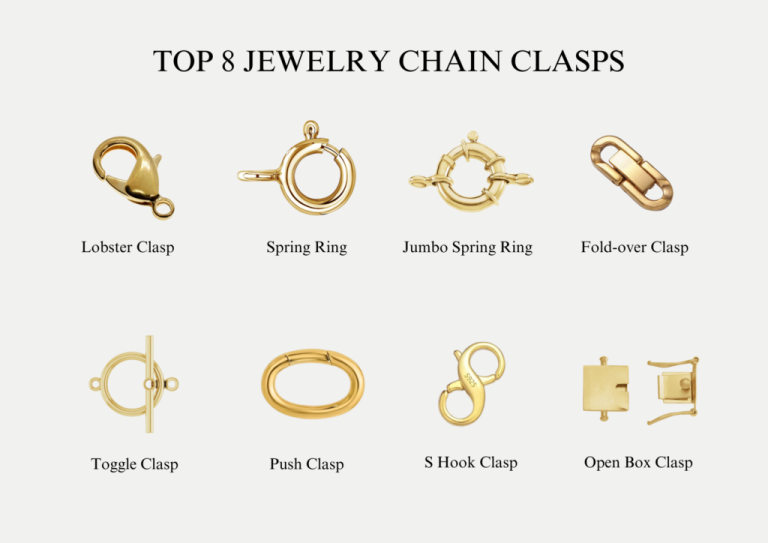
Examine the jewelry under consistent lighting. Look for an even color across visible surfaces, smooth polishing, clean edges, secure connections, and properly finished clasps.
For chains and bracelets, pay particular attention to links, soldered or joined areas, and moving components. For rings and earrings, inspect edges, settings, closures, and areas that may experience repeated friction.
A well finished product should not have obvious scratches, rough edges, loose components, or inconsistent workmanship.
Color consistency is useful for evaluating manufacturing quality, but it does not prove gold content. Different gold alloys and finishing processes can produce different shades, so buyers should approve a reference sample before placing a bulk order.
5. Evaluate the Base Metal and Overall Construction
Gold filled jewelry combines an outer gold alloy layer with a base metal. The base metal affects the product’s structure, weight, flexibility, and suitability for its intended design.
Ask the supplier to identify the actual base metal rather than relying on a general description such as premium metal.
The appropriate base material depends on the product design and construction. Chains, wire components, pendants, and other jewelry parts may have different material requirements.
For jewelry intended for frequent wear, evaluate the strength of the components, the security of closures, and the performance of moving parts. If nickel content, skin contact, or regulatory compliance is important for your target market, request relevant material declarations or test reports rather than assuming that a gold filled surface guarantees suitability for every wearer.
6. Compare Supplier Documents and Quality Control Procedures
For jewelry brands and wholesalers, supplier verification should extend beyond an individual sample.
Before approving a new gold filled jewelry supplier, request documentation that identifies the material specification and explains how the manufacturer verifies product quality.
A practical supplier review should cover:
-
Written confirmation of the gold karat and stated weight ratio
-
Identification of the base metal
-
Available material or laboratory reports relevant to the product
-
Defined inspection criteria for appearance and construction
-
Procedures for checking samples and bulk production
-
A process for handling nonconforming products
Not every document proves every aspect of quality. For example, a report measuring surface composition may not, by itself, establish the total gold weight ratio of a finished item. The test method must be appropriate for the question being investigated.
A reliable manufacturer should be able to explain what is tested, how samples are selected, and which requirements the results are intended to verify.
Before choosing a gold filled jewelry manufacturer, verify the supplier’s material specifications, inspection process, and ability to meet your product requirements
7. Inspect Samples Before Approving Bulk Production
A sample approval process helps jewelry businesses reduce the risk of receiving products that differ from the agreed specification.
Before bulk production, document the approved sample and record the important product requirements, including material construction, color, dimensions, weight where relevant, finish, markings, and component details.
During production inspection, compare selected pieces with the approved reference and check for visible defects, inconsistent workmanship, damaged components, and deviations from the agreed specifications.
For repeat orders, retain the approved product information and inspection records. This makes it easier to identify changes between batches and communicate specific corrective actions to the manufacturer.
If a material authenticity concern arises, visual inspection should be supplemented with an appropriate verification method.
8. Be Careful With Price and Durability Claims
Gold filled jewelry generally costs more to produce than comparable conventional gold plated jewelry because of its construction and gold content. However, price alone cannot establish whether a product is genuine or well made.
When comparing quotations, review the stated material specification, product dimensions, component construction, finishing requirements, order quantity, and quality documentation.
Durability also varies by design, manufacturing quality, frequency of wear, friction, and exposure to chemicals or environmental conditions. Gold filled jewelry should not automatically be described as waterproof, tarnish proof, or guaranteed to retain its appearance for a fixed number of years.
For brands selling to end customers, use care instructions and durability claims that reflect the actual product and available evidence.
Frequently Asked Questions
1.How can you tell if jewelry is genuinely gold filled?
Start by checking the material marking and obtaining the supplier’s written specification. Confirm the stated gold karat, weight ratio, and base metal. If the claim remains uncertain, seek appropriate independent testing. Appearance and stamps alone are not conclusive proof.
2.What does 1/20 14K GF mean?
It generally indicates that the gold layer is 14K and accounts for one twentieth of the item’s metal weight. The marking should be interpreted in the context of the product’s construction and applicable labeling requirements.
3.Is gold filled jewelry better than gold plated jewelry?
Gold filled and gold plated describe different construction methods. Gold filled jewelry generally has a mechanically bonded gold alloy layer, while conventional gold plated jewelry uses a surface coating process. The best option depends on the product specification, intended use, target price, and required performance.
4.Can you test gold filled jewelry at home?
Visual checks can help identify surface defects and inconsistent workmanship, but they cannot reliably establish the gold weight ratio or verify the complete construction. Material claims should be checked against supplier documentation and, where necessary, appropriate professional testing.
5.What should jewelry brands ask a gold filled jewelry manufacturer?
Ask for the gold karat, stated weight ratio, base metal composition, bonding method, relevant supporting documentation, and quality inspection procedures. Before bulk production, approve a reference sample and agree on written acceptance criteria.
Final Checklist for Buying High Quality Gold Filled Jewelry
Before approving a gold filled jewelry order, confirm the following:
-
The material specification matches the product description.
-
Gold karat and weight ratio claims are documented.
-
The base metal and construction are clearly identified.
-
The sample has a consistent finish and secure components.
-
Inspection criteria are agreed upon before bulk production.
-
Any material or durability claims are supported by appropriate evidence.
For jewelry brands, the most dependable way to identify high quality gold filled jewelry is to combine material verification, careful sample inspection, and documented supplier quality control. This approach supports more consistent purchasing decisions and helps reduce avoidable quality issues across repeat orders.
Have a jewelry design idea or some questions?