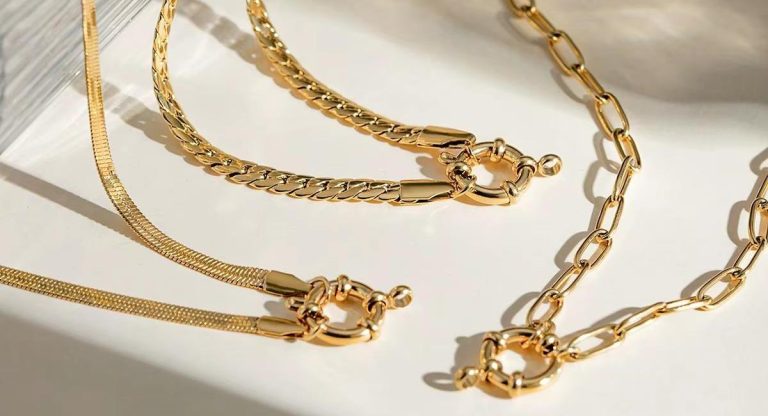
Jewelry Manufacturing Process: From Design to Bulk Production
Table of Contents
What Is the Jewelry Manufacturing Process?
The jewelry manufacturing process is the series of production stages that turn a jewelry design into a finished product ready for sale. For jewelry brands, wholesalers, retailers, and private label businesses, the process typically includes design development, CAD modeling, prototyping, mold making when required, casting or forming, polishing, stone setting, plating, quality inspection, and bulk production.
Working with an experienced jewelry manufacturer helps businesses manage product development, production costs, material selection, quality standards, and delivery schedules. Depending on the project, manufacturers may provide OEM jewelry manufacturing, ODM services, contract jewelry production, or complete private label manufacturing.
This guide explains how jewelry is manufactured, how each production stage works, and what B2B buyers should consider when outsourcing jewelry production to a factory.
Jewelry Manufacturing Process at a Glance
For businesses sourcing from a jewelry manufacturer, OEM jewelry manufacturer, or wholesale jewelry supplier, understanding each production stage makes it easier to communicate specifications and choose the right manufacturing solution. A professional jewelry factory can also support custom designs, private label production, and repeat bulk orders.
| Manufacturing Details | |
|---|---|
| Company | Endless Jewellery |
| Factory Location | Guangzhou, China |
| Business Type | B2B Jewelry Manufacturer |
| Manufacturing Services | OEM, ODM, Contract Manufacturing, Private Label |
| Main Materials | 925 Sterling Silver, Gold Plated, Gold Vermeil, Brass |
| Product Categories | Rings, Necklaces, Earrings, Bracelets, Pendants |
| Production Support | Custom Design, CAD, Prototyping, Bulk Production |
| MOQ | Flexible MOQ, depending on design and order requirements |
| CAD Development | Typically 24–48 hours |
| Sample Lead Time | Typically 7–10 days |
| Bulk Production | Typically 20–30 days |
| Quality Control | In-house production inspection |
A jewelry manufacturing factory may handle product development, sampling, and mass production through different teams or production departments. For B2B buyers, understanding the manufacturer’s production capabilities, minimum order quantity, sample process, and bulk production lead time is essential before placing an order.
At Endless Jewellery, we support jewelry brands and wholesalers with custom jewelry development, OEM and ODM production, and flexible order quantities based on project requirements.
Jewelry Design and Manufacturing: From Concept to CAD
Jewelry design and manufacturing require more than creating an attractive product. A design must also be suitable for the selected material, production method, and intended use.
For custom jewelry manufacturing, buyers can provide:
Hand-drawn jewelry sketches
Reference photos or existing samples
Technical drawings with dimensions
3D CAD files
Logo and engraving requirements
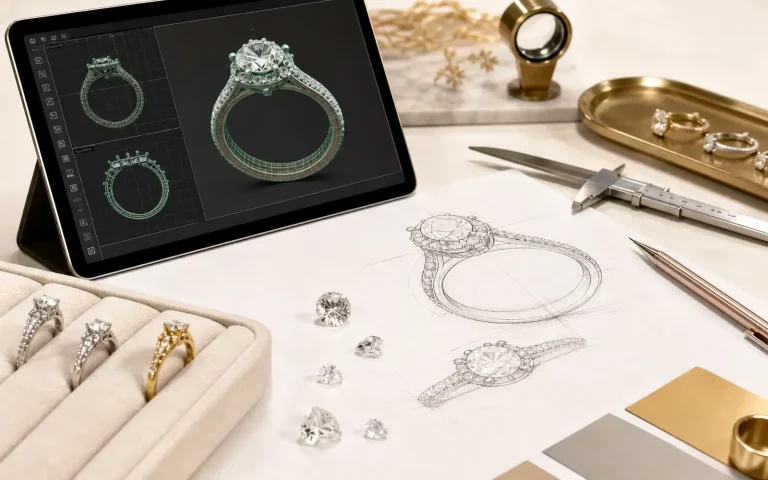
The manufacturer’s CAD team reviews the design, checks structural details, and prepares a 3D model for production approval. This helps identify potential manufacturing problems before prototyping and reduces unnecessary sample revisions.
For OEM jewelry production, CAD approval also establishes the technical reference for subsequent sampling and bulk manufacturing.
What Is CAD in Jewelry Manufacturing?
CAD, or computer-aided design, creates a detailed 3D model of the jewelry before physical production begins.
During CAD development, the manufacturer can check:
- Product dimensions and proportions
- Material thickness
- Stone size and placement
- Connections and structural areas
- Logo or engraving
- Ring size and other measurements
- Overall manufacturability
CAD approval is an important checkpoint because design problems can often be identified before a physical sample is produced.

Jewelry Prototype Manufacturing and Sample Development
Jewelry prototype manufacturing allows brands to evaluate a design before starting full-scale production. Depending on the design and manufacturing method, prototypes may be produced using 3D-printed resin, wax models, or other suitable materials.
During the prototyping stage, manufacturers and buyers can review:
Product dimensions and overall proportions
Weight and material thickness
Stone placement and setting structure
Surface details and logo positioning
Comfort, durability, and wearability
After reviewing the prototype, the buyer can request adjustments before approving the physical sample.
For startups and emerging jewelry brands, prototype manufacturing is especially useful when developing a small collection or testing new designs before placing larger production orders.
Not every jewelry design requires a new mold. The tooling decision depends on the production method, design structure, and expected order quantity.
Does Every Jewelry Design Need a Mold?
No. The manufacturing method depends on the product.
For cast jewelry, a production mold may be created so the approved design can be reproduced consistently. Other products may use methods such as CNC machining, stamping, laser cutting, or other fabrication techniques.
For repeat B2B orders, appropriate tooling and production methods can help maintain consistency between batches.
Casting, Refining and Polishing
Once the design and prototype are approved, production begins.
Depending on the design and manufacturing requirements, jewelry components can be produced using 925 sterling silver, brass, and other suitable precious metal materials. The selected material affects the production method, product weight, surface finishing, and final manufacturing cost.
For custom silver jewelry manufacturing, casting is commonly used to create detailed metal components. After casting, excess material is removed through filing and refining before the pieces move to polishing and subsequent finishing stages.
After casting, the components are refined to remove excess material and correct production imperfections.
Why Is Polishing Important?
Polishing prepares the jewelry surface for its final finish.
The process can include:
- Removing scratches and rough areas
- Smoothing surfaces
- Refining edges
- Preparing the product for plating
- Creating the required surface finish
Detailed jewelry may require careful manual finishing to achieve consistent results, especially around small or complicated areas.

Jewelry Production Methods: Casting, Forming and Assembly
Different jewelry designs require different manufacturing methods. Casting is suitable for many detailed and three-dimensional designs, while stamping, cutting, soldering, and assembly may be used for other product structures.
The production method depends on the base material, design complexity, thickness, product dimensions, and order quantity.
Selecting the appropriate manufacturing method helps improve production consistency, material utilization, and finished product quality.
Gold Plating and Gold Vermeil in Jewelry Manufacturing
Surface finishing is an important stage in gold jewelry manufacturing. The finishing method depends on the base metal, product design, target appearance, and quality requirements.
Common finishing options for custom jewelry production include:
Gold plating for gold-colored jewelry
Rose gold plating for a warm pink tone
Rhodium plating for a bright white finish
Gold vermeil for gold-plated sterling silver jewelry
For gold vermeil production, the base material and gold layer specifications should be confirmed according to the applicable market requirements.
Before bulk production, buyers should confirm the plating color, thickness, finishing requirements, and approved sample to help maintain consistency across production batches.
Stone Setting
The setting method depends on the design. Common techniques include prong, bezel, pavé, and channel settings.
The manufacturer checks:
- Stone alignment
- Stone security
- Setting symmetry
- Prong condition
- Missing or damaged stones
Plating and Surface Finishing
Many jewelry products receive a final surface treatment such as gold plating, rose gold plating, or rhodium plating.
The final finish affects the jewelry’s color and appearance. For B2B production, brands should confirm the base material, plating type, color, and applicable quality requirements before production.

Quality Control Throughout Jewelry Manufacturing
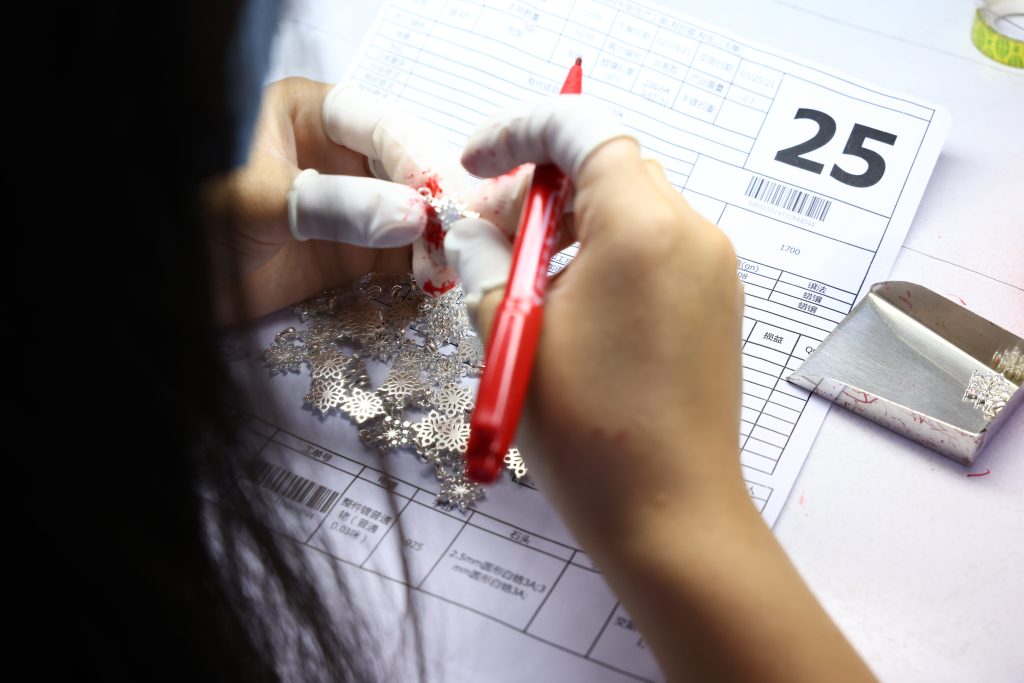
Quality control is essential in contract jewelry manufacturing because products must meet the agreed specifications across different production batches.
A structured inspection process may include:
Incoming Material Inspection
Check the material specifications, components, and stones before production.
In-Process Quality Inspection
Inspect casting quality, product dimensions, soldering, stone setting, polishing, and surface finishing during manufacturing.
Plating Inspection
Review plating color, surface consistency, and the agreed finishing specifications.
Final Product Inspection
Check appearance, weight, dimensions, stone security, logo details, product function, quantity, and packaging before shipment.
For repeat OEM jewelry orders, the approved sample and confirmed specifications provide an important reference for maintaining product consistency.
What Does Jewelry Quality Control Check?
Depending on the product, inspections can include:
- Dimensions and weight
- Casting quality
- Surface finish
- Stone security and alignment
- Plating color and consistency
- Logo and engraving
- Product function
- Final quantity
- Packaging
For a B2B buyer, consistent quality across the entire production batch is especially important because the same product may need to be reordered later.
From Jewelry Sampling to Mass Production
The transition from sample development to mass jewelry production is an important stage for jewelry brands and wholesalers.
Before bulk production begins, the buyer should review and approve the physical sample. The approved sample serves as a reference for product dimensions, weight, materials, stones, plating color, and overall appearance.
A typical OEM jewelry production workflow includes:
Design confirmation and quotation
CAD development and approval
Prototype and sample production
Physical sample review and approval
Bulk order confirmation
Mass jewelry production
In-process and final quality inspection
Packaging and shipment
For small quantity jewelry production, the manufacturer should evaluate the design, material requirements, tooling costs, and production setup before confirming the order quantity.
Once the product specifications and sample are approved, production can proceed according to the agreed order requirements.
How Long Does Custom Jewelry Manufacturing Take?
There is no fixed timeline for every project. Lead time depends on design complexity, material, order quantity, customization, stone setting, plating, packaging, and sample revisions.
At Endless Jewellery, typical projects can have:
| Production Stage | Typical Lead Time |
|---|---|
| Sample development | 7–10 days |
| Bulk production | 20–30 days |
| MOQ | From 30 pcs/design |
Actual lead time and MOQ should be confirmed for each project because requirements vary between products.
What Determines Jewelry Manufacturing Cost?
The cost of jewelry manufacturing depends on material selection, product weight, design complexity, manufacturing methods, order quantity, and finishing requirements. For brands outsourcing jewelry production, understanding these cost factors helps with product budgeting and supplier comparison.
Key Cost Factors
- Material: 925 sterling silver, brass, gold plating, and gold vermeil have different material costs and production requirements.
- Product Weight: More metal generally means higher material cost.
- Design Complexity: Detailed designs may require more CAD development, tooling, finishing, or manual work.
- Stones: Stone type, size, quantity, and setting method affect the final cost.
- Plating: Different plating materials and finishing requirements can change production costs.
- Tooling: Some custom designs require molds or other production tooling.
- Order Quantity: Larger quantities can distribute certain setup costs across more pieces.
- Customization: Logo engraving, custom components, and packaging can increase the overall project cost.
For an accurate quotation, brands should provide the design, material, estimated quantity, and customization requirements whenever possible.
Does Order Quantity Affect Jewelry Manufacturing Costs?
Yes. Order quantity can influence the unit cost of jewelry production because some setup, tooling, and development costs are shared across the order.
Small production runs may have higher unit costs, while larger orders can improve production efficiency when the design and manufacturing process remain consistent.
For new jewelry brands, starting with a manageable sample order can help evaluate product quality and market demand before increasing production quantities.
How Endless Jewellery Handles OEM and Contract Jewelry Manufacturing
Endless Jewellery is a Guangzhou-based B2B jewelry manufacturer in China with over 20 years of jewelry manufacturing experience. We provide OEM, ODM, private label, and custom jewelry production services for jewelry brands, wholesalers, retailers, and growing businesses.
Our factory specializes in 925 sterling silver jewelry, gold-plated jewelry, gold vermeil, and brass jewelry. With 30 production lines and 50 machines, we support jewelry product development, sampling, bulk manufacturing, and finishing.
Our end-to-end jewelry manufacturing services help B2B buyers manage their projects from initial design development to finished products.
Design → CAD → Wax → Casting → Refining → Polishing → Hand Setting → Plating → Quality Control
End-to-End Jewelry Manufacturing for Brands and Wholesalers
End-to-end jewelry manufacturing involves coordinating product development, sample production, material processing, finishing, quality inspection, and final packaging.
For brands outsourcing jewelry production, working with a manufacturing partner that can coordinate these stages helps simplify communication and manage production requirements.
Endless Jewellery supports custom jewelry projects with:
OEM and ODM jewelry manufacturing
Custom CAD design and product development
Jewelry prototyping and sample production
925 sterling silver and gold vermeil production
Gold plating and brass jewelry manufacturing
Logo engraving and customized packaging
Flexible MOQ and bulk production
Endless Jewellery supports custom jewelry projects with:
We work with jewelry brands, wholesalers, retailers, and private label businesses that need custom production and repeat manufacturing support.
Our Manufacturing Capabilities
Endless Jewellery works with materials and product categories including:
- 925 sterling silver
- Gold-plated jewelry
- Gold vermeil
- Brass jewelry
- Custom gemstone jewelry
- Rings
- Necklaces
- Earrings
- Bracelets
- Pendants
With 30 production lines and 50 machines, our factory supports custom jewelry production from product development and manufacturing to finishing and quality inspection.
For B2B customers, we also support:
- OEM jewelry manufacturing
- ODM jewelry manufacturing
- Private label jewelry
- Custom CAD development
- Logo engraving
- Custom packaging
- Low MOQ production
- Bulk production
As a direct jewelry factory, we offer flexible MOQ options, so brands can start with the quantity that best fits their needs without worrying too much about minimum order requirements.
What Should You Ask a Jewelry Manufacturer Before Production?
Choosing the right contract jewelry manufacturer is important for businesses planning to outsource jewelry production. Before starting a project, buyers should evaluate the factory’s manufacturing capabilities, material experience, sampling process, quality control procedures, and production capacity.
A reliable manufacturing partner should be able to explain how custom designs are developed, how samples are approved, and how finished products are inspected before shipment.
Product Specifications
Confirm the material, dimensions, weight, stones, plating, finish, and logo requirements.
Sample and Production
Ask about sample lead time, sample approval, bulk production time, and production capacity.
MOQ and Pricing
Confirm the MOQ per design and what factors are included in the quotation.
Quality Control
Ask how the manufacturer checks materials, dimensions, finishing, stone setting, plating, and final products.
Branding and Packaging
If you are building a private label jewelry brand, confirm logo engraving, tags, packaging, and other branding requirements.
Can Jewelry Production Be Outsourced to a Manufacturer?
Yes. Jewelry brands, retailers, and wholesalers can outsource jewelry production to an OEM or contract jewelry manufacturer. Depending on the supplier’s capabilities, services may include CAD development, prototyping, casting, polishing, stone setting, plating, quality inspection, and packaging.
Outsourcing allows businesses to work with specialized production teams without establishing their own jewelry manufacturing facilities. Before choosing a supplier, buyers should confirm materials, MOQ, sample approval procedures, production timelines, and quality standards.
Frequently Asked Questions About Jewelry Manufacturing
How is jewelry manufactured?
Jewelry is manufactured through a combination of design, CAD development, prototyping, casting or forming, refining, polishing, stone setting, plating, quality control, and bulk production. The exact process depends on the design and material.
What Is Contract Jewelry Manufacturing?
Contract jewelry manufacturing is a business arrangement in which a jewelry brand or retailer hires an external manufacturer to produce jewelry according to agreed designs, materials, specifications, and quality requirements. The manufacturer may support sampling, production, finishing, inspection, and packaging.
What Is the Difference Between OEM and ODM Jewelry Manufacturing?
OEM jewelry manufacturing involves producing jewelry based on a buyer’s own designs or specifications. ODM jewelry manufacturing involves developing products based on the manufacturer’s design and development capabilities, which buyers can select or further customize.
How Does Jewelry Prototype Manufacturing Work?
Jewelry prototype manufacturing starts with an approved design or CAD model. The manufacturer creates a physical prototype using a suitable production method, allowing the buyer to review dimensions, structure, details, and appearance before final sample approval.
Can I Outsource Jewelry Production to a Factory in China?
Yes. Jewelry brands and wholesalers can work with Chinese jewelry manufacturers for custom OEM, ODM, and private label production. Buyers should confirm the factory’s materials, manufacturing capabilities, sampling process, quality control, MOQ, and delivery arrangements before placing an order.
Can Jewelry Manufacturers Accept Small Quantity Production Orders?
Some jewelry manufacturers support small quantity production depending on the design, material, tooling requirements, and production process. MOQ should be confirmed with the manufacturer for each project before sampling or bulk production.
How Long Does End-to-End Jewelry Manufacturing Take?
The timeline depends on product complexity, materials, sample revisions, and order quantity. At Endless Jewellery, typical sample development takes around 7–10 days, while bulk production generally takes 20–30 days after order confirmation. CAD development typically takes 24–48 hours, depending on the design.
Start Your Custom Jewelry Manufacturing Project
Understanding the jewelry manufacturing process helps brands make better decisions about design, materials, quality, lead time, and production costs.
From CAD development and prototyping to casting, polishing, stone setting, plating, quality control, and bulk production, each stage contributes to the final product.
If you have a jewelry design, sketch, reference image, or existing collection, Endless Jewellery can help turn your concept into a production-ready jewelry product.
Send us your design and estimated quantity to discuss custom jewelry manufacturing, MOQ, sampling, production time, and pricing.
About Endless Jewellery
Endless Jewellery is a B2B jewelry manufacturer in Guangzhou, China, specializing in OEM, ODM, private label, and wholesale jewelry manufacturing. Our capabilities cover product development, CAD, casting, polishing, stone setting, plating, quality control, and customized production for jewelry brands and retailers.
Have a jewelry design idea or some questions?