OEM vs ODM Jewelry Manufacturing: Which Route Fits Your Jewelry Brand?
Table of Contents
Launching a jewelry brand requires more than attractive designs. The manufacturing model you choose can affect product development, customization, production costs, quality control, launch timelines, and long term brand positioning.
The two most common models are OEM jewelry manufacturing and ODM jewelry manufacturing. OEM focuses on producing jewelry based on a brand’s own designs and specifications, while ODM allows brands to select and customize designs developed by a manufacturer.
Understanding the difference between OEM and ODM jewelry manufacturing can help jewelry brands, wholesalers, retailers, and e commerce businesses choose a production strategy that fits their product goals.
For brands working with an experienced ODM jewellery manufacturer or jewelry OEM manufacturer, the key considerations include design ownership, customization requirements, development costs, production capabilities, MOQ, quality control, and communication.
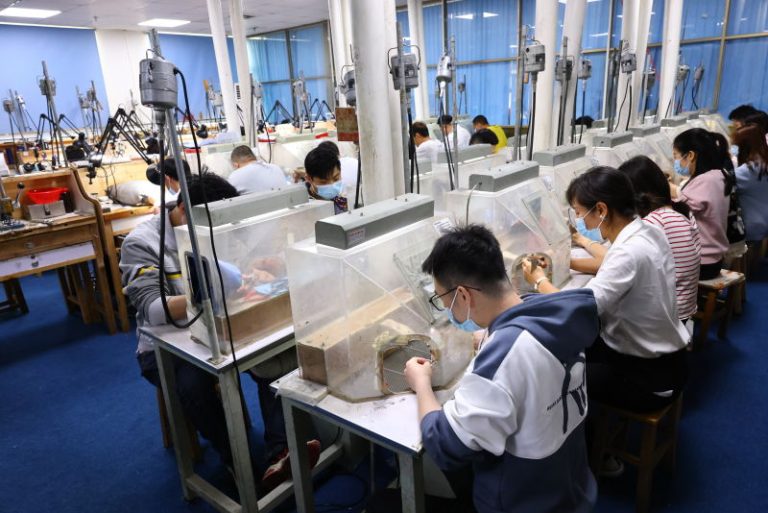
At Endless Jewellery, we provide OEM, ODM, and private label jewelry manufacturing from our production facility in Panyu, Guangzhou, China. Our factory has 15+ years of jewelry manufacturing experience, 30 production lines, and 50 machines, supporting custom jewelry development from CAD and sampling through bulk production and quality inspection.
What Is OEM Jewelry Manufacturing?
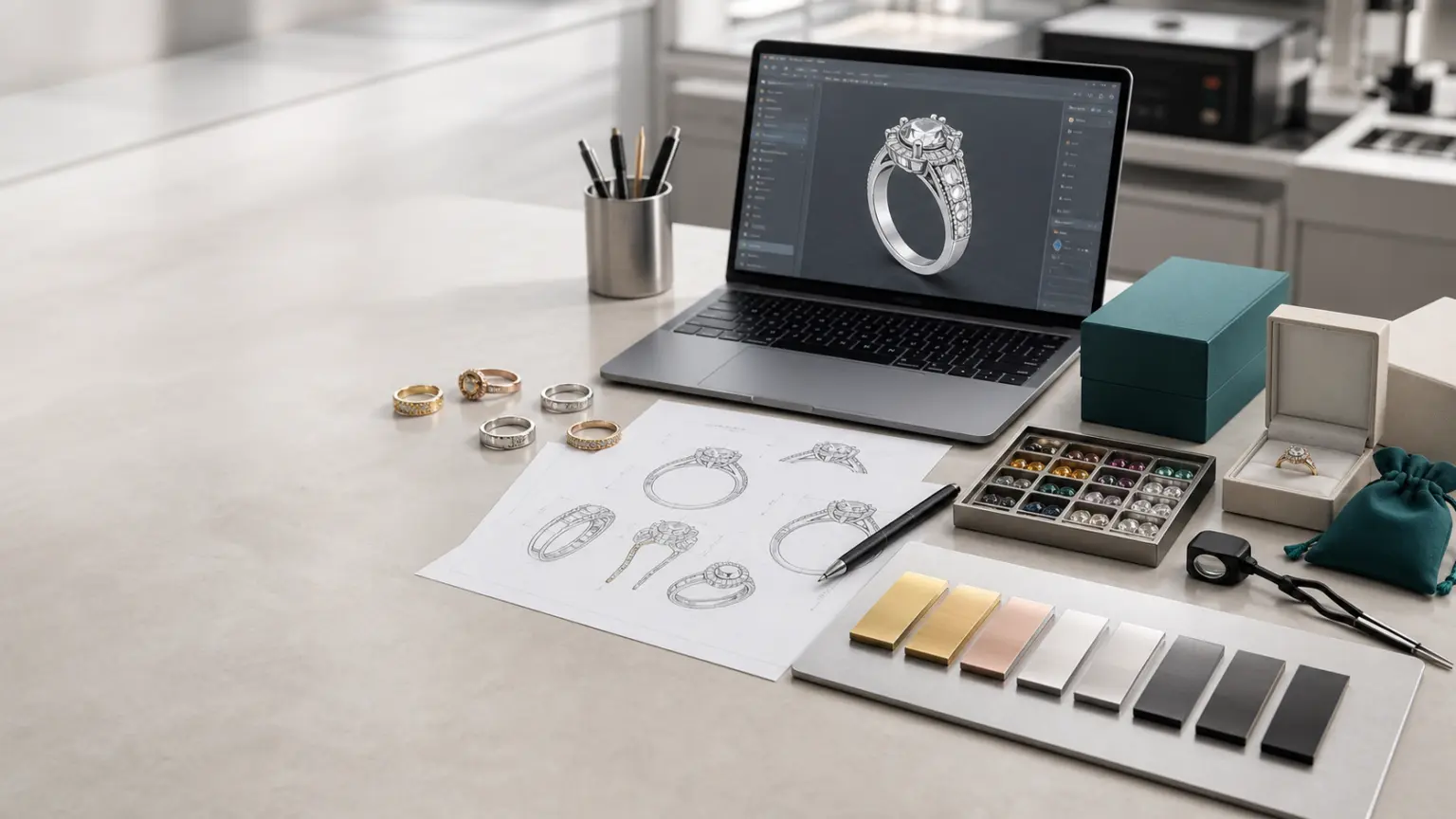
OEM jewelry manufacturing means a jewelry manufacturer produces jewelry based on a customer’s own designs, concepts, drawings, or technical specifications.
In an OEM model, the jewelry brand generally controls the creative direction and product specifications, while the manufacturer provides the technical and production capabilities needed to turn the design into a finished product.
An OEM jewelry project may include:
- Jewelry design provided by the brand
- Custom CAD development
- Material selection
- Gemstone selection
- Plating requirements
- Product dimensions and specifications
- Logo engraving
- Custom packaging
The manufacturer may handle mold making, casting, polishing, stone setting, electroplating, quality inspection, and packaging according to the approved product specifications.
OEM is particularly suitable for brands that already have their own designs and want greater control over the final product.
What Does OEM Jewelry Mean for a Brand?
When buyers search for OEM jewelry meaning, they are usually looking for a simple explanation of how the manufacturing relationship works.
In practical terms, OEM jewelry means that the brand provides the product concept or design requirements, while the jewelry manufacturer handles the technical development and physical production.
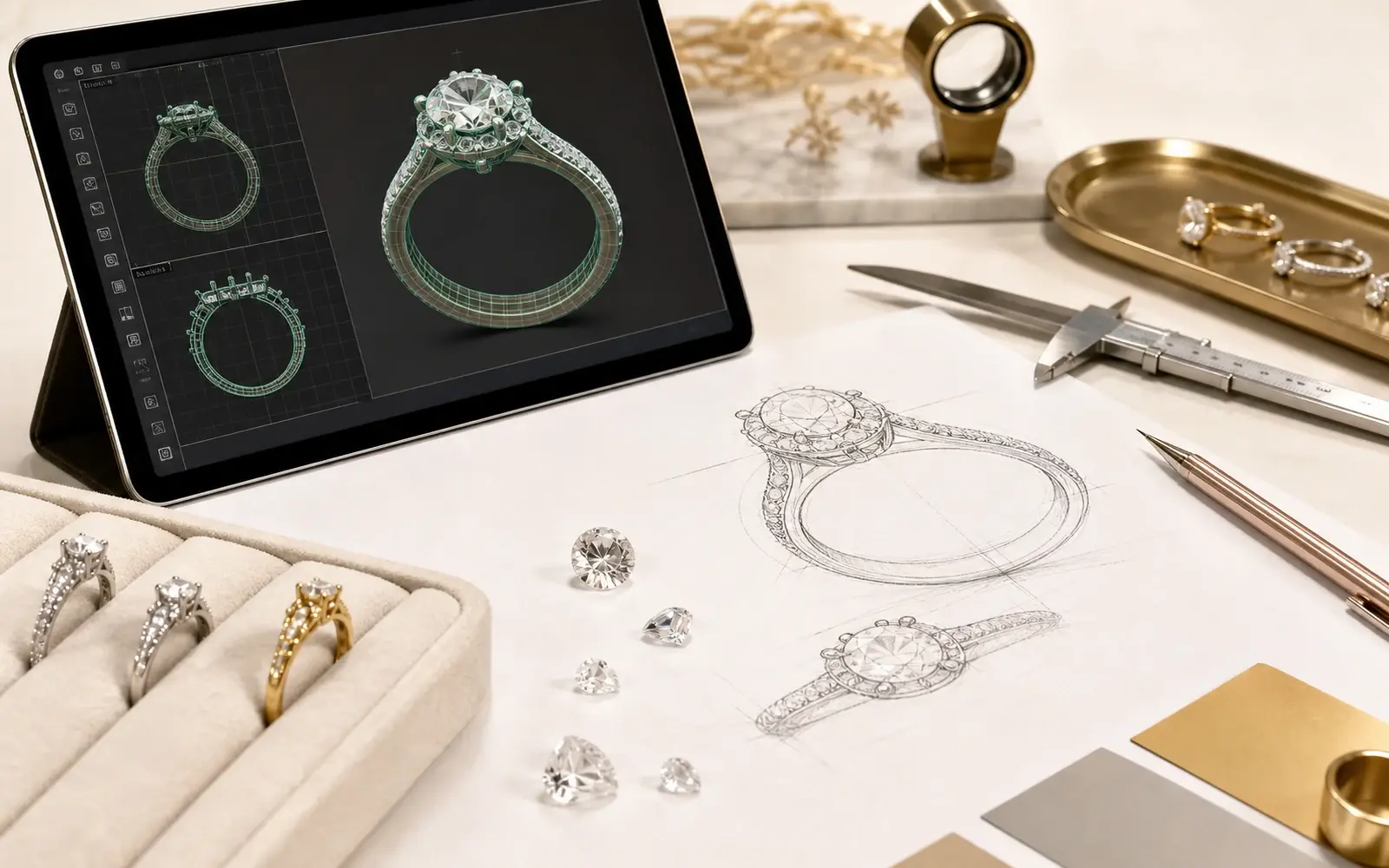
For example, a jewelry brand may provide a hand drawn ring design. The manufacturer can convert the concept into a 3D CAD model, prepare a sample, confirm the material and finishing requirements, and then manufacture the approved design.
This model gives brands more control over product development and is often used for signature collections and custom jewelry.
Advantages of OEM Jewelry Manufacturing
1. Greater Design Control
OEM allows brands to develop jewelry around their own product concepts.
Whether you need custom rings, necklaces, earrings, bracelets, or pendants, the manufacturer can help convert your specifications into production ready jewelry.
This is useful for brands that already have a defined visual identity and want their products to reflect specific design requirements.
2. Stronger Product Differentiation
Because OEM projects are based on customer supplied designs or concepts, brands can develop products that are more closely aligned with their own identity.
OEM jewelry can be suitable for:
- Jewelry brands with original designs
- Independent jewelry designers
- Private label jewelry businesses
- E commerce jewelry brands
- Retailers developing exclusive collections
- Brands creating signature products
For ODM private label jewelry, the design source is different, which is why brands should understand the distinction between OEM, ODM, and private label manufacturing before choosing a production model.
3. Flexible Material and Production Options
An experienced jewelry OEM manufacturer can support different material and finishing requirements depending on the product.
Common options include:
- 925 sterling silver
- Gold jewelry
- Gold plated jewelry
- Gold vermeil jewelry
- Brass jewelry
- Gemstone jewelry
Material selection should be based on the product design, target retail positioning, required durability, plating specifications, gemstone requirements, and production budget.
OEM Jewelry Manufacturing Cost Considerations
Material and production specifications directly affect the cost of an OEM jewelry project.
For example, the final quotation may depend on:
- Material type
- Product weight
- Design complexity
- Gemstone type and quantity
- Plating specification
- Mold requirements
- Production quantity
- Packaging requirements
A professional jewelry manufacturer should provide a quotation based on the actual product specification rather than giving a generic price based only on the jewelry category.
For B2B buyers, comparing quotations also requires checking what is included in the quoted price.
What Is ODM Jewelry Manufacturing?
ODM jewelry manufacturing allows brands to select, modify, and customize designs developed by a jewelry manufacturer.
Instead of developing every product from the beginning, a brand can start with existing manufacturer designs and adjust selected specifications according to its collection requirements.
Depending on the manufacturer, ODM customization may include:
- Material selection
- Plating color
- Gemstones
- Product size
- Design details
- Logo application
- Packaging
This approach can help brands develop collections more efficiently when they do not have a complete product design library of their own.
For brands searching for an ODM jewelry manufacturer, the most important questions are usually whether the manufacturer has suitable designs, how much customization is available, how the brand’s specifications are handled, and how the manufacturer controls product quality.
Advantages of ODM Jewelry Manufacturing
1. Faster Product Development
ODM can reduce the amount of design development required because the manufacturer already has existing product concepts or designs.
This can be useful for brands that want to test a new category, expand an existing collection, or respond to seasonal market demand.
2. Lower Initial Development Requirements
Compared with developing every product from an original concept, ODM may reduce the amount of work required for:
- Initial design development
- CAD development
- Mold development
- Prototype preparation
- Product sampling
The actual cost and timeline still depend on the design and the level of customization required.
3. Access to Manufacturer Design and Production Experience
An experienced ODM jewellery manufacturer can provide more than an existing design library.
The manufacturer may also provide practical production input regarding:
- Product structure
- Material selection
- Stone setting
- Plating
- Manufacturing feasibility
- Production efficiency
- Product finishing
This production knowledge can help brands identify potential manufacturing problems before entering bulk production.
OEM vs ODM Jewelry Manufacturing: Key Differences
| Factor | OEM Jewelry Manufacturing | ODM Jewelry Manufacturing |
|---|---|---|
| Design source | Customer design or concept | Manufacturer developed design |
| Customization | High | Moderate to high depending on supplier |
| Development work | More customer specific development | Existing design can reduce development work |
| Design control | Higher | Shared between brand requirements and manufacturer design |
| Development cost | Depends on design complexity | Often lower for existing designs |
| Launch timeline | Depends on custom development | Often faster for existing designs |
| Product uniqueness | High when based on exclusive designs | Depends on customization and design availability |
| Best suited for | Brands with original designs | Brands seeking faster product development |
| Production model | Custom manufacturing | Design based manufacturing with customization |
There is no universal answer when comparing OEM and ODM. The right model depends on the brand’s design resources, product strategy, development budget, desired level of customization, and launch timeline.
OEM Jewelry vs ODM Jewelry: Which Model Fits Your Brand?
The difference becomes easier to understand when you look at the actual business requirements.
Choose OEM Jewelry Manufacturing If You:
- Already have original jewelry designs
- Need extensive customization
- Want stronger control over product specifications
- Are developing signature or exclusive products
- Have specific material or manufacturing requirements
- Want products closely aligned with your brand identity
For example, a jewelry brand with its own sterling silver ring designs may choose OEM production so the manufacturer can develop the CAD, sample, and final product according to the brand’s specifications.
Choose ODM Jewelry Manufacturing If You:
- Need to develop products quickly
- Do not have a complete design library
- Want to start from existing manufacturer designs
- Need inspiration for a new collection
- Want to test a new product category
- Prefer to reduce some of the initial design development work
ODM can be useful for new and growing brands that want to expand their product range without developing every product completely from scratch.
Can a Brand Use Both OEM and ODM?
Yes. A jewelry brand does not necessarily need to use only one manufacturing model.
For example, a brand may use OEM for signature products that require original designs and use ODM for seasonal collections or products intended for faster market testing.
The most suitable approach depends on the role each product plays within the brand’s overall collection.
OEM and ODM Jewelry Production Process
Although OEM and ODM use different design sources, both can follow a similar manufacturing workflow after the product specifications are confirmed.
A professional production workflow usually includes:
1. Design Development and CAD
For OEM projects, the brand provides its design, sketch, reference image, or technical requirements.
For ODM projects, the brand starts with an existing manufacturer design and confirms the required modifications.
The design is then developed into a production ready CAD file.
At Endless Jewellery, CAD development is part of our custom jewelry production process, allowing dimensions, structure, materials, and finishing requirements to be reviewed before sampling.
2. Sample Production
Before bulk production, the manufacturer produces a physical sample.
The sample can be checked for:
- Dimensions
- Weight
- Product structure
- Surface finishing
- Stone setting
- Plating
- Overall appearance
Sample approval is an important quality control stage because it establishes the reference standard for bulk production.
3. Manufacturing and Finishing
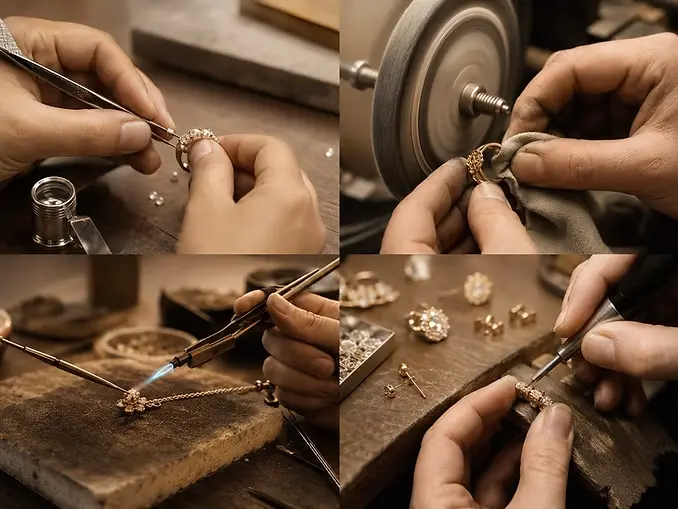
After sample approval, production may include:
- Mold making
- Casting
- Cutting
- Polishing
- Stone setting
- Electroplating
- Assembly
- Final finishing
The exact process depends on the jewelry design and selected material.
4. Quality Control and Packaging
Before shipment, finished jewelry should be checked against the approved specifications.
Quality inspection may cover:
- Product dimensions
- Surface finishing
- Plating appearance
- Stone security
- Product structure
- Color consistency
- Packaging requirements
Endless Jewellery maintains quality control throughout production, including material checks, in process inspection, and final product inspection.
For buyers who want to understand our quality control approach in more detail, see our jewelry quality control service.
How to Choose an OEM or ODM Jewelry Manufacturer
Choosing an OEM or ODM supplier involves more than comparing unit prices.
A reliable manufacturing partner should be able to demonstrate relevant production experience, clear communication, suitable production capacity, and a defined quality control process.
1. Check Manufacturing Experience
Look for a manufacturer with experience producing the type of jewelry you plan to sell.
Useful questions include:
- How many years has the factory produced jewelry?
- Does the factory support OEM and ODM production?
- Can the manufacturer work with your required materials?
- Can the supplier provide relevant production examples?
- Does the factory have in house production capabilities?
When evaluating a jewelry factory, ask whether it has:
The finishing specification can significantly affect the appearance and performance of the finished jewelry.
2. Evaluate Production Capability
Ask whether the manufacturer can support the complete production process required for your collection.
Important capabilities may include:
- CAD development
- Sampling
- Casting
- Polishing
- Stone setting
- Electroplating
- Quality inspection
- Logo engraving
- Custom packaging
A manufacturer with suitable in house capabilities can simplify communication and reduce the number of suppliers involved in a project.
3. Confirm MOQ and Production Timeline
MOQ can vary depending on the material, design complexity, production process, and customization requirements.
At Endless Jewellery, our standard MOQ can start from 30 pieces per design, depending on the project.
For custom projects, typical timelines include:
- CAD development: 24 to 48 hours
- Sample production: 7 to 10 days
- Bulk production: 20 to 30 days
The final timeline should always be confirmed according to the specific product and order requirements.
4. Review Quality Control Procedures
Do not evaluate a jewelry manufacturer only by the final product photos.
Ask how the factory manages quality during production.
Useful quality control points include:
- Incoming material inspection
- Design and dimension checks
- Stone setting inspection
- Surface finishing inspection
- Plating inspection
- Final quality inspection
You can also ask what testing or compliance documentation is available for your specific material, product type, and target market.
5. Evaluate Communication and Project Support
Communication becomes especially important for OEM jewelry product manufacturing because small differences in dimensions, materials, plating, or finishing can affect the final product.
A reliable supplier should be able to provide:
- Clear quotations
- Production timelines
- CAD confirmation
- Sample updates
- Production communication
- Quality inspection feedback
- Packaging confirmation
- After sales support
For international B2B projects, clear communication from the first quotation through final production can significantly reduce misunderstandings.
Why Choose Endless Jewellery for OEM and ODM Jewelry Manufacturing?
Endless Jewellery is a B2B jewelry manufacturer based in Panyu, Guangzhou, China, providing OEM, ODM, and private label jewelry manufacturing for brands, wholesalers, retailers, and e commerce businesses.
With 15+ years of jewelry manufacturing experience, our factory operates with 30 production lines and 50 machines to support custom jewelry production from design development and sampling through bulk manufacturing and quality inspection.
Our production capabilities include:
- OEM jewelry manufacturing
- ODM jewelry manufacturing
- Private label jewelry production
- Custom jewelry development
- 925 sterling silver jewelry
- Gold jewelry
- Gold plated jewelry
- Gold vermeil jewelry
- Brass jewelry
- Custom gemstone jewelry
Our production process can include CAD development, casting, polishing, stone setting, electroplating, quality inspection, logo engraving, and custom packaging.
For brands starting with smaller production runs, our MOQ can start from 30 pieces per design, depending on the product and manufacturing requirements.
Typical project references include:
- CAD development: 24 to 48 hours
- Sample production: 7 to 10 days
- Bulk production: 20 to 30 days
For brands looking specifically for private label production, our private label jewelry manufacturing service supports existing or adapted designs, custom jewelry development, logo engraving, plating, and custom packaging.
Final Thoughts: OEM or ODM Jewelry Manufacturing
The choice between OEM and ODM jewelry manufacturing depends on how much control your brand needs over design, how quickly you want to develop products, and how much product development work you want to handle internally.
OEM jewelry manufacturing is suitable for brands that have original designs and need greater control over product specifications and customization.
ODM jewelry manufacturing can be suitable for brands that want to start with manufacturer developed designs and bring products to market with less initial design development.
Some brands use both models, using OEM for signature products and ODM for selected collections or market testing.
The most important step is to choose a manufacturing partner that can meet your requirements for design development, materials, production capacity, MOQ, quality control, communication, and delivery.
FAQs
1.What is OEM jewelry manufacturing?
OEM jewelry manufacturing means a jewelry manufacturer produces jewelry based on a customer’s own designs, concepts, or product specifications. The manufacturer manages the required production processes to turn the approved design into finished jewelry.
2.What is OEM jewelry meaning?
OEM jewelry refers to jewelry manufactured according to a brand’s own design or specifications. The brand generally controls the product concept, while the manufacturer provides technical development and production capabilities.
3.What is the difference between OEM and ODM jewelry?
OEM generally starts with a customer supplied design or concept, while ODM starts with a manufacturer developed design that can be selected and customized by the brand.
4.What is ODM jewelry?
ODM jewelry refers to jewelry developed from designs created by the manufacturer. Brands can usually customize selected details such as materials, colors, gemstones, sizes, logos, or packaging depending on the supplier.
5.What is an ODM jewelry manufacturer?
An ODM jewelry manufacturer develops or provides jewelry designs that brands can select and customize for their own collections. The manufacturer may support design modification, CAD development, sampling, production, quality control, and packaging.
6.What is ODM private label jewelry?
ODM private label jewelry combines manufacturer developed designs with a brand’s own branding. The brand may customize selected product details and apply its own logo and packaging while the manufacturer manages production.
7.What is the MOQ for OEM jewelry?
MOQ depends on the material, design complexity, production process, and customization requirements. At Endless Jewellery, MOQ can start from 30 pieces per design for suitable projects.
Have a jewelry design idea or some questions?