How to Build a Private Label 925 Sterling Silver Jewelry Collection
Building a private label 925 silver jewelry collection starts with choosing the right products, not simply adding as many designs as possible. For a new or growing jewelry brand, a focused collection can make sampling, inventory planning, branding, and reordering easier.
This guide explains how to plan a 925 sterling silver jewelry collection from product categories and SKU numbers to plating, gemstones, packaging, MOQ, and repeat production.
From Idea to a Sellable Collection in 6 Steps
A practical jewelry collection development process can follow six steps:
- Choose product categories and define the role of each product.
- Decide how many SKUs to launch.
- Build a consistent 925 silver and plating mix.
- Use gemstones to create different price points.
- Plan logo and packaging according to your budget.
- Test, reorder, and replace products based on sales performance.
If you are still developing your overall brand plan, see our guide on how to start a private label jewelry brand.
Step 1: Choose Your Product Categories
A strong collection needs a clear product mix. Instead of creating many similar designs, assign different roles to your products.
Build a Three Layer Product Mix
Traffic products can include simple rings, hoop earrings, minimalist necklaces, and everyday bracelets. These designs are generally easier for customers to understand and can help attract first time buyers.
Margin products can use more detailed designs, gemstones, or stronger visual elements. Examples include gemstone rings, layered necklaces, and statement earrings.
Brand image products should communicate the collection’s unique design identity. These can include signature pendants, distinctive gemstone pieces, or custom designs.
This structure helps a new brand build a collection with different commercial purposes instead of treating every SKU the same way.

Step 2: Decide How Many SKUs to Launch
One common question when building a jewelry collection for a new brand is how many products to launch.
For many small and growing brands, 20 to 40 SKUs can be a practical starting range. This is not a fixed industry standard. The right number depends on budget, target market, product categories, and design complexity.
| Collection Size | Planning Approach |
|---|---|
| 20 SKUs | Focus on core designs |
| 30 SKUs | Balanced range across key categories |
| 40 SKUs | Broader collection with more variation |
Starting with 100 SKUs can increase sampling, photography, packaging, inventory, and reordering complexity.
For many new brands, the objective is to launch enough products to test demand while keeping the initial investment manageable.
Step 3: Build a Material and Finish Mix
A 925 sterling silver collection can use different finishes while keeping the core material consistent.
| Finish | Typical Collection Role |
|---|---|
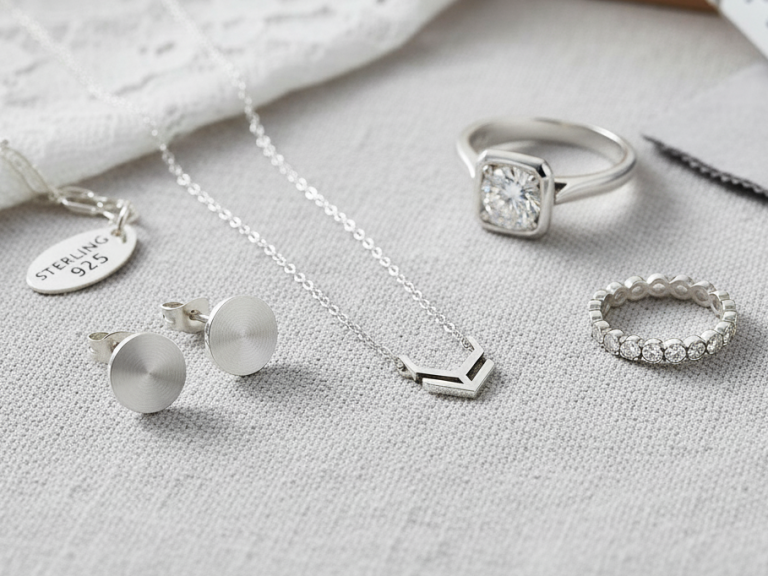
| Rhodium plated 925 silver | Bright, everyday silver styles |
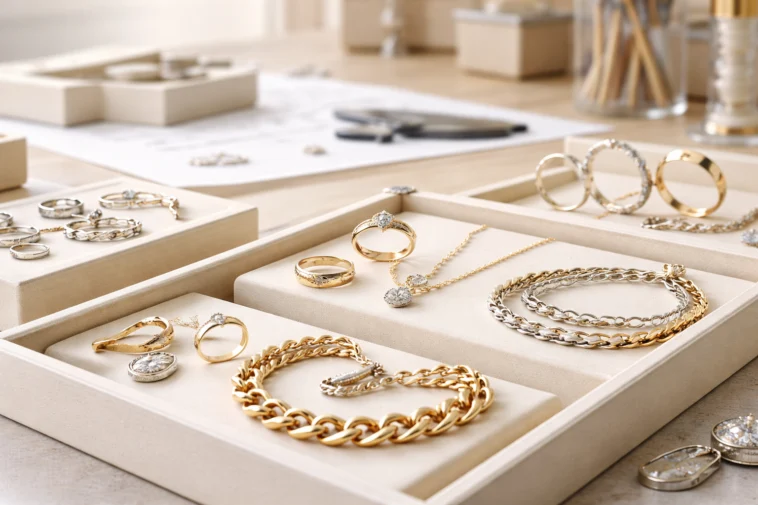
| Gold plated 925 silver | Fashion focused designs |
| Gold vermeil | Higher perceived value |
| Natural silver finish | Classic and minimalist styles |
The important point is to define specifications before sampling, including the silver material, plating color, karat where applicable, and plating requirements.
For a private label jewelry product line, consistent specifications help different designs look and feel like part of one collection.
Avoid turning this section into a general silver or plating guide. The purpose here is to explain how different finishes can be used within one product range.

Step 4: Use Gemstones to Create Price Points
Gemstones can help a brand create different price levels without changing the overall collection style.
Create Entry, Mid Range and Premium Products
For jewelry businesses, offering custom silver rings helps build stronger connections with clients and increases brand value. As a silver jewelry manufacturer, creating personalized pieces demonstrates craftsmanship and attention to detail, which enhances customer trust and loyalty.
- Entry level: Cubic zirconia can be used for accessible everyday designs.
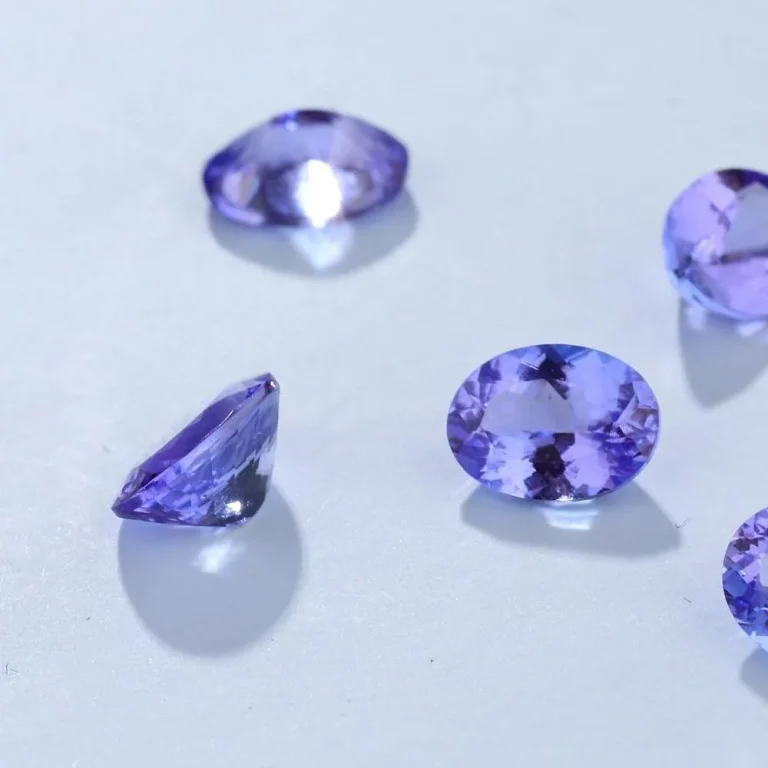
- Mid range: Moissanite can add a more premium appearance to selected pieces.
- Premium: Natural gemstones can be reserved for signature designs or higher value products.
The goal is not to use every gemstone type. Choose stones that match the collection’s target customer, design language, and price range.

Step 5: Match Branding and Packaging to Your Budget
Branding can be developed in stages rather than adding every customization option to the first order.
Product Level Branding
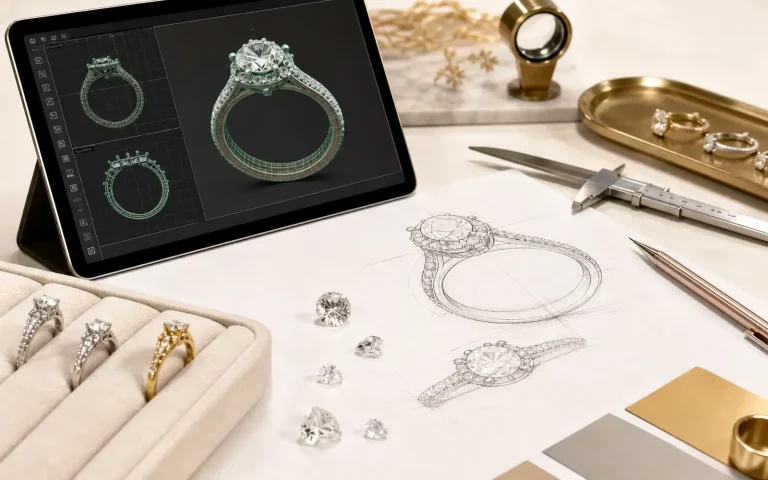
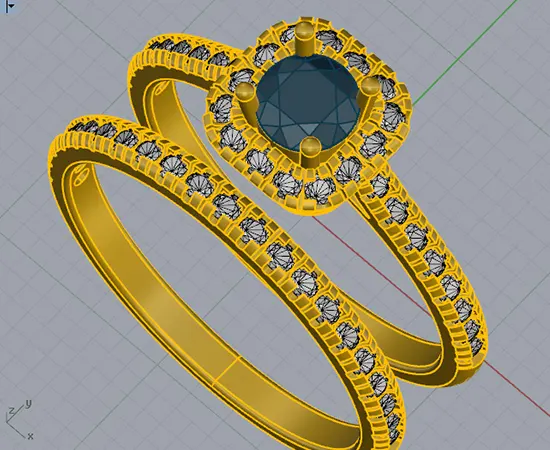
Logo engraving or other product branding can be considered during CAD development. Planning logo placement early can help integrate the branding naturally into the design.
Branded Packaging
Depending on the budget, brands can use jewelry cards, pouches, stickers, care cards, or customized jewelry boxes.
The key is consistency across the collection. A simple but coordinated packaging system can create a stronger brand presentation than using too many unrelated elements.
For more packaging ideas, see creative jewelry packaging ideas.
Step 6: Plan Sampling, MOQ and Reorders
Sampling is an important part of the jewelry collection development process.
Before bulk production, review:
- Material and specifications
- Dimensions and weight
- Stone setting
- Plating finish
- Logo placement
- Overall workmanship
For a new collection, it can be practical to sample a focused group of designs first and use the results to guide the initial bulk order.
A low MOQ can also allow brands to test more designs without committing large quantities to every SKU. See our guide to low MOQ jewelry wholesale.
Use Sales Results to Plan Reorders
After launch, products can be reviewed in three groups:
- Best sellers: Maintain stock and consider increasing reorder quantities.
- Potential products: Continue monitoring customer response.
- Slow movers: Reduce quantities, improve the design, or replace the SKU.
This creates a practical cycle:
Launch → Test → Reorder → Review → Expand or Replace
Keep Product Consistency Across Reorders
Consistency becomes increasingly important when a jewelry collection moves from the first order to repeat production.
Keep approved specifications for:
- 925 sterling silver material
- Product dimensions and weight
- Stone type and size
- Plating finish
- Logo position
- Packaging
- Quality requirements
An approved production sample can also be retained as a reference for future batches.
From a factory perspective, production steps such as casting, polishing, stone setting, electroplating, assembly, and quality inspection all affect the consistency of a finished jewelry collection.
At Endless Jewelry, these production and inspection processes are handled in our Guangzhou, China factory, supporting brands from sampling through bulk production and repeat orders.
Example: Planning a 30 SKU First Collection
A 30 SKU collection can provide variety while remaining manageable for a new brand.
| Category | Example SKUs |
|---|---|
| Rings | 6 |
| Earrings | 8 |
| Necklaces | 7 |
| Bracelets | 5 |
| Pendants | 4 |
| Total | 30 |
This is only an example. The ideal allocation depends on the target market and the brand’s product positioning.
When planning the initial budget, consider:
| Category | Example SKUs |
|---|---|
| Rings | 6 |
| Earrings | 8 |
| Necklaces | 7 |
| Bracelets | 5 |
| Pendants | 4 |
| Total | 30 |
Keeping part of the budget available for reorders and new product development can give a new brand more flexibility after the first collection launches.
FAQ
1.How many pieces should be in a first jewelry collection?
For many small and growing brands, 20 to 40 SKUs can be a practical starting range. The right number depends on budget, target customers, product categories, and design complexity.
2.How many SKUs should a private label jewelry collection have?
There is no fixed number. A focused collection of around 20 to 40 SKUs can provide enough variety for market testing while keeping sampling and inventory more manageable.
3.What materials work well for a 925 sterling silver collection?
925 sterling silver can be offered with finishes such as rhodium plating, gold plating, gold vermeil, or a natural silver finish. The choice should match the collection’s design and target price range.
4.Can gold plated and rhodium plated jewelry be in the same collection?
Yes. Different finishes can be combined when the designs, branding, and quality specifications create a consistent overall collection.
5.What MOQ should I plan for a new private label jewelry collection?
MOQ depends on the manufacturer, design, material, and production requirements. A low MOQ can help new brands test multiple designs before committing to larger quantities.
Have a jewelry design idea or some questions?