How to Source 925 Sterling Silver Jewelry From China: A B2B Buyer’s Guide
China is one of the world’s major jewelry manufacturing markets, offering established production supply chains, custom development capabilities, flexible order quantities, and a wide range of jewelry manufacturing services.
For jewelry brands, wholesalers, retailers, and e-commerce businesses, sourcing from China involves more than comparing unit prices. A reliable sourcing process should cover supplier research, factory verification, product specifications, sampling, quality control, production, packaging, and shipping.
This guide explains how to source 925 sterling silver jewelry from China and what B2B buyers should prepare before working with a Chinese jewelry manufacturer.
Why Source 925 Sterling Silver Jewelry From China?
China offers jewelry buyers access to established manufacturing supply chains, a wide range of production processes, and suppliers serving different order sizes and product requirements.
For B2B buyers, the main sourcing advantages include:
Access to multiple jewelry suppliers and manufacturing options
Opportunities to compare quotations for the same product specifications
Sampling before committing to bulk orders
Flexible packaging and shipping arrangements
Opportunities to build long term supplier relationships
However, supplier capabilities and production terms vary. Buyers should verify the actual manufacturing location, material specifications, quality standards, order requirements, and shipping arrangements before selecting a supplier.
The goal is not simply to find a low price, but to identify a supplier that can meet the product and delivery requirements consistently.
Where to Source 925 Sterling Silver Jewelry From China
There are several ways to identify potential Chinese jewelry suppliers.
Jewelry Manufacturing Centers
Guangzhou and Panyu are established jewelry manufacturing areas in China.
For buyers looking for custom sterling silver jewelry, suppliers in manufacturing clusters may offer services covering product development, CAD, casting, polishing, stone setting, plating, inspection, and packaging.
The manufacturing location itself does not guarantee quality, however. Buyers should still verify the supplier’s actual capabilities and production processes.
Direct Manufacturer Websites
Searching for Chinese jewelry manufacturers directly can help buyers understand a supplier before starting a quotation.
A manufacturer’s website should ideally provide useful information about:
- Factory location
- Jewelry materials
- Product categories
- OEM and ODM services
- Sampling
- MOQ
- Production lead time
- Quality control
- Custom packaging
A supplier that provides detailed manufacturing information gives buyers more information to evaluate than a website that only displays product photographs.
B2B Marketplaces
B2B marketplaces can help buyers discover a large number of Chinese jewelry suppliers.
However, marketplace listings should be treated as a starting point rather than proof that a company is a direct factory.
Before placing an order, confirm:
- Whether the company manufactures jewelry directly
- Where production takes place
- Which processes are performed in house
- What materials are used
- How samples are developed
- How quality is inspected
- What production terms apply
When comparing marketplace suppliers, do not rely on product listings or company descriptions alone. Request clear information about the actual production location, the legal business entity, relevant product experience, inspection procedures, and order terms. For larger orders, consider a factory visit or independent verification before making a commitment.
Jewelry Trade Shows
Jewelry trade shows provide another opportunity to meet manufacturers and compare suppliers.
Meeting suppliers in person allows buyers to examine samples, discuss custom designs, compare finishing quality, and understand how the supplier approaches product development.
For buyers planning long term cooperation, trade shows can also make it easier to discuss production requirements directly with the manufacturer’s sales and product development teams.


What Information Should You Send a China Jewelry Manufacturer?
Before requesting a quotation, prepare as much product information as possible.
The more complete the specification, the easier it is for a manufacturer to calculate pricing and production requirements accurately.
Your initial inquiry should ideally include:
- Product category
- Reference images
- CAD files or technical drawings
- Material
- Product dimensions
- Approximate weight if available
- Plating requirements
- Stone specifications
- Logo or engraving requirements
- Quantity
- Packaging requirements
- Target delivery date
For example, a buyer developing a custom sterling silver ring should specify the required silver material, ring sizes, dimensions, stones, plating, logo, quantity, and packaging requirements.
If some specifications are not finalized, explain which details are still under development. A manufacturer may then be able to help clarify the production options during the sampling stage.
Prepare a Consistent RFQ for Supplier Comparison
If you are contacting several suppliers, send each one the same product requirements and requested quantity. This makes quotations easier to compare and reduces the risk of choosing a supplier based on an incomplete or misleading unit price.
Ask each supplier to identify any excluded costs, including sample charges, tooling, custom packaging, inspection, and shipping. If a specification is still undecided, mark it clearly so all suppliers quote on the same assumptions.
How to Evaluate a China 925 Sterling Silver Jewelry Supplier
Before placing a bulk order, evaluate potential suppliers using verifiable information rather than product photos, low quotations, or general claims about manufacturing experience.
Verify the Supplier's Business and Manufacturing Location
Confirm the company’s registered business information and the location where your jewelry will actually be produced.
Depending on the order size and level of risk, request:
The factory’s business and location details
Recent factory photos or a live video walkthrough
Information about production equipment and available processes
References or examples of comparable products, where available
A factory visit or independent verification for larger orders
A company may coordinate production through external partners rather than manufacture every component in house. Ask which processes are performed directly by the supplier and which are outsourced.
Check Experience With Your Product Category
A supplier that produces simple pendants may not have the same experience as one that regularly manufactures stone set rings, detailed earrings, or multi component necklaces.
Ask for examples of products similar to your intended order. Review workmanship, dimensions, stone setting, surface finish, plating, and consistency across different pieces.
For collections with multiple SKUs, confirm that the supplier can manage the required specifications and keep the approved standards consistent across designs.
Confirm Material Specifications and Testing
For 925 sterling silver jewelry, ask the supplier to confirm the material specification in writing. Where appropriate, ask whether material verification or independent testing is available.
If the order includes gold plated, rose gold plated, or rhodium plated finishes, document the required finish and any agreed plating specifications. Do not assume that similar colors indicate identical plating processes or thicknesses.
For products intended for specific international markets, confirm applicable material, chemical, and product compliance requirements before production.
Evaluate Communication and Documentation
Reliable sourcing requires clear written communication throughout the order.
Before committing, check whether the supplier can provide:
A detailed quotation based on your specifications
Clear sample and bulk production terms
Written confirmation of the approved product requirements
An agreed quality inspection procedure
Clear arrangements for packaging, shipment, and handling defects
These records make it easier to resolve differences between the quotation, approved sample, and delivered goods.
Request Quality Control Records Before Ordering
Ask the supplier what inspection records are available for your order and whether they can be provided before shipment.
Depending on the product and agreed inspection plan, relevant records may include material verification, dimensional checks, plating inspection, stone setting checks, final appearance inspection, quantity verification, and packaging checks.
If your company requires a formal QC inspection report, independent inspection, or laboratory testing, specify this before confirming the order. Agree on the inspection scope, acceptance criteria, reporting format, timing, and any additional costs in writing.
Not every supplier provides the same reports as standard. Confirm exactly which documents will be supplied rather than assuming they are automatically included.
What Should a China Jewelry Manufacturer Quotation Include?
When comparing Chinese jewelry suppliers, make sure quotations are based on the same specifications.
A quotation may include several different cost components.
| Quotation Item | What to Check |
|---|---|
| Material | 925 sterling silver and other specified materials |
| Silver weight | Approximate or confirmed weight per piece |
| Plating | Plating type and required finish |
| Stones | Stone type, size, quantity, and quality |
| MOQ | Minimum quantity per design |
| Sampling | Sample or development cost |
| Tooling | Mold or tooling costs if applicable |
| Logo | Engraving or branding cost |
| Packaging | Included or quoted separately |
| Bulk production | Unit price at the requested quantity |
| Shipping | Included or excluded from the quotation |
Do not compare suppliers based only on the lowest unit price.
Before choosing a supplier, confirm that each quotation covers the same product specifications and order quantity. Check whether sampling, tooling, packaging, inspection, and shipping are included or charged separately.
For bulk orders, request written confirmation of the final unit price, payment terms, production schedule, and any conditions that could change the quoted cost.
How Does Sampling Work When Sourcing From China?
A sample helps buyers assess whether a supplier can meet the agreed product requirements before committing to bulk production.
Before ordering a sample, confirm its cost, expected completion date, shipping arrangements, and whether any sample fees can be credited toward a bulk order.
What to Check When Reviewing a Sample
Compare the sample with the original product requirements and check:
Material and specified silver content
Dimensions, thickness, ring size, and chain length
Weight, where a target weight has been agreed
Surface finish and visible workmanship
Stone positioning and setting security
Plating color and agreed finish specifications
Logo placement, engraving, and packaging requirements
Record any changes required and ask the supplier to confirm them before approving the final sample.
Keep a Reference for Bulk Production
Once the sample is approved, keep a reference sample and written specifications where practical. Document any approved deviations so that both parties understand the standard expected for the bulk order.
Do not assume that sample approval automatically confirms every bulk production or inspection requirement. These should be agreed separately before production begins.
MOQ, Pricing and Production Lead Time
MOQ and lead time depend on the manufacturer and the requirements of each project.
A simple pendant may have very different production requirements from a complex ring with multiple stones.
What Affects Jewelry Pricing?
Common cost factors include:
- Silver weight
- Product complexity
- Tooling
- Stones
- Stone setting
- Plating
- Engraving
- Packaging
- Order quantity
- Custom development
Providing complete specifications helps manufacturers produce a more accurate quotation.
What MOQ Should You Expect?
There is no universal MOQ for 925 sterling silver jewelry.
MOQ may vary according to:
- Product type
- Design complexity
- Customization
- Material
- Tooling
- Production requirements
- Order quantity
Instead of relying on a general industry number, ask each manufacturer for the MOQ of your specific design.
How Long Does Custom Jewelry Production Take?
Production lead time depends on the product specifications, order quantity, sample approval, customization requirements, and factory schedule.
When comparing suppliers, confirm the expected timing for sample completion, bulk production, final inspection, packaging, and shipment. Ask when the production lead time officially begins and what may cause delays.
For reference, Endless Jewellery’s production workflow can include CAD development within 24 to 48 hours, sampling within approximately 7 to 10 days, and bulk production within approximately 20 to 30 days, depending on project requirements.
These are reference timeframes rather than guaranteed delivery dates. Confirm the schedule for your specific order in writing before placing a purchase order.
How to Establish Quality Standards Before Bulk Production

Quality control should begin before production rather than only after the goods are finished.
Use the Approved Sample as the Reference
Once a sample has been approved, document the important specifications that should remain consistent during bulk production.
These may include:
- Material
- Dimensions
- Weight
- Plating
- Stones
- Logo
- Surface finish
- Packaging
This creates a clearer reference for production and inspection.
Define Acceptable Defects
Before bulk production, discuss which defects are acceptable and which require rework or rejection.
Depending on the product, quality standards may cover:
- Surface scratches
- Casting defects
- Uneven polishing
- Plating inconsistency
- Loose stones
- Misaligned components
- Incorrect dimensions
- Incorrect engraving
For larger B2B orders, written inspection standards can make repeat production easier to manage.
Conduct Pre Shipment Inspection
Before the goods leave the factory, finished products should be checked against the approved specifications.
A practical inspection sequence is:
Material and specifications → Appearance → Construction → Plating → Stones → Logo → Quantity → Packaging
For repeat orders, maintaining consistent inspection standards can help reduce variation between production batches.
What Should a Pre Shipment QC Report Include?
For B2B orders, agree on the inspection report format before bulk production starts. Depending on the order requirements, a report may record:
Order number, product codes, and inspected quantities
Inspection date and inspection method
Material or specification verification results, where applicable
Appearance, dimensions, plating, and workmanship findings
Stone setting and functional checks, where relevant
Defects identified and corrective actions agreed
Final quantity and packaging verification
Inspection photos and the final inspection result
The required report will vary by product and buyer requirements. If an independent inspector or laboratory report is necessary, confirm who will arrange and pay for it before production.
A QC report is useful only when the inspection criteria are clearly defined and the findings are documented against the agreed requirements.
Packaging and Shipping From China
Shipping should be considered during the sourcing process rather than treated as an afterthought.
Custom Jewelry Packaging
Depending on your sales channel, packaging may include:
- Jewelry boxes
- Pouches
- Brand cards
- Barcode labels
- Brand tags
- Custom inserts
If you are developing a private label collection, confirm packaging requirements before bulk production.

Bulk Packaging
Jewelry should be packaged in a way that helps reduce:
- Scratches
- Tangling
- Moisture exposure
- Surface damage
- Movement during transportation
Packaging requirements depend on the product type and shipping method.
Shipping Methods
Common international shipping options include:
- Express delivery
- Air freight
- Freight forwarding
The appropriate method depends on:
- Order volume
- Destination
- Delivery requirements
- Shipping cost
- Customs requirements
Before shipment, confirm the commercial invoice, packing information, shipping terms, and documentation required for the destination market.
How to Source 925 Sterling Silver Jewelry From China Step by Step
Use this checklist to manage supplier evaluation and bulk purchasing from initial research to shipment.
Step 1: Define Your Purchasing Requirements
Prepare the product specifications, target quantity, budget, packaging requirements, target market, and expected delivery date.
Step 2: Shortlist Potential Suppliers
Identify several suppliers and compare their actual manufacturing locations, relevant product experience, communication, and ability to meet your requirements.
Step 3: Verify the Supplier
Confirm business details, manufacturing capabilities, material specifications, and the availability of the inspection records required for your order.
Step 4: Request Comparable Quotations
Send the same specifications and quantities to each supplier. Check unit prices, sample charges, tooling, packaging, inspection costs, shipping, payment terms, and exclusions.
Step 5: Evaluate Samples
Review the sample against the agreed requirements. Document corrections and approve the final version before bulk production.
Step 6: Confirm the Purchase Order
Record the final specifications, quantity, price, production schedule, inspection criteria, packaging, payment terms, and shipping arrangements in writing.
Step 7: Inspect the Bulk Order
Confirm that the goods are checked against the approved requirements. Obtain the agreed QC records and resolve any identified issues before shipment.
Step 8: Confirm Shipment and Delivery
Check quantities, packaging, commercial documents, shipping terms, and the arrangements for tracking and receiving the order.
Following these steps helps buyers compare suppliers consistently, reduce avoidable misunderstandings, and establish clearer expectations before placing repeat orders.
Working With a China Factory for Custom 925 Sterling Silver Jewelry
For B2B buyers, choosing a sourcing partner involves more than comparing prices. The supplier should be able to meet the agreed requirements for material, workmanship, order quantity, inspection, packaging, and delivery.
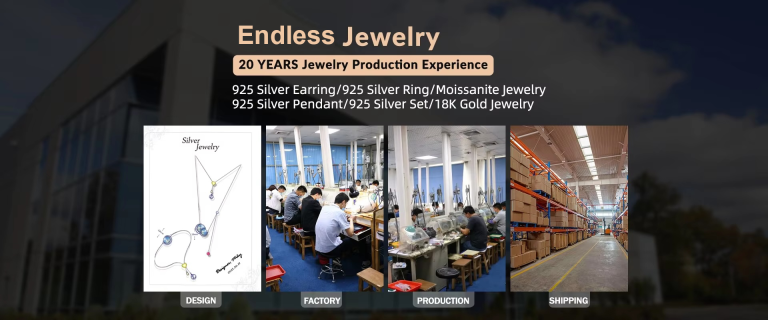
Endless Jewellery is a jewelry manufacturer based in Panyu, Guangzhou, China, with 15+ years of jewelry production experience and 30 production lines. The factory supports B2B customers sourcing 925 sterling silver jewelry.
When evaluating a potential supplier, confirm the production arrangements, agreed specifications, quality inspection requirements, and order terms before committing to bulk purchasing.
If your main requirement is custom product development, OEM/ODM manufacturing, or private label production, see our guide to 925 silver jewelry OEM in China.
FAQ About Sourcing 925 Sterling Silver Jewelry From China
1.How Do I Find a Reliable 925 Sterling Silver Jewelry Supplier in China?
Start with direct manufacturer websites, B2B marketplaces, trade shows, and industry referrals. Compare suppliers using the same product specifications, and verify their manufacturing location, relevant experience, quality procedures, quotation terms, and delivery arrangements.
2.How Can I Verify a China Jewelry Factory Before Placing a Bulk Order?
Request information about the actual production location, business details, manufacturing processes, and experience with similar products. For larger orders, consider a factory visit or independent verification.
3.What Should a QC Inspection Report Include for Bulk 925 Sterling Silver Jewelry Orders?
Depending on the agreed inspection plan, a report may include inspected quantities, material or specification checks, workmanship findings, plating and stone setting checks, identified defects, corrective actions, and inspection photos. Confirm the report format and inspection scope with the supplier before production.
4.How Can I Compare Quotations From Chinese Jewelry Suppliers?
Send the same product specifications and quantities to each supplier. Compare silver weight, plating, stones, tooling, sampling, packaging, inspection, shipping, payment terms, and any excluded costs rather than choosing solely by unit price.
5.What Is the MOQ for 925 Sterling Silver Jewelry in China?
MOQ varies according to the supplier, design, material, customization, and production requirements. Ask each shortlisted supplier for the minimum quantity for your specific product.
6.How Long Does It Take to Source and Receive 925 Sterling Silver Jewelry From China?
The schedule depends on supplier response time, sampling, sample approval, bulk production, inspection, and shipping. Confirm each stage separately, and distinguish factory production time from total delivery time.
7.What Should I Confirm Before Shipping a Bulk Jewelry Order?
Confirm the final quantity, agreed specifications, inspection result, packaging, commercial documents, shipping terms, and destination requirements. Resolve any outstanding quality issues before authorizing shipment.
Final Takeaway
Sourcing 925 sterling silver jewelry from China requires a structured approach to supplier verification, quotation comparison, sample evaluation, quality inspection, and shipment planning.
Before placing a bulk order, make sure the product specifications, total costs, production schedule, inspection criteria, packaging, and shipping arrangements are documented and agreed upon.
A consistent sourcing process helps jewelry brands, wholesalers, and retailers make more informed supplier decisions and manage purchasing risks more effectively.
For buyers who have already defined their product requirements and are comparing custom manufacturing services, our guide to 925 silver jewelry OEM in China explains the OEM and ODM production options available for B2B jewelry projects.
Have a jewelry design idea or some questions?