Understanding Sterling Silver Composition, Purity and Hallmarks
Sterling silver is widely used in jewelry because it combines a high silver content with the strength needed for practical jewelry production. But for jewelry brands and professional buyers, understanding sterling silver involves more than knowing that a piece is marked “925.”
The sterling silver composition determines its material properties, while purity markings, hallmarks, production records, and quality controls provide additional information about the finished product.
This guide explains how sterling silver is defined, what its material specification means, how hallmarks should be interpreted, and how jewelry manufacturers can verify and control silver materials during production.

What Is Sterling Silver?
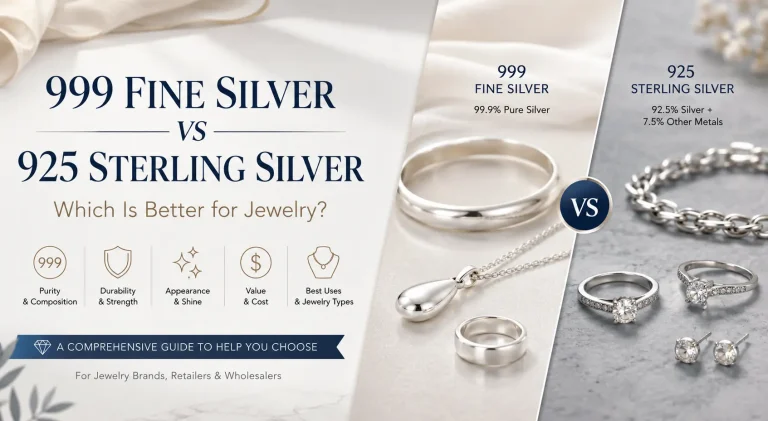
Sterling silver is a silver alloy containing 92.5% silver by weight, with the remaining 7.5% consisting of alloying metals.
The alloy is designed to provide a practical combination of silver content, hardness, workability, and finishing performance for jewelry manufacturing.
Unlike fine silver, which has a higher silver content but is relatively soft, sterling silver is engineered for applications where the finished jewelry needs greater structural stability.
For jewelry production, this makes sterling silver suitable for many designs, including rings, earrings, necklaces, bracelets, pendants, and gemstone jewelry.
What Is Sterling Silver Made Of?
The defining composition of standard sterling silver is:
| Material Component | Typical Proportion | Purpose |
|---|---|---|
| Pure silver | 92.5% | Provides the precious metal content |
| Alloying metals | 7.5% | Improves hardness, strength and workability |
Why Does Sterling Silver Need Alloying Metals?
Pure silver is relatively soft and highly malleable. For many jewelry applications, this can make the material more difficult to keep in its intended shape during everyday use.
Alloying improves properties that are important during both manufacturing and use, including:
- Structural strength
- Hardness
- Casting performance
- Formability
- Polishing performance
- Resistance to deformation
The result is a material that can be processed into detailed jewelry designs while retaining the high silver content associated with sterling silver.

Sterling Silver Purity and Material Standards
For jewelry buyers, purity describes the proportion of silver contained in the alloy.
The number 925 represents 925 parts of silver per 1,000 parts of material, corresponding to 92.5% silver.
This is the key material specification behind the term 925 sterling silver.
Rather than treating purity as a general quality score, it is more useful to view it as one specific characteristic of the material. Finished jewelry quality also depends on manufacturing, surface finishing, stone setting, construction, inspection, and other production factors.
What Does a 925 Silver Hallmark Mean?
A 925 marking indicates that the jewelry is identified as having a silver fineness of 925 parts per thousand.
Common markings can include:
- 925
- .925
- S925
- Sterling
- STG
The precise marking system depends on the product, manufacturer, and destination market.
A hallmark or purity stamp is therefore an important piece of information, but it should be interpreted in the context of the applicable marking and assay requirements.
Does a 925 Hallmark Prove Silver Purity?
Not by itself.
A stamp indicates the claimed material specification, but a physical mark is not the same as a laboratory analysis.
For commercial jewelry production, confidence in material purity can be strengthened through a combination of:
- Supplier documentation
- Material specifications
- Incoming material controls
- Production records
- Quality inspection
- Professional material testing
This distinction is particularly important for jewelry brands purchasing products from multiple suppliers or manufacturing partners.

Sterling Silver Hallmarks: What Should You Look For?
Hallmarks and stamps can provide useful information about jewelry materials, but different types of marks serve different purposes.
A jewelry piece may contain a purity mark, maker’s mark, manufacturer’s identification, or other markings required by a particular market.
Purity Marks
A purity mark identifies the fineness of the precious metal.
For sterling silver, 925 is the most commonly recognized purity designation.
The position of the mark depends on the jewelry design. It may appear inside a ring, on a pendant component, near a clasp, on an earring component, or in another discreet location.
Maker's and Manufacturer's Marks
A maker’s mark identifies the party responsible for the jewelry or its production.
This is different from a purity mark.
For brands and manufacturers, identifying marks can contribute to product traceability by connecting a finished item with its production source.
Hallmarks and Market Requirements
Hallmarking requirements are not identical in every country.
Some markets have specific rules regarding precious metal fineness, hallmarking, assay offices, or manufacturer responsibilities.
Therefore, jewelry brands should confirm the requirements of their target market before deciding how products should be marked.
A 925 stamp should not automatically be interpreted as a universal legal certification covering every aspect of a product.
How Is Sterling Silver Purity Verified?
For professional jewelry production, silver purity can be evaluated through documentation, inspection, and testing.
The appropriate verification method depends on the product, order requirements, destination market, and level of assurance required.
Material Documentation
Material documentation provides the starting point for supplier verification.
Brands may request information about:
- Silver purity
- Alloy specification
- Material source
- Batch information
- Recycled content where applicable
- Relevant testing or compliance documentation
Keeping these records organized helps manufacturers and brands maintain consistency across production batches.
Production Quality Control
Material verification should not end when the raw material enters the factory.
During jewelry manufacturing, quality control can monitor whether the specified material is being used consistently throughout production.
For example, production controls can cover:
- Material identification
- Casting and forming
- Polishing
- Stone setting
- Surface finishing
- Plating
- Final inspection
This approach helps connect the original material specification with the final jewelry product.
Common causes of faster tarnishing include:
Professional Testing
When additional verification is required, professional testing can be used to analyze metal composition.
X-ray fluorescence, commonly known as XRF, is one method used in the jewelry industry to analyze the elemental composition of metals.
Other testing methods may also be appropriate depending on the product and testing objective.
For high-value production or specific compliance requirements, brands should rely on qualified testing services rather than informal household tests.
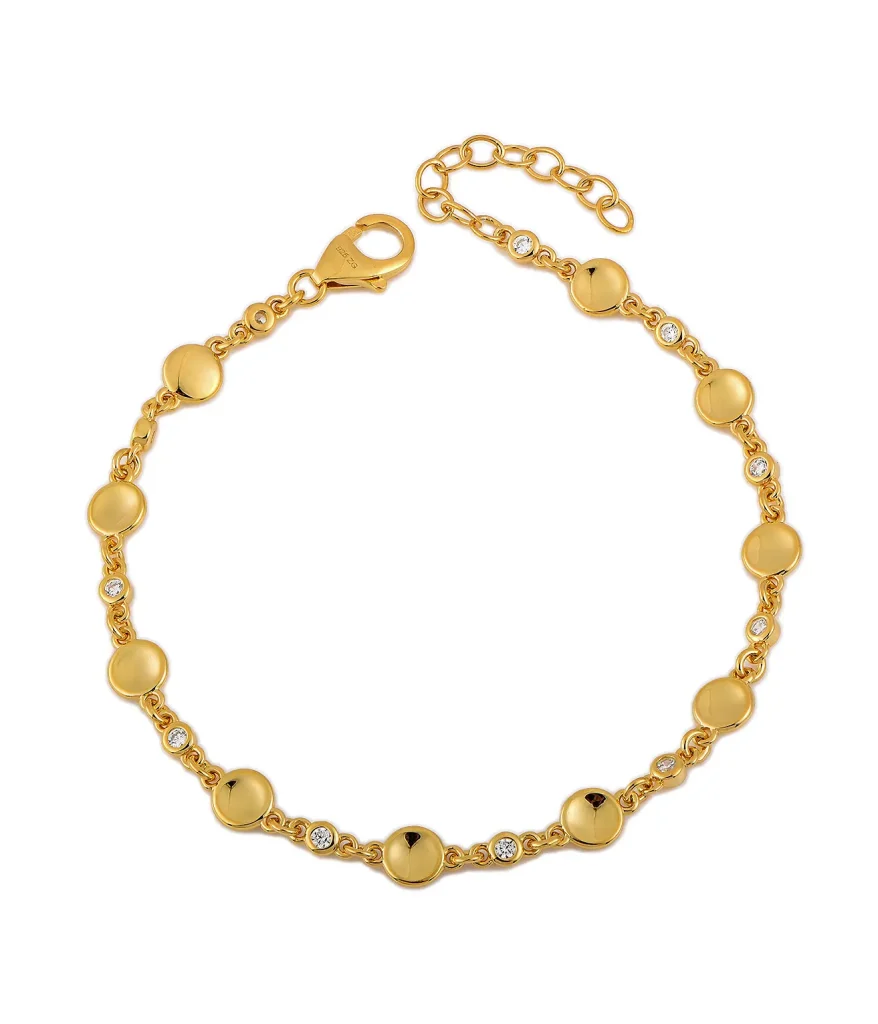
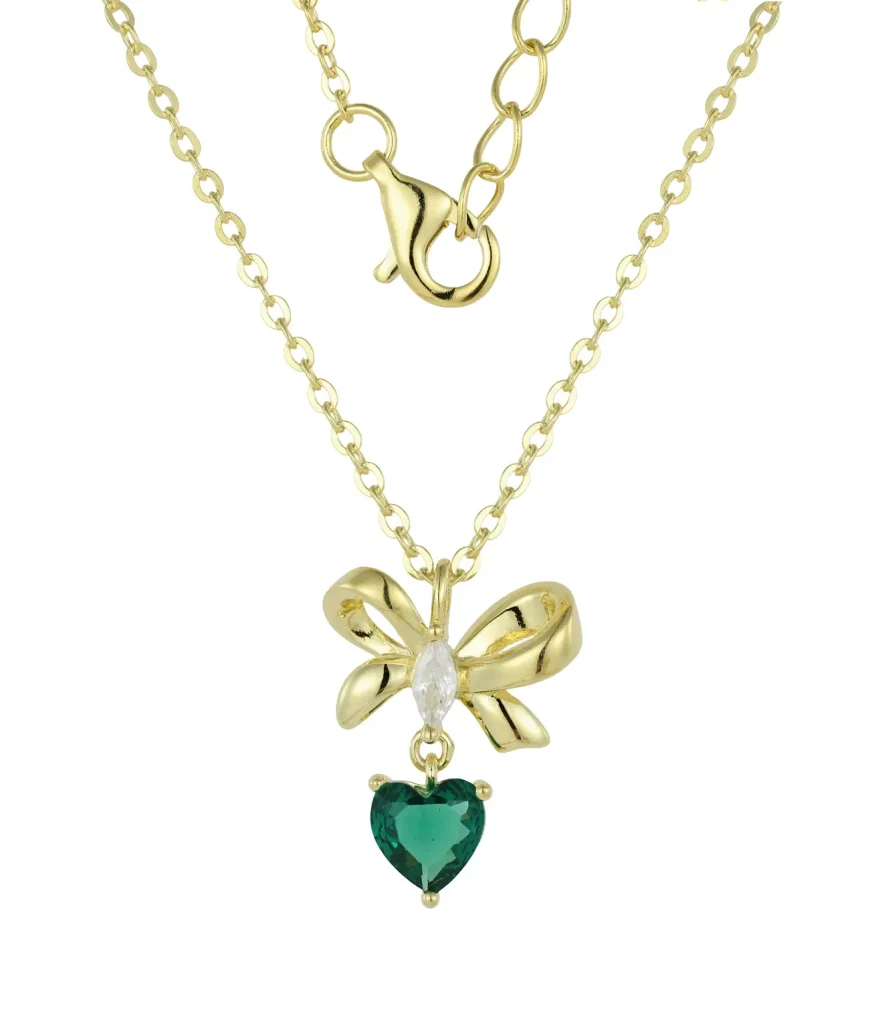
Sterling Silver Composition vs Surface Finish
One common source of confusion is the difference between the base material and the surface finish.
A sterling silver jewelry piece may have a surface treatment without changing the underlying silver specification.
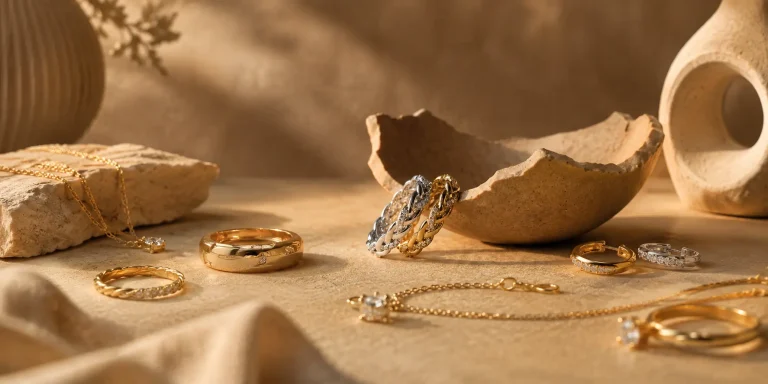
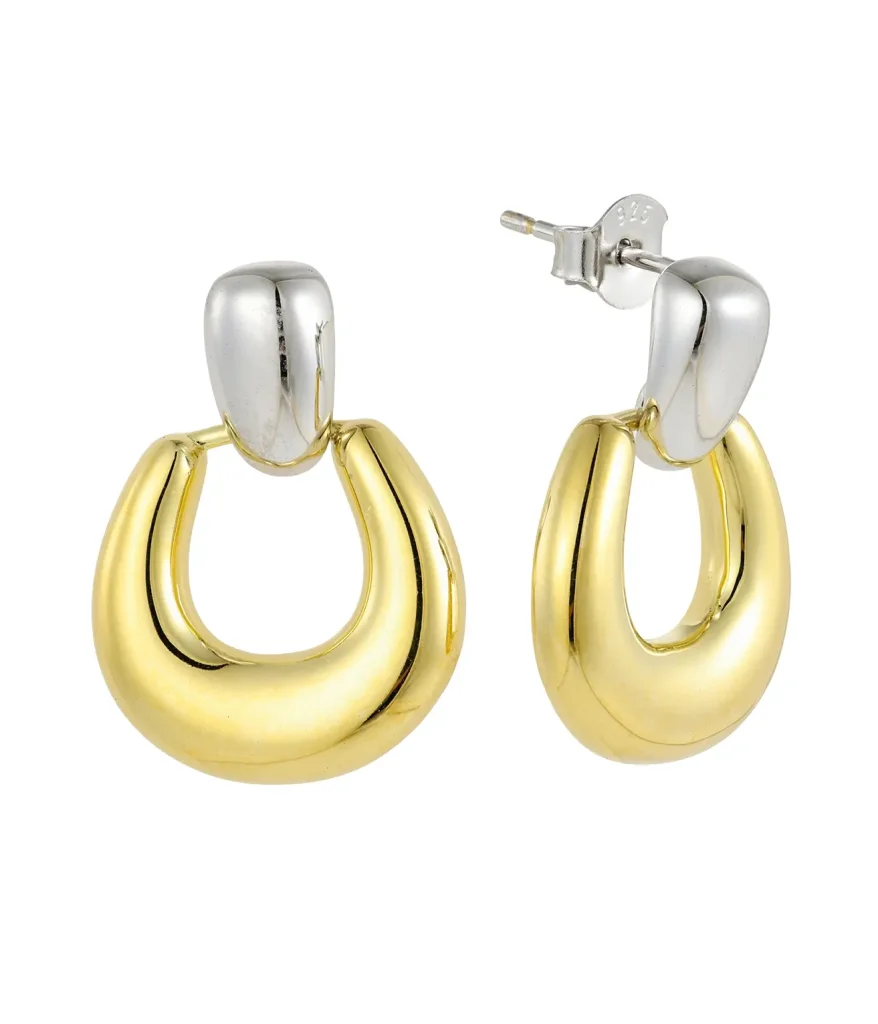
For example, sterling silver can be finished with:
- Rhodium plating
- Gold plating
- Other decorative or protective finishes
In these cases, the visible surface may not look like untreated silver even though the underlying material is sterling silver.
This distinction is particularly important when sourcing custom jewelry because the product specification should identify both the base material and the finishing requirements.
For example:
Base material: 925 sterling silver
Surface finish: 18K gold plating
This is more precise than describing the entire product simply as “gold jewelry.”

Sterling Silver and Material Traceability
For jewelry brands, material traceability becomes increasingly important as collections grow and supply chains become more complex.
Traceability means being able to connect material information with the relevant production process and finished product.
Why Does Material Traceability Matter?
A clear material trail can help brands:
- Maintain consistent product specifications
- Manage repeat production
- Investigate quality issues
- Communicate accurately with customers
- Support compliance documentation
- Evaluate sustainability claims
This is particularly relevant for private label and OEM jewelry, where the same design may be produced repeatedly over time.
What Should Jewelry Brands Record?
A practical material record may include:
| Information | Why It Matters |
|---|---|
| Material specification | Defines the required silver purity |
| Alloy requirements | Controls the approved material composition |
| Supplier information | Identifies the material source |
| Batch information | Helps trace production |
| Finishing specification | Separates base material from surface treatment |
| Inspection records | Documents quality control |
| Testing records | Supports material verification |
The exact documentation required will depend on the brand and target market.
Recycled Silver and Responsible Sourcing
Sustainability is another reason material information matters to modern jewelry brands.
Recycled silver can be used in jewelry production to reduce reliance on newly mined material. However, sustainability claims should be supported by appropriate supplier information and documentation.
Brands should distinguish between:
“Made with recycled silver”
and a more specific claim that identifies the proportion or source of recycled material.
Clear documentation helps prevent broad sustainability statements from being disconnected from the actual material used in production.
For brands building long-term collections, responsible sourcing and traceability can therefore be considered part of supplier management rather than simply a marketing message.
What Should Jewelry Brands Specify When Ordering Sterling Silver?
When developing a sterling silver jewelry collection, brands should define the material requirements before production begins.
A useful product specification can include:
Silver Purity
Specify whether the product requires 925 sterling silver and confirm the required purity standard.
Alloy Requirements
If the brand has requirements such as nickel-free production or specific alloy restrictions, these should be communicated before production.
For nickel-related requirements, see our separate guide to nickel-free sterling silver jewelry.
Surface Finish
Specify whether the jewelry will remain in silver, receive rhodium plating, or use another plating finish.
For gold finishes, brands should also define the desired gold color and plating specification.
Quality Inspection
Material specification should be supported by finished-product inspection.
Inspection can evaluate areas such as:
- Dimensions
- Surface quality
- Polishing
- Stone setting
- Plating
- Marking
- Construction
- Overall appearance
For brands looking for a manufacturing partner that can manage these processes, jewelry manufacturing services can cover the development and production stages from material preparation through finishing and inspection.
Sterling Silver Composition: Key Takeaways
Sterling silver is defined by its 92.5% silver content, while the remaining alloying metals provide properties needed for practical jewelry manufacturing.
The 925 marking communicates the claimed silver fineness, but a hallmark should not be treated as the only evidence of material authenticity.
For jewelry brands, a stronger approach is to connect:
Material specification → Supplier documentation → Production control → Testing → Final inspection
This process provides a clearer foundation for consistent sterling silver jewelry production.
Understanding composition and purity is therefore not only useful for identifying silver jewelry. It also helps brands specify materials accurately, communicate with manufacturers, manage quality, and maintain reliable product information as their collections grow.
Frequently Asked Questions About Sterling Silver Composition
Is sterling silver made of 92.5% silver?
Yes. Standard sterling silver contains 92.5% silver by weight, with the remaining 7.5% consisting of alloying metals.
What does 925 mean on sterling silver jewelry?
Yes. Standard sterling silver contains 92.5% silver by weight, with the remaining 7.5% consisting of alloying metals.
Is a 925 stamp enough to prove sterling silver is genuine?
No. A 925 stamp indicates the claimed purity but does not independently prove the composition of the metal. Supplier documentation, production controls, and professional testing can provide additional verification.
Can sterling silver have gold or rhodium plating?
Yes. Sterling silver can be used as the base material for gold plating, rhodium plating, and other surface finishes. The plating changes the surface appearance but does not necessarily change the underlying silver composition.
Why is material traceability important for jewelry brands?
Material traceability helps brands maintain consistent specifications, manage repeat production, support quality control, and substantiate material and sustainability claims.
Conclusion
Understanding sterling silver composition requires more than recognizing the 925 mark.
For jewelry brands and manufacturers, the key considerations are the defined silver purity, alloy specification, hallmarking requirements, material documentation, testing, finishing, and production quality control.
When these elements are managed together, 925 sterling silver becomes a clearly specified manufacturing material rather than simply a label stamped onto a finished piece.
Have a jewelry design idea or some questions?