Can Real Gold Turn Green? Causes & Cleaning Tips
Table of Contents
Real gold is chemically inert and naturally resistant to corrosion, which means it does not tarnish on its own. However, many jewelry owners notice their gold pieces turning green, black, or appearing dull over time. This can be confusing and often leads to the question of whether the jewelry is fake. In most cases, the answer is no.
In this article, we will explore whether real gold can tarnish, why gold jewelry may turn black or green, and what causes it to lose its original shine. We will also explain practical ways to remove tarnish from gold jewelry and help restore its appearance.
What Is Real Gold?
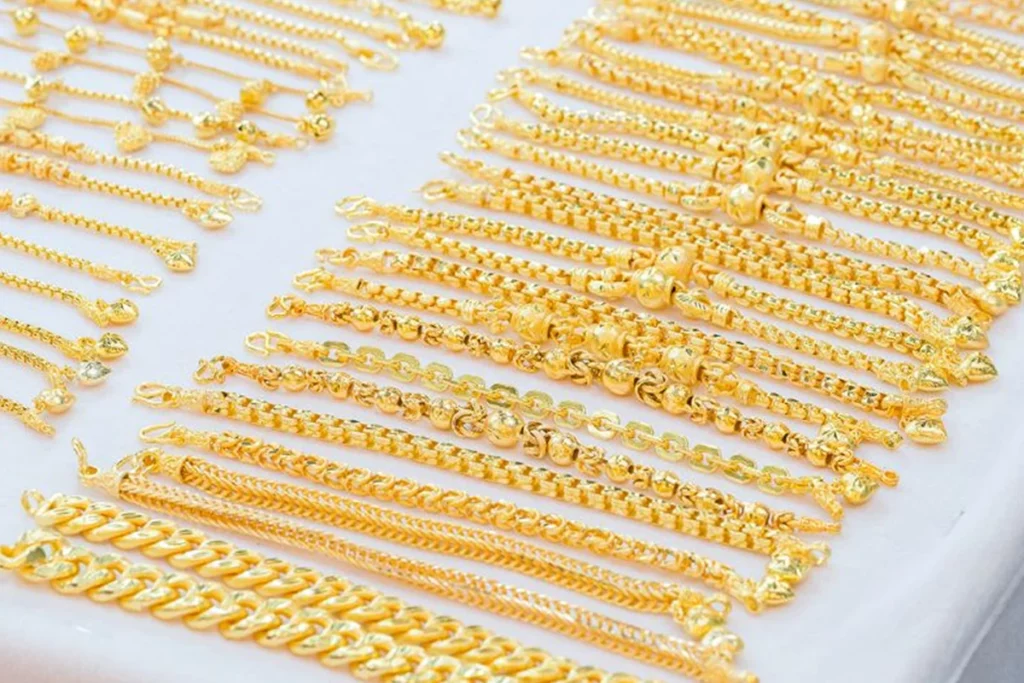
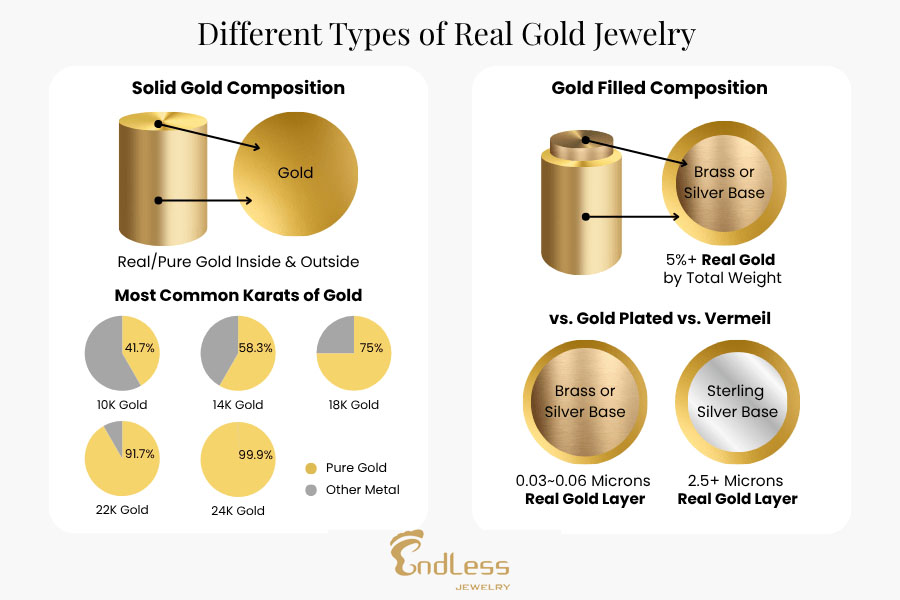
Real gold is a naturally occurring precious metal known for its distinctive bright yellow color, luster, and resistance to corrosion. It’s not just a metal, it is legacy, faith, power, love, and wisdom compressed into a shining element. Real gold jewelry is any piece of jewelry that contains a significant amount of pure gold. Therefore, solid gold (24K, 22K, 18K, 14K, & 10K), gold-plated, gold vermeil, and gold-filled jewelry are all real gold jewelry. In this blog, we mainly talk about solid gold.
Why Does Real Gold Jewelry Turn Black, Green, or Tarnish?
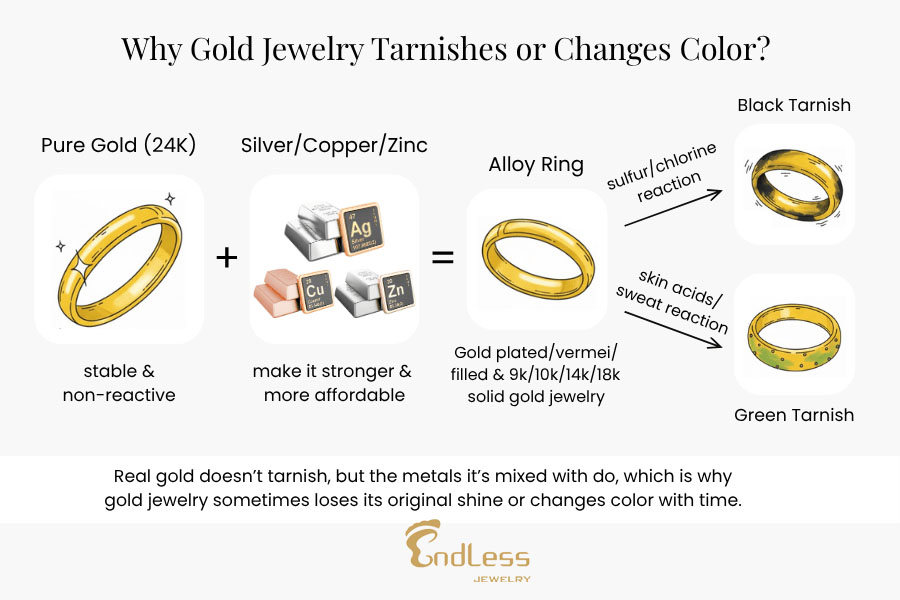
If real gold does not tarnish or lose its color, why do some gold jewelry pieces turn green, black, or appear dull over time? The reason is that most gold jewelry is not made from pure gold alone. To improve strength and durability, gold is commonly alloyed with other metals such as copper, nickel, and silver.
Because silver is highly malleable, artisans can shape it into countless designs, from delicate rings with gemstone accents to bold, sculpted pieces. This versatility allows sterling silver jewelry to suit any personal style or fashion trend.
That said, some types of gold jewelry are designed to be more resistant to tarnish. Solid gold, gold filled, and PVD gold plated jewelry contain a higher proportion of gold or use advanced coating techniques, making them less likely to react with air, moisture, or chemicals. As a result, these options maintain their color and shine for a longer period with proper care.
Does Real Gold Tarnish Over Time?
No, real gold or pure 24K gold does not tarnish, corrode, or rust. This is because gold is chemically stable and does not react with oxygen, moisture, sulfur, or most acids.
However, most jewelry is not made from pure gold. To improve durability and reduce cost, manufacturers mix gold with other metals such as silver or copper to create 9K, 10K, 14K, 18K, and 22K solid gold jewelry.
These alloy metals are more reactive and can oxidize or corrode over time, which may cause the jewelry to appear darker, duller, or slightly discolored. As a result, even higher karat gold jewelry can show minor changes in appearance after long periods of wear. This effect comes from the alloy metals, not from the gold itself.
Additionally, everyday factors such as sweat, perfume, sunscreen, humidity, and air pollution can leave residue on the surface of gold jewelry. This buildup can reduce shine and make the piece look tarnished, even though it is only a surface issue and not permanent damage.
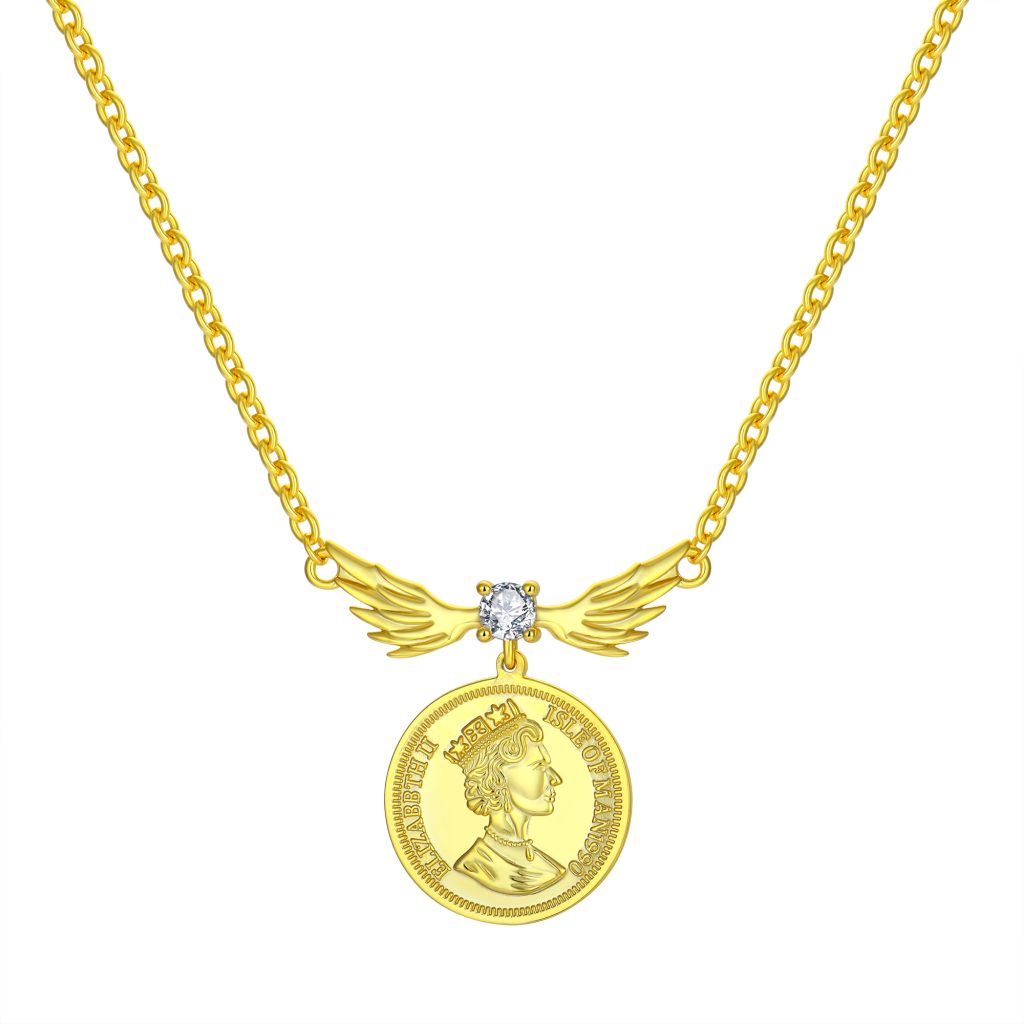

Does Real Gold Turn Black or Green?
The table below shows the gold content and tarnish resistance of different gold karats. It also answers the question: does real gold turn green or black?
As seen in the table above, real gold (24K) doesn’t change color, turn black or green. The black color or greenish tint that you may have noticed in your gold jewelry comes from the metal alloys that the gold is mixed with. For example, a 14K gold ring (58% gold + copper/silver) might leave a green stain on your finger in humid weather or after swimming. This is not the gold; it’s the copper reacting. So, ensure you go through the waterproof gold jewelry guide to know if your jewelry can withstand water.
| Gold Karat | Gold Content | Tarnish Resistance | Turn Black | Turn Green | Durability |
|---|---|---|---|---|---|
| 24K | 99.9% | ⭐⭐⭐⭐⭐ | No | No | Very Soft |
| 22K | 91.6% | ⭐⭐⭐⭐ | Rare | Rare | Soft |
| 18K | 75% | ⭐⭐⭐ | Possible | Possible | Durable |
| 14K | 58.3% | ⭐⭐⭐ | Possible | Possible | Durable |
| 10K | 41.7% | ⭐⭐⭐ | Possible | Possible | Durable |
| 9K | 37.5% | ⭐⭐⭐ | Possible | Possible | Very Durable |
Note: Except for 24K pure gold, which never changes color, all gold alloys may experience slight discoloration or dullness over time. However, due to their higher gold content, these changes are usually minimal compared to gold plated jewelry.
If Gold Turns Black or Green, Is It Fake?
A common question is whether gold that turns black or green is fake. The answer is no. Discoloration does not automatically mean the gold is not genuine.
Even real gold, particularly in alloys like 10K, 14K, and 18K, can change color under certain conditions. These changes are usually caused by reactions involving the other metals in the alloy rather than the gold itself. For example, gold can turn green when the copper in the alloy reacts with sweat, moisture, or chemicals. Similarly, it can turn black if the silver content reacts with sulfur present in air, skin, or other substances.
Does White Gold Turn Yellow or Black?
White gold is made by alloying pure gold with metals like nickel, palladium, or zinc, then coating it with a thin layer of rhodium to give it a bright silvery-white appearance, as against the natural yellow of pure gold. So, does white gold turn black or yellow?
Yes, white gold can turn yellow over time as its rhodium plating wears off, revealing the natural yellowish color underneath. But it is uncommon for white gold to turn black, unless it is exposed to harsh chemicals or heavy oxidation. With proper care and occasional re-plating, white gold stays white and shiny.
Will Gold-Plated Jewelry Tarnish or Turn Green?
Gold-plated jewelry is created by coating a base metal—such as silver, brass, or copper—with a thin layer of pure gold. This process produces jewelry that is more affordable, durable, and visually similar to solid gold.
So, does gold-plated jewelry turn green, black, or tarnish? Yes, it can. When the thin gold layer wears off, the underlying base metal is exposed, which can lead to black tarnish or green stains. How quickly this happens depends on the thickness of the gold layer and how often the jewelry is exposed to air, moisture, sweat, and chemicals. Proper care can slow this process and help maintain the jewelry’s appearance.
Will Gold-Filled Jewelry Tarnish or Turn Green?
Gold-filled jewelry is made by bonding a thick layer of gold onto a base metal. Unlike gold-plated jewelry, the gold layer in gold-filled pieces makes up at least 5% of the item’s total weight, providing much greater resistance to tarnish and discoloration.
This commitment to sustainability strengthens customer trust and enhances the reputation of brands that prioritize transparency and eco-conscious production.
How to Remove Tarnish from Gold Jewelry
If your gold jewelry shows signs of tarnish or discoloration, there are several effective methods to restore its shine.
- Mild Soap and Warm Water: Mix a few drops of mild dish soap with warm water and soak the jewelry for 10–15 minutes. Gently scrub with a soft toothbrush, rinse thoroughly, and pat dry with a soft cloth.
- Baking Soda Paste: Create a paste using three parts baking soda and one part water. Apply it to the jewelry with a soft cloth, gently rub the tarnished areas, rinse well, and dry completely.
- Aluminum Foil and Baking Soda: Line a bowl with aluminum foil (shiny side up), add one tablespoon each of baking soda and salt, then pour in hot water. Submerge the jewelry for 2–3 minutes, rinse, and dry. This method works best for solid gold pieces.
- Jeweler’s Polishing Cloth: Use a specialized gold polishing cloth with micro-abrasives to gently buff away light tarnish without using any liquids.
How Gold Jewelry Manufacturers Prevent Tarnishing and Discoloration
In the jewelry industry, a professional gold jewelry manufacturer uses specific production techniques to reduce tarnishing, discoloration, and green or black reactions on the skin.
A high quality custom gold jewelry manufacturer carefully controls alloy composition, especially when producing 14K or 18K gold jewelry, to ensure better stability and long term wear performance.
Waterproof Gold Jewelry and Daily Wear Performance
Modern waterproof gold jewelry is designed to resist water exposure from daily activities such as washing hands or light sweating.
However, it is important to understand that even waterproof gold jewelry is not completely immune to long term chemical reactions, especially when exposed to chlorine, perfume, or acidic environments.
That is why material quality and manufacturing standards are crucial.
Why Manufacturing Quality Affects Tarnishing
The reason gold jewelry turns black or green is often not the gold itself, but the alloy metals used during production.
A professional gold jewelry manufacturer carefully balances:
- Gold purity (10K, 14K, 18K)
- Alloy composition
- Surface protection
- Plating thickness
This directly affects whether the jewelry will tarnish over time.
FAQs
Can real gold turn green or black?
No. Pure gold (24K) does not turn green or black because it is chemically stable. Discoloration usually comes from alloy metals mixed with gold.
Why does gold jewelry turn my skin green?
This is mainly caused by copper in gold alloys reacting with sweat, moisture, or acids on your skin, leaving a green residue.
Why does gold jewelry turn black?
Black marks usually come from oxidation of metals like silver or copper in the alloy, or from reactions with cosmetics and chemicals.
Do chemicals like perfume or chlorine affect gold?
Yes. Chemicals such as perfume, lotion, and chlorine can speed up corrosion of alloy metals and cause discoloration.
Conclusion
Real gold doesn’t turn green, black, or tarnish because it is highly resistant to corrosion and oxidation. However, most gold jewelry are not produced from pure gold only, they are mixed with other metals that react with sweat, skin acids, air, and chemicals — causing tarnish and discoloration
As a jewelry brand looking to create gold jewelry that retains their shine and client trust, you need to join forces with a reputable gold jewelry manufacturer in crafting long-lasting tarnish-free gold jewelry.
Have a jewelry design idea or some questions?