Hypoallergenic Earrings for Sensitive Ears: Materials Guide
Table of Contents
Earrings are one of the jewelry pieces most likely to stay in direct contact with the skin for long periods. For people with sensitive ears, choosing the right metal, plating, and earring components can make a significant difference in wearing comfort.
For jewelry brands, wholesalers, and retailers, understanding hypoallergenic earrings is equally important. The material of the earring, alloy composition, plating system, and quality control can all affect how suitable a product is for customers with sensitive skin.Earrings are one of the jewelry pieces most likely to stay in direct contact with the skin for long periods. For people with sensitive ears, choosing the right metal, plating, and earring components can make a significant difference in wearing comfort.
This guide explains what hypoallergenic earrings are, which metals are commonly used for sensitive ears, how nickel-free jewelry differs from hypoallergenic jewelry, and what buyers should check when sourcing earrings from a jewelry manufacturer.
What Are Hypoallergenic Earrings?
Hypoallergenic earrings are designed to minimize the likelihood of skin irritation or allergic reactions caused by certain jewelry materials.
The term “hypoallergenic” does not mean that a piece is guaranteed to cause no reaction. People can have different sensitivities to different metals, and the overall construction of an earring also matters.
For sensitive ears, buyers should pay particular attention to:
- Base metal and alloy composition
- Nickel content or nickel release
- Plating material and thickness
- Earring posts and backs
- Surface finish
- Manufacturing and quality control standards
Among these factors, nickel is one of the most important considerations when selecting earrings for sensitive ears.
What Causes Earrings to Irritate Sensitive Ears?
Earring irritation can have several causes. Metal sensitivity is one possibility, but redness, itching, or discomfort can also be associated with friction, moisture, pressure, poor surface finishing, or recently pierced skin.
Nickel is a particularly important material to consider because some people are sensitive to nickel released from jewelry.
For jewelry brands, simply labeling a product “hypoallergenic” is not enough. A more reliable approach is to understand the actual metal composition and relevant testing requirements.
This is especially important when sourcing wholesale earrings or developing a private label jewelry collection.
What Metals Are Best for Sensitive Ears?
There is no single metal that is guaranteed to work for every person with sensitive ears. However, some jewelry materials are commonly selected for their low-allergen potential and skin-friendly characteristics.
1. Nickel-Free Sterling Silver
925 sterling silver contains 92.5% silver and 7.5% alloy metals used to improve strength and durability.
For sensitive ears, the key consideration is not simply whether an earring is “925 silver.” Buyers should also confirm what alloy metals are used and whether the finished product meets applicable nickel-release requirements.
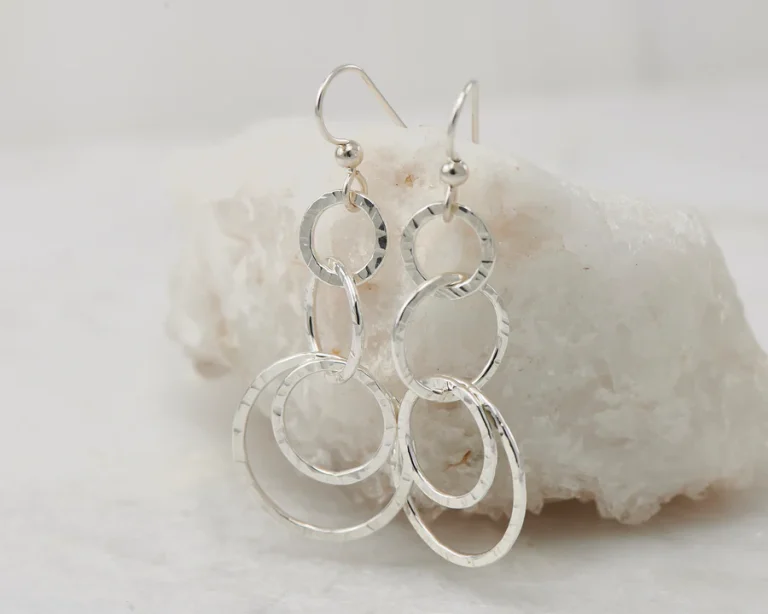
Nickel-free sterling silver earrings can be a practical choice for brands looking for a balance between quality, appearance, durability, and cost.
For example, Endless produces custom sterling silver earrings and states that its silver earrings are designed to meet REACH nickel-safety requirements.
2. 14K and 18K Gold
Higher-karat gold contains a greater proportion of pure gold than lower-karat gold alloys.
However, karat alone does not determine whether an earring is suitable for sensitive skin. Gold jewelry is normally alloyed with other metals to improve strength, and those alloy metals can affect skin compatibility.
For this reason, jewelry brands should confirm the complete alloy composition instead of assuming that every 14K or 18K gold earring is automatically hypoallergenic.
3. Titanium
Titanium is lightweight, durable, and widely used in jewelry and body-piercing applications.
For customers looking specifically for earrings for sensitive ears, titanium can be an attractive material because of its low density and corrosion resistance.
For newly pierced ears or body-piercing applications, buyers should pay particular attention to the exact titanium grade and the intended use of the product.
4. Platinum
Platinum is a premium precious metal known for its durability and corrosion resistance.
Because platinum jewelry generally contains a high proportion of platinum, it is often considered a suitable choice for people who are sensitive to some common jewelry alloys.
The main disadvantage is cost, making platinum more suitable for premium and fine jewelry collections.
5. Niobium
Niobium is another metal commonly associated with jewelry designed for people with metal sensitivities.
It is lightweight and corrosion resistant and can be anodized to create different colors without relying on conventional paint.
For brands developing specialized sensitive-skin jewelry collections, niobium can be an alternative material worth considering.
Hypoallergenic vs Nickel-Free Earrings: What's the Difference?
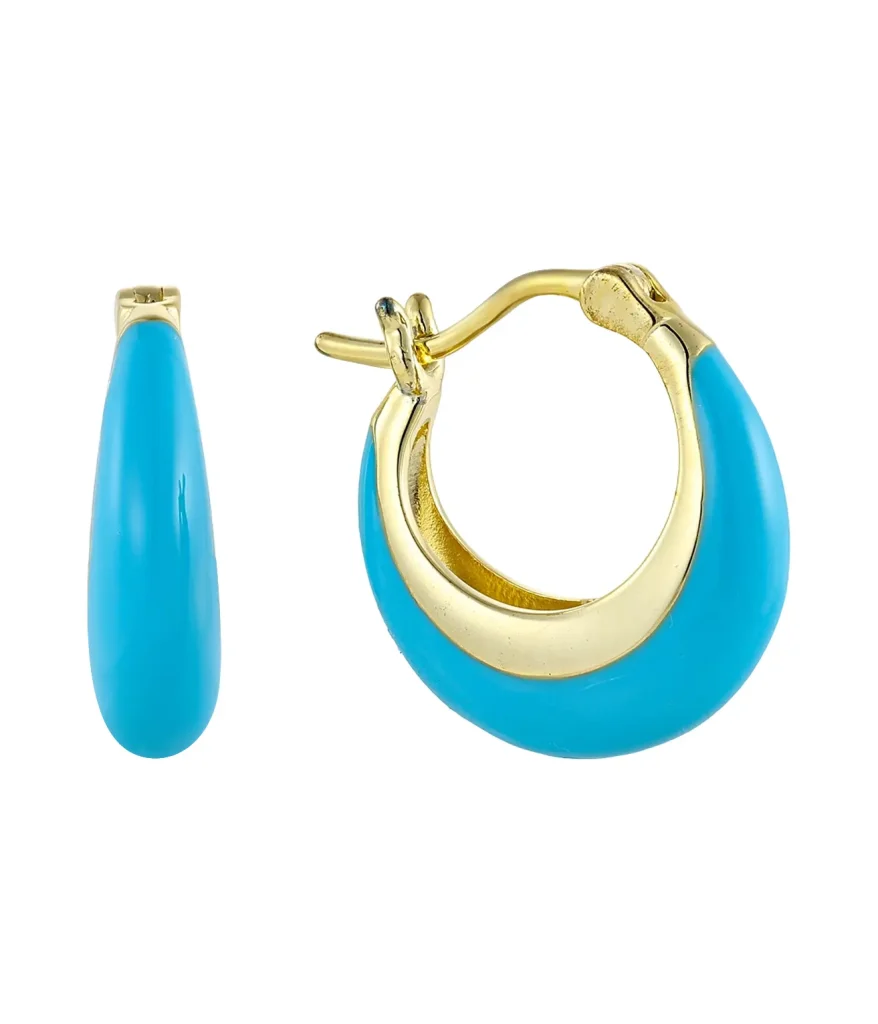
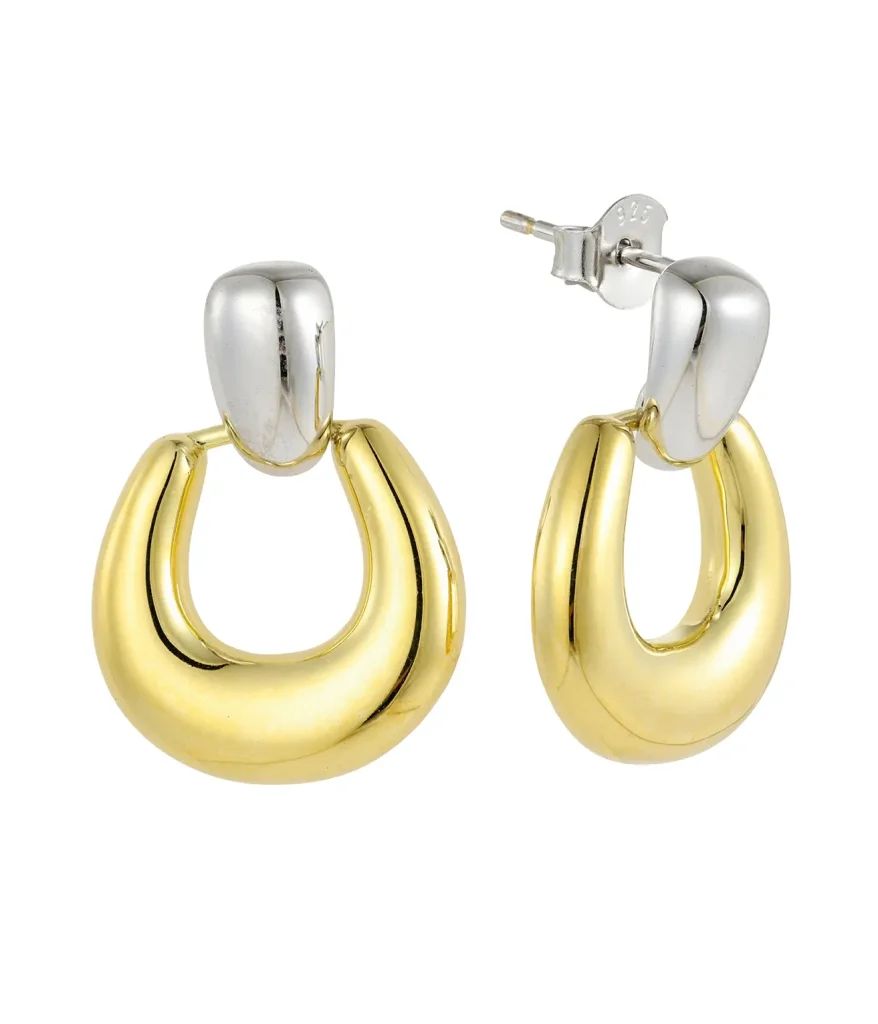
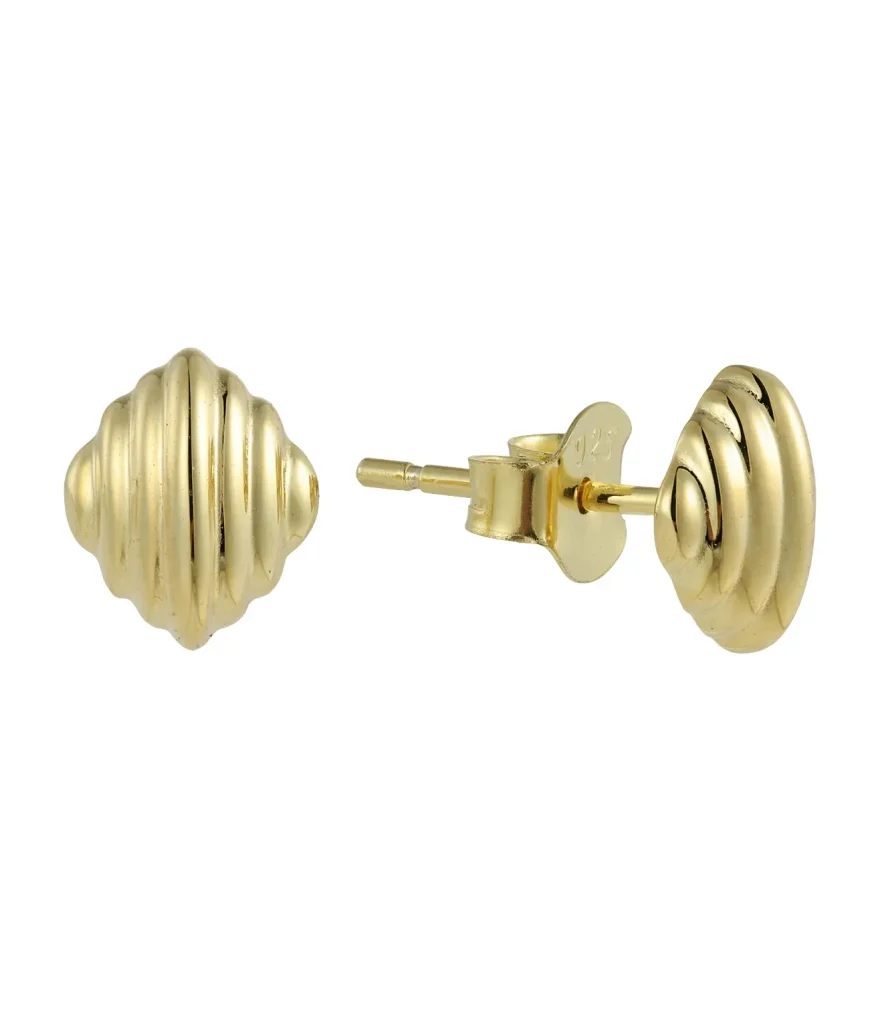
“Nickel-free” and “hypoallergenic” are not exactly the same thing.
- Nickel-free earrings indicate that nickel is absent or below the applicable threshold defined by the relevant standard or regulation.
- Hypoallergenic earrings is a broader marketing term describing jewelry designed to reduce the likelihood of allergic reactions.
For B2B buyers, it is better to ask a manufacturer for specific material information and test documentation rather than relying only on the word “hypoallergenic.”
Are Sterling Silver Earrings Safe for Sensitive Ears?
Sterling silver earrings can be a good option for sensitive ears when the alloy and finished product are appropriately specified.
925 sterling silver contains 92.5% silver and 7.5% other metals. The remaining alloy is important because different formulations can have different skin-contact characteristics.
For a sensitive-ear jewelry collection, consider specifying:
- Nickel-free sterling silver
- Suitable earring posts and backs
- Appropriate surface finishing
- Nickel-release testing where applicable
- Consistent material specifications across production batches
This is particularly important for wholesale and private label jewelry because a brand needs consistent material performance across repeated production orders.
Are Gold-Plated Earrings Hypoallergenic?
Gold-plated earrings are not automatically hypoallergenic.
A gold-plated earring contains a base metal underneath the gold layer. If the base metal contains an allergen or if the plating wears through, the wearer’s skin may come into contact with the underlying material.
Therefore, when sourcing gold-plated earrings for sensitive ears, ask the manufacturer about:
- Base metal
- Gold purity
- Plating thickness
- Nickel content or nickel release
- Surface finishing
- Quality-control testing
Gold plating over sterling silver can provide a different material construction from gold plating over brass or other base metals.
For jewelry brands, the base metal should therefore be treated as an important purchasing specification rather than focusing only on the visible gold color.
Best Earring Styles for Sensitive Ears
Material is important, but the earring design also affects comfort.
Hypoallergenic Stud Earrings
Stud earrings are compact and usually have limited movement, making them a popular option for everyday jewelry collections.
For sensitive-ear collections, brands can consider nickel-free sterling silver, titanium, platinum, or appropriately specified gold alloys.
Hypoallergenic Hoop Earrings
Hoop earrings are available in many sizes and weights.
Lightweight hoops can reduce pulling and pressure on the earlobe. Smooth edges and properly finished posts can also improve wearing comfort.
Hypoallergenic Drop Earrings
Drop earrings can create more movement and weight on the earlobe.
When designing or sourcing drop earrings for sensitive ears, consider the total product weight, post material, clasp construction, and surface finishing.
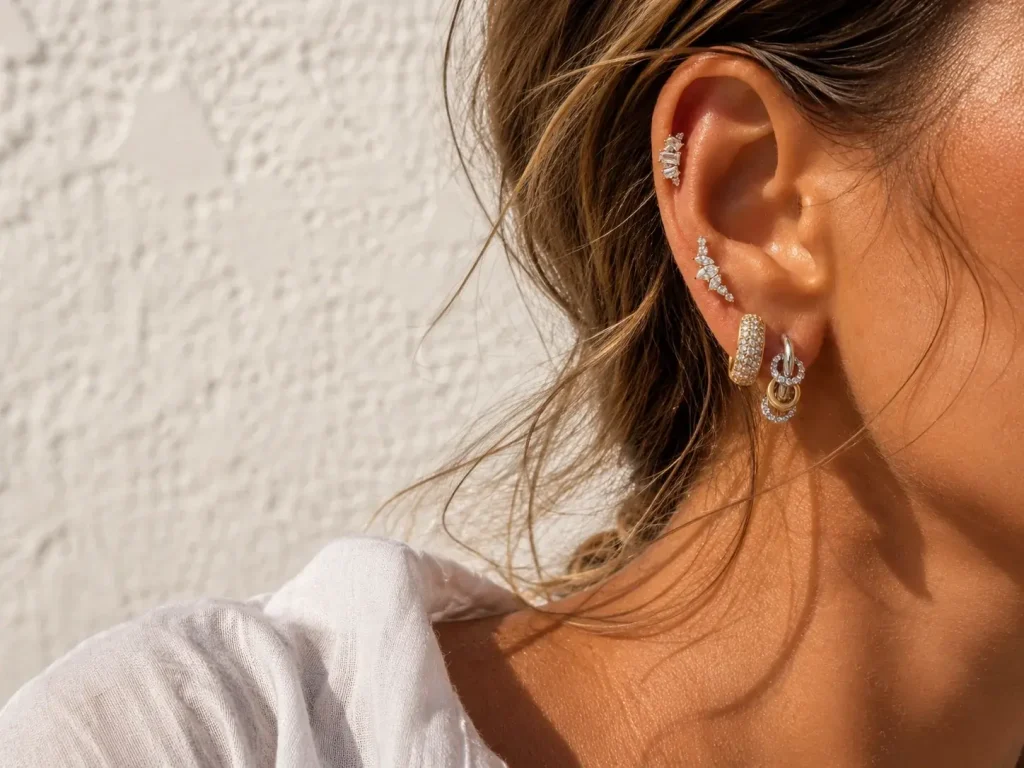
What Earrings Are Best for Newly Pierced Ears?
Newly pierced ears require additional care because the piercing site is still healing.
For this reason, jewelry brands should not treat “hypoallergenic” as a substitute for appropriate piercing-care guidance.
For starter or piercing jewelry, material selection, jewelry design, cleanliness, and the suitability of the product for the intended piercing application all matter.
Titanium, appropriately specified gold, platinum, and certain nickel-free materials are commonly considered when developing jewelry for sensitive skin.
Consumers with persistent swelling, severe irritation, discharge, or other concerning symptoms should seek professional medical advice rather than relying on jewelry changes alone.
How to Choose Hypoallergenic Earrings for a Jewelry Brand
If you are a jewelry retailer, wholesaler, or private label brand, choosing hypoallergenic earrings requires more than selecting a product labeled “nickel-free.”
1. Confirm the Base Metal
Ask whether the earrings are made from:
- 925 sterling silver
- Stainless steel
- Titanium
- Brass
- Gold
- Other alloys
The base metal affects both product cost and skin-contact performance.
2. Check Nickel Requirements
For products sold in Europe, nickel release is an important compliance consideration.
Ask your supplier whether the finished jewelry has been tested according to the applicable requirements and request supporting documentation where appropriate.
3. Check Plating Specifications
For plated earrings, ask about:
- Plating material
- Plating thickness
- Underplating
- Surface finishing
- Anti-tarnish treatment
These specifications help brands maintain consistent product quality between production batches.
4. Check Earring Posts and Backs
The earring post and back are often in prolonged contact with the skin.
A necklace may have limited skin contact, but an earring post can remain inside the piercing for hours. Therefore, brands should not focus only on the visible front portion of the earring.
5. Ask About Quality Control
A professional jewelry manufacturer should be able to explain how materials and finished products are inspected.
For B2B jewelry sourcing, useful questions include:
- What material is used for the earring posts?
- Is the jewelry nickel-free?
- What nickel-release standard is used?
- Are material specifications documented?
- How is plating quality checked?
- Are samples approved before bulk production?
- How is batch consistency controlled?
Hypoallergenic Earrings for Wholesale and Private Label Jewelry
For jewelry brands, sensitive-skin earrings can be developed as part of a broader 925 sterling silver, gold-plated, or private label jewelry collection.
A manufacturer can help brands specify:
- Metal composition
- Earring post material
- Plating finish
- Surface treatment
- Logo engraving
- Custom packaging
- Product dimensions
- Sample development
- Production quantities
Endless specializes in custom sterling silver jewelry manufacturing and offers custom sterling silver earrings in stud, hoop, drop, and other styles. Its product range includes 925 sterling silver earrings and plated silver earrings for jewelry brands and wholesale buyers.
For brands developing a sensitive-ear jewelry line, discussing the material specification with the manufacturer before sampling can help reduce problems later in bulk production.
Hypoallergenic Earrings Buying Checklist
Before placing a wholesale or private label order, check the following:
| What to Check | Why It Matters |
|---|---|
| Base metal | Determines the underlying material |
| Nickel content/release | Important for customers sensitive to nickel |
| Earring post | Direct and prolonged skin contact |
| Earring back | Can also contact sensitive skin |
| Plating | Affects surface protection and durability |
| Plating thickness | Helps evaluate plated jewelry specifications |
| Material testing | Provides evidence for material claims |
| Quality control | Helps maintain batch consistency |
| Sample approval | Allows brands to verify the product before bulk production |
Frequently Asked Questions About Hypoallergenic Earrings
1.What are the best earrings for sensitive ears?
The best earrings for sensitive ears depend on the individual’s metal sensitivity and the product’s material composition. Nickel-free sterling silver, titanium, platinum, and appropriately specified gold jewelry are commonly considered options.
2.Are nickel-free earrings better for sensitive ears?
Nickel-free earrings can be a good choice for people who are sensitive to nickel. However, nickel-free does not mean that every person will tolerate the jewelry because individuals can have different sensitivities.
3.Is 925 sterling silver hypoallergenic?
925 sterling silver can be suitable for sensitive ears when the alloy and finished product are appropriately specified. Brands should verify the alloy composition and relevant nickel-release requirements rather than assuming every 925 silver product is hypoallergenic.
4.Are gold-plated earrings safe for sensitive ears?
Gold-plated earrings are not automatically hypoallergenic. Their suitability depends on the base metal, plating system, and the wearer’s individual sensitivity.
5.What metal is best for sensitive ears?
There is no single best metal for everyone. Titanium, platinum, nickel-free sterling silver, and appropriately specified gold alloys are commonly considered when developing earrings for sensitive ears.
6.What should jewelry brands ask a hypoallergenic earrings manufacturer?
Brands should ask about the base metal, alloy composition, nickel-release requirements, plating specifications, earring-post material, testing documentation, and quality-control procedures.
Conclusion
Choosing hypoallergenic earrings involves more than a product label. Material composition, nickel release, plating, earring posts, and quality control all matter when developing jewelry for sensitive ears.
For jewelry brands and wholesale buyers, working with a manufacturer that can clearly provide material specifications, testing information, and production support is essential. Endless Jewelry supports wholesale, OEM, ODM, and private label custom sterling silver earrings from product development to bulk production.
Have a jewelry design idea or some questions?