How CAM Works in Jewelry Manufacturing
CAM (Computer Aided Manufacturing) plays an important role in modern jewelry manufacturing. By converting digital jewelry designs into precise production instructions, CAM technology helps jewelry manufacturers improve production accuracy, reduce manual errors, and speed up OEM and ODM jewelry production.
Today, CAM is widely used in custom jewelry manufacturing, especially for 925 sterling silver jewelry, brass jewelry, and gold jewelry production.
Introduction to Jewelry CAD Modeling
Computer-Aided Design (CAD) has become an essential tool in modern jewelry creation. By using advanced 2D and 3D modeling software, designers can develop precise digital blueprints of jewelry pieces. These models act as the foundation for manufacturing, capturing every detail—from gemstone placement to intricate filigree work—with accuracy and efficiency.
2D Jewelry Design
2D CAD design provides flat, two-dimensional illustrations of jewelry. This stage is often used for conceptual planning, basic visualization, and effective communication with manufacturers or clients before moving into detailed development.
3D Jewelry Design
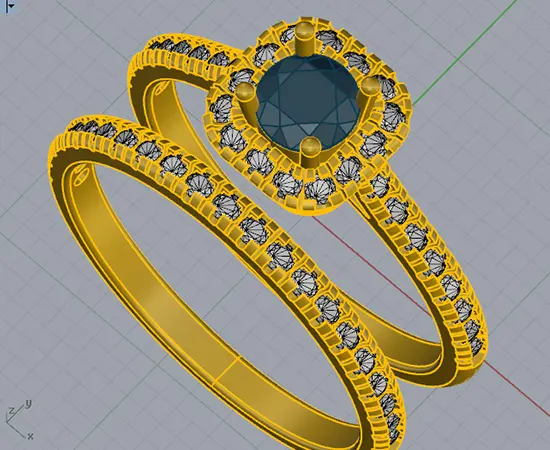
3D CAD design takes jewelry modeling to the next level, producing realistic three-dimensional renderings that can be viewed from every angle. This process not only gives a lifelike preview of the finished piece but also helps identify and fix potential design flaws before production begins.
Common CAD Software for Jewelry Design
A variety of professional software programs are available to create CAD jewelry models. Among the most widely used are AutoCAD, Autodesk, Inventor, CATIA, and SolidWorks, each offering specialized tools to bring complex jewelry designs to life with precision.

How CAM Works in Jewelry Manufacturing
In the jewelry industry, CAM technology is commonly combined with CAD software to create highly accurate jewelry products. CAD is used to design 3D jewelry models, while CAM is responsible for transforming those designs into actual production processes such as lost wax casting jewelry, CNC machining, and casting.
Understanding Jewelry CAM Processing
Computer-Aided Manufacturing (CAM) plays a key role in modern jewelry production by transforming CAD models into precise prototypes of the final piece. Through advanced software, CAM guides the manufacturing workflow, ensuring that even the most intricate designs are translated into accurate, high-quality jewelry.
Common CAM Software in Jewelry Making
A variety of software programs are widely used in CAM processing, including WorkNC, Siemens NX, PowerMILL, and SolidCAM. Each offers specialized tools that help jewelers achieve precision and efficiency in production.
Is CAM Always Necessary?
Not all jewelry requires CAM processing. CAM becomes essential only when CNC (Computer Numerical Control) machining is needed—such as for pieces that demand laser cutting or specialized tooling for high accuracy.
However, for traditional methods like casting, lost-wax casting, hand fabrication, or electroforming, CAM is not required. In contrast, CAD modeling is indispensable for all types of jewelry, regardless of how they are ultimately manufactured.
| CAD | CAM | |
| Full Form | CAD refers to Computer-Aided Design. | CAM refers to Computer-Aided Manufacturing/Modeling. |
| Definition | CAD is the use of computers for designing. Computers are used to aid in creating the design, modifying, and analyzing the designing activities. | CAM is the use of computer software to control machine tools in the manufacturing of modules. CAM transforms engineering designs into fully-grown products. |
| Purpose | The purpose of CAD is to make 2D technical drawings and 3D models. | The purpose of CAM is to use 3D models to design machining processes. |
| Main Focus | CAD focuses on the design of a product or part, structure, and colors. How it looks, how it functions. | CAM focuses on how to make the jewelry. CAM adds surface treatment details, texture, and different gemstone rendering effects. |
| Software | AutoCAD, Autodesk Inventor, CATIA, Solid Works | Work NC, Siemens NX, Power MILL, SolidCAM |
| Service Price | More economical | More expensive |
How CAM Works in Jewelry Manufacturing
Modern jewelry manufacturing uses CAM technology to improve production efficiency and product consistency.
1.CAD Jewelry Design
The process usually begins with CAD software, where designers create detailed 3D jewelry models with precise dimensions and stone settings.
2.CAM File Preparation
After the CAD model is completed, the design file is converted into manufacturing instructions for CAM systems. These instructions guide machines during production.
3. 3D Wax Printing or CNC Machining
CAM technology can control 3D wax printers or CNC machines to create highly accurate jewelry prototypes and molds.
4.Casting and Finishing
After production preparation, the jewelry pieces go through jewelry casting process, polishing, stone setting, and final quality inspection.
From CAD to CAM Processing
The manufacturing of any jewelry begins from CAD. When the design is completed in CAD, it is transferred into CAM.
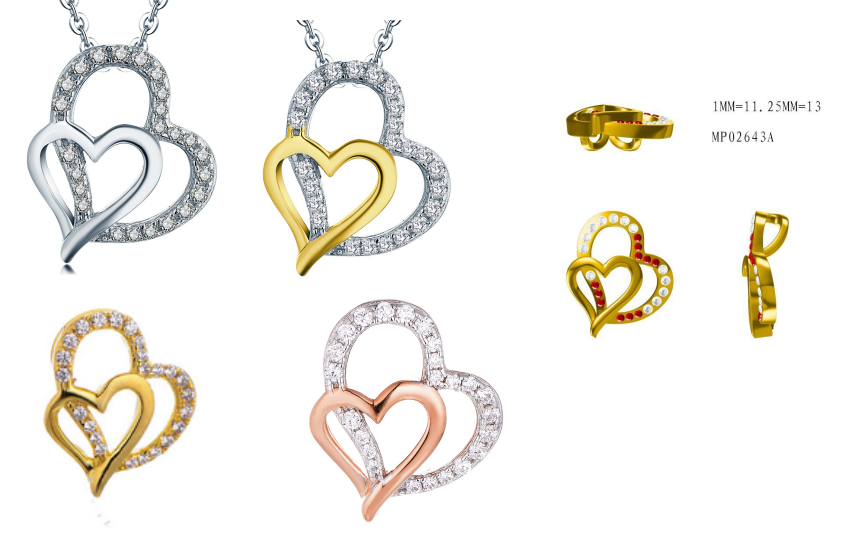
Steps Involved in the CAD to CAM Process
Here is a typical case study: from sketch to product of how jewelry engineering is done.
1.CAD Model Development
The process begins with creating a digital design using CAD software. Here, the designer builds a precise 3D model, incorporating all specifications such as dimensions, shapes, and intricate aesthetic details. The goal is to ensure the design fully aligns with the requirements of the final jewelry piece.
2. Exporting to a CAM-Compatible File
Once the CAD model is finalized, it is exported into a format suitable for CAM software—commonly STL. This step ensures that every design detail is accurately carried over for the next stage of production.
3. Manufacturing Setup
The CAD file is then imported into the CAM software, where detailed manufacturing instructions are generated. This includes defining tool paths, selecting the appropriate tools and sizes, setting operational speeds, and configuring other production parameters.
4. Production Execution
Finally, the CAM-generated instructions are transferred to manufacturing equipment such as CNC machines or 3D printers. These machines cut, carve, or print the jewelry material with precision, transforming the original sketch into a tangible finished product.
How Do CAD and CAM Work in Jewelry Manufacturing?
CAD & CAM Integration
The process begins with the designer creating a precise three-dimensional digital model using CAD software. Once completed, the design is exported into a CAM-compatible file format and imported into CAM software. This stage ensures the design details are accurately translated into manufacturing instructions.
Jewelry Assembly & Cleaning
After casting, the separate jewelry components are assembled to achieve the complete design. This may involve setting gemstones, joining metal parts, or attaching decorative elements. Once assembled, the jewelry is carefully cleaned to eliminate any wax, residues, or machining oils left from production.
Polishing, Finishing & Quality Assurance
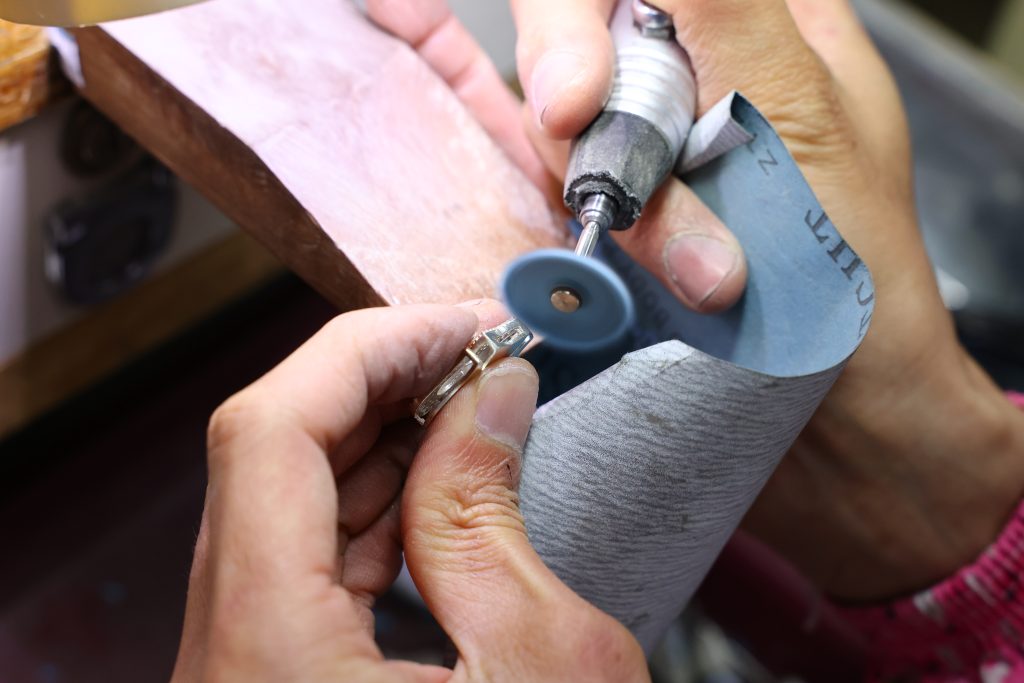
In the final stage, jewelers polish the piece to achieve a flawless shine, smooth out surfaces, and remove imperfections. Additional finishing processes—such as plating, engraving, or texturing—may be applied to achieve the desired look. Finally, every piece undergoes strict quality inspection to verify that it meets design specifications and industry standards.
Benefits of CAD & 3D Rendering for Jewelry Business
The integration of CAD and 3D jewelry mold manufacturing techniques in jewelry production has brought numerous benefits to both jewelry businesses and customers. Some of them are:
For Jewelry Businesses and Brand Owners
Saving Time and Reducing Costs
By replacing traditional sketching and manual casting with digital modeling, CAD and CAM technologies significantly accelerate the production process. With all design tools integrated into the software, each stage of manufacturing requires less time.
In addition, these innovations help lower production costs. Since jewelers can calculate material needs and technical requirements in advance, mass production can be carried out with greater efficiency and reduced waste.
Minimizing Product Returns
Thanks to CAD and 3D rendering, designers can preview the jewelry’s final appearance before production. This allows for adjustments and corrections during the design stage, reducing potential errors. As a result, the likelihood of product returns caused by design flaws is greatly diminished.
Enhancing Brand Trust and Loyalty
The precision offered by CAD, 3D rendering, and CAM ensures that the final product accurately matches the original concept. Delivering exactly what was promised strengthens customer trust and fosters long-term loyalty to the brand.
Benefits of CAM in Jewelry Manufacturing
- CHigher Production Accuracy
CAM technology helps manufacturers create highly precise jewelry products with fewer manual mistakes.
- Faster Sampling Time
Compared with traditional handmade production, CAM systems can significantly reduce jewelry sampling time.
- Claw Setting
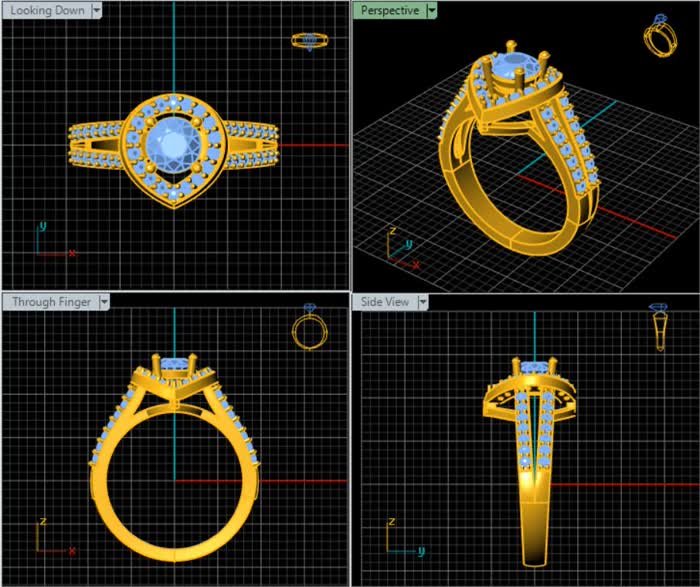
3D renders show a relatively high claw. This is intentional because the jeweler has sufficient material to work with when setting the stone. The extra height in the claw setting allows for precise adjustments and ensures the stone is securely and aesthetically set. During the actual setting process, these claws will be meticulously trimmed, shaped, and polished to hold the stone firmly and achieve the desired look.
- Better Consistency for Bulk Orders
For OEM jewelry manufacturing, maintaining consistent quality across large orders is extremely important. CAM technology helps ensure production consistency.
- Reduced Material Waste
CAM systems optimize production efficiency and help reduce precious metal waste during manufacturing.
How Do You Begin Working with a CAD Designer?
You don’t need to be an industry expert to collaborate with a CAD designer. All it takes is sharing your sketch, concept, or idea, and the designer will transform it into an initial 3D model. From there, you can request refinements and add detailed specifications until the design perfectly matches your vision.
If you’re searching for a reliable CAD partner, Endless Jewelry is here to help. As a sustainable jewelry manufacturer, we specialize in providing tailored CAD services that align with your preferences. By working with us, you gain faster lead times, reduced costs, improved customer experiences, and stronger brand growth.
At Endless Jewelry, we offer more than CAD rendering—we work alongside you to provide valuable market insights and industry expertise, ensuring your brand evolves with every project.
Why CAM Technology Is Important for OEM Jewelry Manufacturing
For OEM and ODM jewelry manufacturers, CAM technology helps improve communication between design and production teams. It also allows factories to offer faster sampling, lower production errors, and more stable bulk order quality.
As global jewelry brands increasingly demand faster lead times and customized jewelry production, CAM systems have become an essential part of modern jewelry manufacturing.
Key Takeaway
CAD and CAM technologies have revolutionized the jewelry industry by reshaping how designs are imagined and produced. When combined with skilled craftsmanship, these tools empower the creation of customized, high-quality jewelry pieces that bring both creativity and precision to life.
FAQs
1.What is CAM in jewelry manufacturing?
CAM refers to Computer Aided Manufacturing, which uses digital technology and automated machines to produce jewelry products.
2. What is the difference between CAD and CAM?
CAD is used for jewelry design, while CAM is used for manufacturing and production.
3.How does CAM improve jewelry manufacturing?
CAM improves production accuracy, reduces manual errors, and increases production efficiency.
4.Is CAM suitable for custom jewelry manufacturing?
Yes. CAM technology is widely used for OEM and ODM custom jewelry production.
5.What equipment is used in CAM jewelry production?
Common equipment includes CNC machines, 3D wax printers, laser engraving machines, and casting systems.