What Types of Jewelry Do Not Tarnish? The Ultimate Anti Tarnish Guide
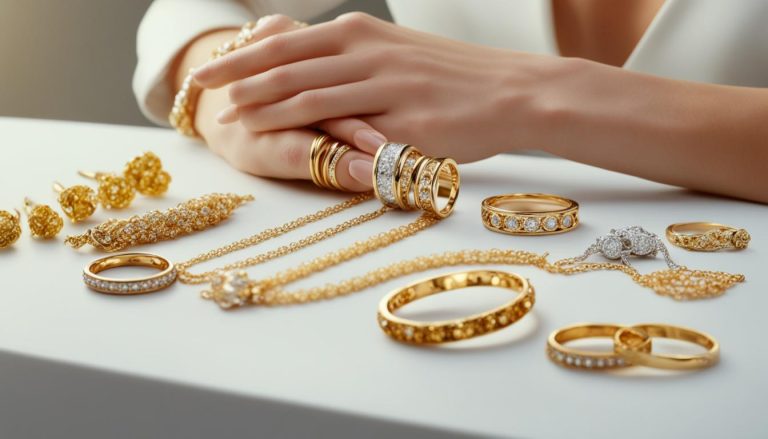
The disappointment of watching your jewelry lose its shine can be truly frustrating. It is not only the fading of a beautiful accessory but also the diminishing value of something you invested in. This is why anti tarnish jewelry has become increasingly important for modern wearers who want long lasting brilliance without the need for frequent polishing or special care.
In this guide, we take a closer look at the most reliable anti tarnish jewelry materials and address common questions such as does gold jewelry tarnish and what types of jewelry resist tarnishing the best. Let us explore how to keep your jewelry looking radiant for years to come.

Why Does Jewelry Tarnish?
What causes jewelry to tarnish is mainly exposure to everyday environmental and physical factors. Over time, these elements gradually dull the surface of metal, reducing its shine and brilliance.
- Sweat:Sweat contains salts and mild acids that accelerate oxidation, especially in metals such as silver and copper. When jewelry frequently comes into contact with sweat, chemical reactions occur that lead to discoloration and a dull appearance over time. This is why active wearers often look for jewelry that can be worn while sweating, showering, or swimming without damage.
- Air:Continuous exposure to oxygen and sulfur in the air triggers oxidation. For example, sterling silver reacts with sulfur to form silver sulfide, which appears as a dark layer on the surface and causes visible tarnishing.
- Water:Moisture speeds up the tarnishing process, particularly in humid environments. Water can leave behind minerals and chlorides that promote corrosion and discoloration, especially in silver and lower karat gold alloys. For this reason, many brands emphasize ocean proof and beach proof jewelry designed to perform better in coastal conditions.
- Chemicals:Perfumes, lotions, chlorine, and household cleaning products contain aggressive compounds that can damage metal surfaces. These substances wear away protective coatings and make jewelry more vulnerable to tarnishing and surface wear.
- Scratches:Surface scratches expose fresh layers of metal that react more easily with oxygen, sulfur, and moisture. This accelerates tarnish development, particularly in softer metals such as silver and gold alloys.
Common Types of Tarnish
Tarnish appears in different forms depending on the metal and environment. Knowing these can help you identify the jewelry that doesn’t tarnish vs. those that are prone to tarnishing.
- Surface Scratches: When the surface of the jewelry has marks from abrasive objects, the protective layer begins to wear off, making the jewelry more prone to oxidation and dullness. Once exposed, the alloys underneath corrode faster, totally disfiguring the jewelry look.
- Discoloration: Jewelry often turns green, yellow, or black when it begins to tarnish. Silver sulfide appears black, copper oxide turns green or brown, and gold alloys may show faded yellow patches.
What Does Tarnished Gold Look Like?
Tarnished gold appears dull, scratched, or discolored. Depending on the karat purity, it may look brown, reddish, or green, especially on areas exposed to sweat, lotions, or moisture. Lower karats like 10K and 12K tarnish faster due to lesser gold content. They lose their shine and luster, and fail to exude the luxurious look they once had.
| Material | Tarnish Resistance | Notes |
|---|---|---|
| Stainless Steel | ✅ Yes | Durable and naturally tarnish resistant |
| PVD Coated Stainless Steel | ✅ Yes | Titanium nitride layer improves durability and tarnish resistance |
| Silver | ❌ No | Tarnishes over time. Rhodium plating or e coating helps reduce tarnish |
| Brass | ❌ No | Tarnishes easily. Not suitable for pool shower or ocean wear without proper plating |
| Rhodium Plated Silver | ✅ Yes | Protective rhodium layer improves tarnish resistance |
| Gold Plated Jewelry | ⚠ Partial | Depends on plating thickness and base material |
| Gold Filled Jewelry | ✅ Yes | Thick bonded gold layer offers long lasting wear |
| Solid Gold Jewelry | ✅ Yes | Pure gold does not tarnish under normal conditions |

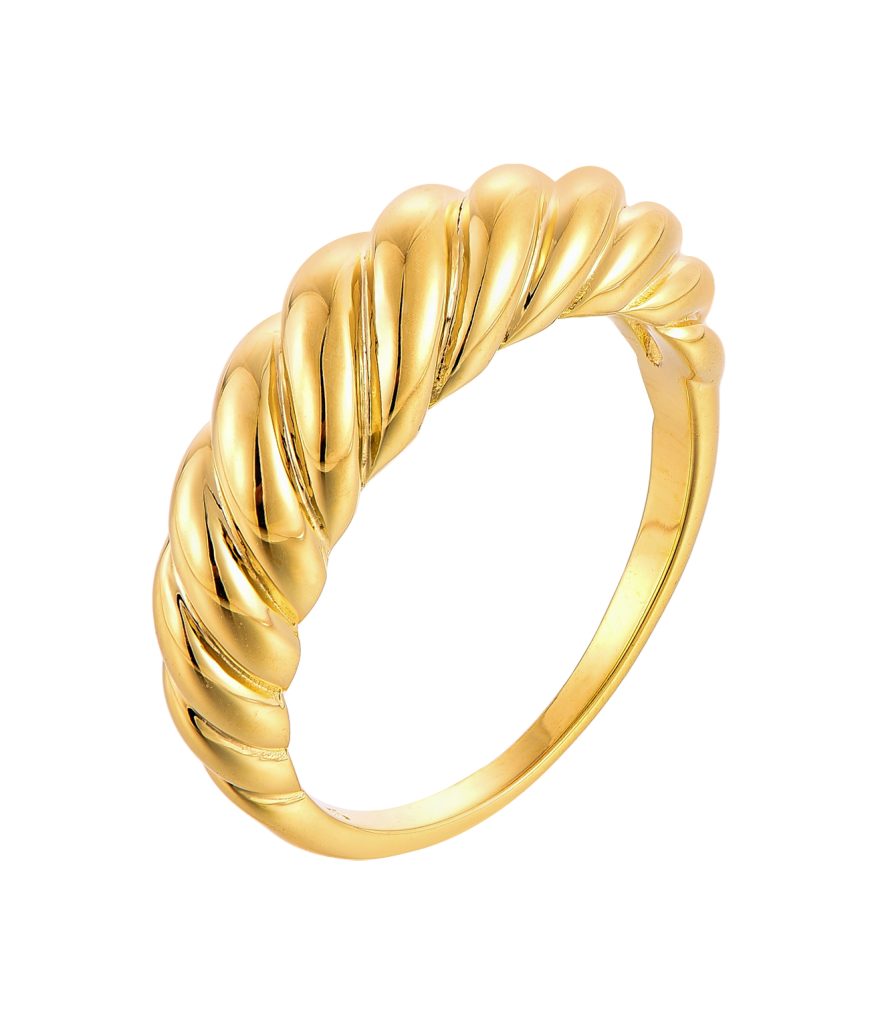
What Is Anti Tarnish Jewelry? What Does Anti Tarnish Mean?
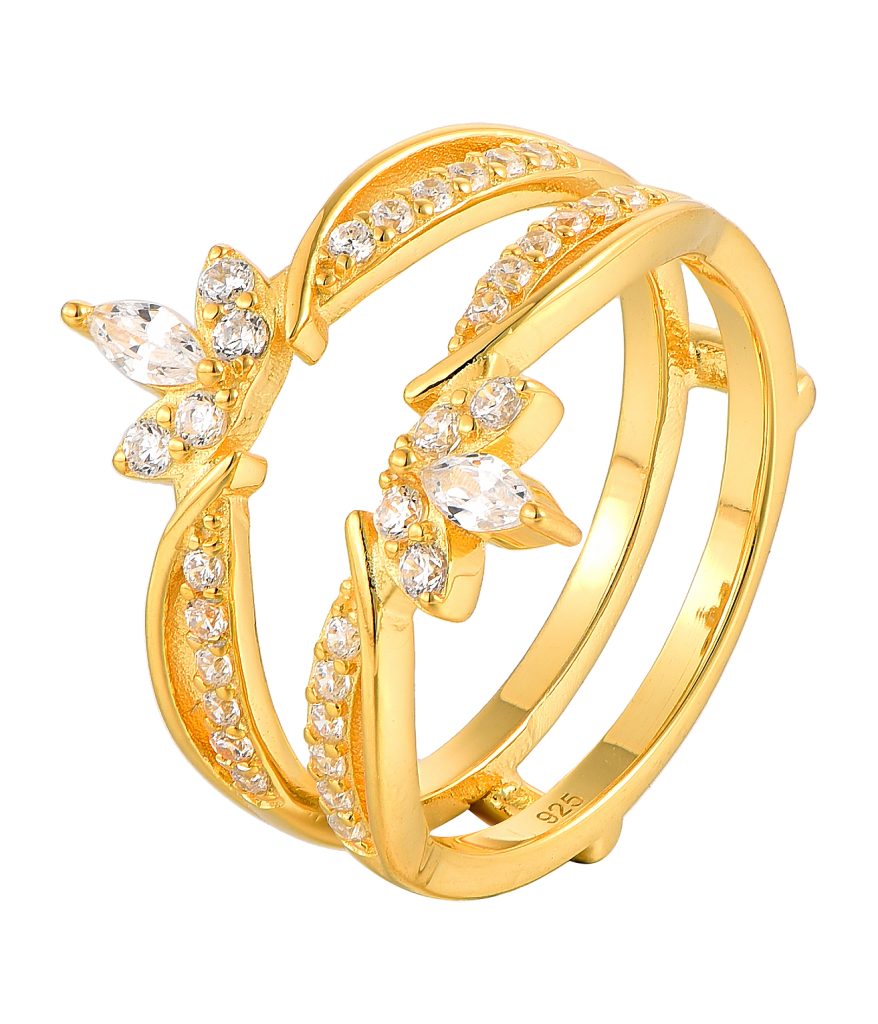
Wondering what anti tarnish means in jewelry? The term anti tarnish does not imply that a piece will never tarnish. Instead, it refers to jewelry that is designed to resist tarnishing, corrosion, and surface dullness caused by everyday exposure to sweat, air, water, chemicals, and minor scratches.
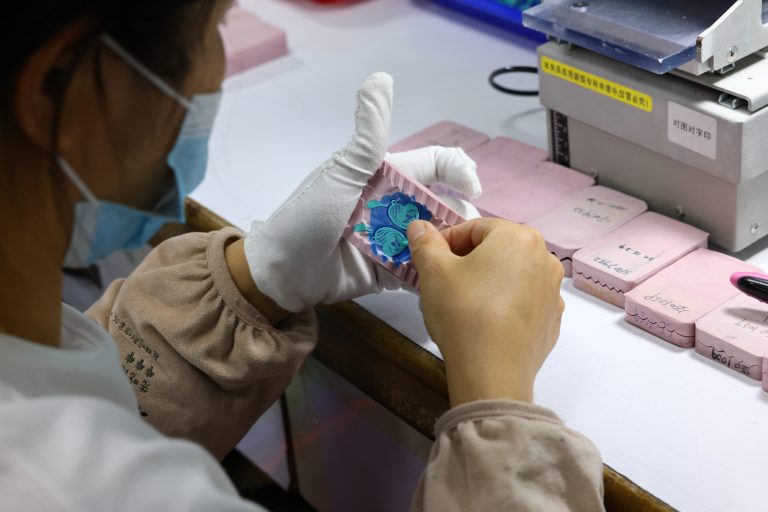
The meaning of tarnish free jewelry also extends to waterproof and wear resistant designs that offer stronger protection against damaging environmental elements. This level of durability is achieved by using robust base metals along with advanced plating and protective technologies such as PVD coatings, rhodium plating, and similar surface treatments that help preserve shine and appearance over time.

Anti Tarnish Jewelry Materials What Types of Jewelry Do Not Tarnish
There are 3 specific metals that you can count on for making tarnish free jewelry. They ensure shine, durability, and lasting value. They are:
304 & 316L Stainless Steel
Stainless steel, particularly 304 and 316L grades, is widely recognized for its natural corrosion resistance, durability, and cost effectiveness. These alloys contain chromium, which accounts for at least 10.5 percent of their composition. When stainless steel is exposed to water, oxygen, or other tarnish causing elements, the chromium reacts to form a thin protective layer that prevents further oxidation. This built in protection is why stainless steel is commonly used in waterproof and anti tarnish jewelry.
316L stainless steel, often referred to as surgical steel, is especially valued for its hypoallergenic properties and skin safety. It withstands daily wear with ease, making it suitable for long term use. For those seeking affordable jewelry that resists tarnishing while maintaining strength and appearance, 316L stainless steel offers an excellent balance between durability and price.
Rhodium Plated Silver Jewelry
Uncoated silver is naturally prone to tarnishing. Over time, it reacts with sulfur in the air, causing the surface to darken and lose its original shine. However, when silver is coated with rhodium, a rare metal from the platinum family, it becomes highly resistant to tarnish.
Rhodium plating creates a protective barrier that prevents oxidation while adding a bright, mirror like finish that enhances the appearance of silver jewelry. Although the rhodium layer is applied thinly over the silver, it is exceptionally durable and can withstand daily wear, including exposure to water environments.
Palladium
This metal is also part of the Platinum Family and is naturally resistant to tarnish. Palladium is highly durable, lightweight, and hypoallergenic. It is commonly used in gold plating jewelry, fine jewelry, and white gold alloys for additional strength.
Unlike silver, this metal does not discolor when exposed to air or moisture, so it does not require plating to look lustrous and durable. Because of its rarity, it’s more expensive than stainless steel and rhodium-plated silver, but provides a lasting, premium finish.
Non Tarnish Gold Jewelry Which Types of Gold Jewelry Do Not Tarnish
Looking for what gold jewelry doesn’t tarnish? There are 3 specific gold pieces you can rely on to maintain their original look over time. They are:
Gold Filled Jewelry
Gold filled jewelry offers an excellent, cost effective option for tarnish resistant gold pieces. It is made by bonding a thick layer of solid gold to a base metal through chemical or mechanical processes. Typically, the solid gold layer accounts for at least 5 percent, or 1/20th, of the total weight, giving the appearance and feel of solid gold without the high cost.
Thanks to its layered composition and strong bonding, gold filled jewelry is highly durable and resistant to tarnish. With proper care, it can retain its shine and brilliance for three to five years, making it a long lasting, affordable alternative to solid gold.
Solid Gold Jewelry
Solid gold jewelry is the most dependable option when it comes to tarnish resistance, though the level of tarnish protection varies with the gold karat. Pure 24K gold (100% gold) does not tarnish because it contains no other metals, but it is very soft and prone to scratches, making it uncommon in mass market jewelry except for custom or private label pieces.
14K and 18K gold are more widely used as they offer an ideal balance between durability and tarnish resistance. The alloyed metals, such as copper, zinc, or brass, strengthen the gold while still maintaining its ability to resist tarnishing. Over time, slight discoloration may occur due to these alloys, but it is minimal and generally unnoticeable, preserving the jewelry’s long term beauty.
PVD Gold on Stainless Steel
PVD (Physical Vapor Deposition) coating allows the creation of waterproof, tarnish resistant gold jewelry by bonding gold particles onto stainless steel within a vacuum environment. This advanced coating method produces a highly durable, scratch resistant finish that outperforms traditional electroplating and standard plating techniques.
Because stainless steel is naturally corrosion resistant, and with the addition of a Titanium Nitride (TiN) layer, PVD coated jewelry combines exceptional strength with a rich, long lasting gold appearance. For those seeking stylish, tarnish proof jewelry at an affordable price, PVD gold stainless steel offers an excellent and cost effective solution.
Best Tarnish Free Jewelry
The best tarnish free jewelry is stainless steel jewelry. Naturally, stainless steel is waterproof, scratch-resistant, ideal for daily wear, and guaranteed to last long. When the jewelry is made with 316L stainless steel, you can rest assured that it’s suitable for individuals with highly sensitive skin without the fear of allergic reaction.
You can also explore our curated list of best waterproof jewelry to see which types thrive in wet environments.
Best Non Tarnish Gold Jewelry
Solid gold jewelry, particularly 14K and 18K are the best anti tarnish gold jewelry. Their balance of durability and beauty makes them capable of withstanding extreme conditions without sacrificing the need to look luxurious and unique.
Inexpensive Gold Jewelry That Won’t Tarnish
The most affordable anti tarnish gold jewelry is PVD gold coating stainless steel. This tarnish free gold jewelry combines the budget-friendliness and corrosion resisting properties of stainless steel with the sophistication of gold, making it inexpensive yet beautiful.
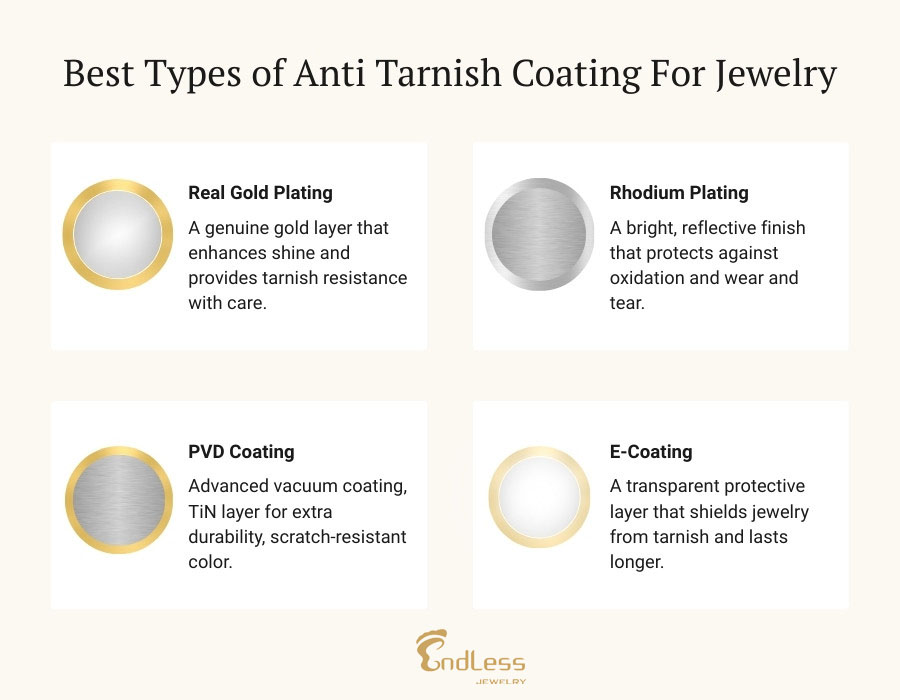
Best Types of Anti Tarnish Coating for Jewelry
Anti tarnish jewelry often relies on protective coatings to extend their lifespan and maintain their shine. Here are the most effective coating methods to preserve jewelry shine and extend lifespan:
Real Gold Plating
Gold plating involves applying a thin layer of real gold over base metals like silver, brass, or stainless steel. A jewelry lab testing should be conducted to ensure real gold is used because some manufacturers nowadays use fake gold, which quickly wears off and leads to early tarnishing. Real gold plating provides a protective barrier that resists tarnish and oxidation.
Rhodium Plating
This coating technique involves submerging the jewelry in a rhodium solution, where the jewelry and rhodium particles are bonded together with electrical current. Rhodium plating is highly reflective and corrosion-resistant, enhancing its waterproof and anti-tarnish performance. For example, sterling silver without coating can tarnish and get dark quickly, but when rhodium-plated, it resists tarnishing and maintains its bright color.
PVD Coating
This is the best anti tarnish coating for jewelry. During the deposition process, the stainless steel base metal is coated with a TiN layer (Titanium Nitride), which makes the gold adhere tightly to the stainless steel. This forms a protective layer that resists tarnishing and has longer color retention for 1-2 years.
E-Coating
This is a transparent, ultra-thin coating that increases scratch resistance and helps retain the jewelry color for a long time. However, e-coating is incapable of withstanding exposure to alcohol, perfume, or harsh chemicals. Closer attention and maintenance must be given to jewelry pieces that are frequently rubbed or worn everyday, as they are more susceptible to scratch.
How Long Does Anti Tarnish Jewelry Last?
The lifespan of anti tarnish jewelry depends on several factors, including the type of metal, the manufacturing process, the thickness of any coatings, how often it is worn, and how it is cared for.
Durable metals such as stainless steel and solid gold can last a lifetime when properly maintained. The plating technique—whether PVD, electroplating, or rhodium plating—also significantly affects durability. Jewelry with thicker gold layers, like gold filled or gold vermeil pieces, tends to be particularly long lasting.
Frequency of wear is another key factor. Jewelry that is worn daily is more likely to come into contact with elements that can cause wear or tarnish. Proper care is essential: exposure to soap, shampoo, saltwater, or chlorine should be followed by rinsing with clean water and thorough drying to maintain the jewelry’s shine and prolong its life.
Can Real Gold Tarnish?
No, real solid gold does not tarnish because it is a noble metal and does not react easily with air or moisture. Although, it may have slight discoloration caused by the alloyed metals, but it’s often minor.
Can Real Gold Tarnish?
Yes, gold vermeil can tarnish over time, as it may oxidize once the gold layer starts to wear down. The duration it retains its shine largely depends on daily use and handling. However, gold vermeil is generally more resistant to tarnish compared to standard gold plated jewelry.
Will Gold Filled Jewelry Tarnish?
Gold filled jewelry does not tarnish quickly since it contains a higher percentage of solid gold that’s bonded to the base metal tightly. This jewelry can last 3-5 years if properly maintained.
Will 14K or 18K Jewelry Tarnish?
They do not tarnish easily. While they contain other metals, the gold content is higher and provides strong tarnish resistance. However, minor dullness may appear over time because of the other metals.
Does Gold Bonded Jewelry Tarnish?
This is similar to gold plating, so it’s the same as asking: does gold plated tarnish? Yes, it tarnishes over time, especially if the gold layer is very thin.
Does Gold Stainless Steel Jewelry Tarnish?
If the gold plating was done through PVD, it won’t tarnish easily. PVD gold stainless steel jewelry has high tarnish resistance thanks to the TiN layer used to make the adhesion tight.
Does Gold Plated Sterling Silver and Brass Jewelry Tarnish?
Does gold plated sterling silver tarnish? The answer depends on both the thickness of the gold plating and how the jewelry is cared for. Thin gold plating, especially with improper maintenance, is more prone to tarnishing. The same principle applies when the base metal is brass. Jewelry with thicker gold plating offers significantly better resistance to tarnish.
How to Stop Jewelry from Tarnishing?
Even the best tarnish free jewelry benefits from care. Proper cleaning, storage, and handling help preserve jewelry’s shine and extend its lifespan. Follow these tips to make your jewelry tarnish-free:
Tip #1: Regular Cleaning with a Cloth
Basically, routine care ensures anti tarnish gold jewelry pieces retain their beauty longer. Oils, sweat, and dust speed up tarnishing. Regularly wiping with a microfiber or jewelry cloth helps prevent build-up that accelerates oxidation, especially for jewelry pieces with thin plating.
Tip #2: Store Properly
Storing jewelry in airtight bags, soft pouches, or lined boxes helps reduce exposure to air and humidity, which are the two factors responsible for corrosion. Jewelry pieces get scratched when stored together, so always separate them.
Tip #3: Avoid Chemicals
Perfume, lotion, chlorine, and cleaning products can strip protective layers and cause corrosion. The best way to preserve your jewelry is to remove it before exposure to any harsh conditions like showering, swimming, or applying beauty products.
Tip #4: Dry After Wear
Moisture quickens oxidation, so drying jewelry after wear is crucial. Sweat, water, or steam can impact anti tarnish jewelry over time. Thus, rinse them with clean water and dry them after workouts, showers, or swimming to prevent mineral deposits and corrosion.
Conclusion
Investing in anti tarnish jewelry is the best way to keep your favorite pieces shining for years without constant maintenance. Whether you prefer stainless steel, gold, or PVD coated designs, durability matters. If you’re an individual or brand seeking long-lasting designs, partnering with a trusted custom jewelry manufacturer can grant you access to high-quality, tarnish-resistant pieces that combine beauty and resilience.
Have a jewelry design idea or some questions?