Hollow Gold vs. Solid Gold: Key Differences and Common Features
Table of Contents
Gold jewelry has always represented elegance, sophistication, and timeless value. For wholesalers and retailers, choosing the right type of gold jewelry is not only about its shine but also about meeting customer demands and balancing cost with quality. Among the different options in the market, hollow gold and solid gold jewelry are two major categories, each with specific advantages for both individual buyers and wholesale jewelry suppliers.
In this article, we will provide a clear comparison of hollow gold and solid gold. You will learn their definitions, similarities, differences, and key factors to consider when sourcing jewelry in bulk. This guide will also help wholesalers, distributors, and business owners determine which type of gold jewelry is more suitable for their target market and purchasing budget.
What is Hollow Gold? Is It Real?
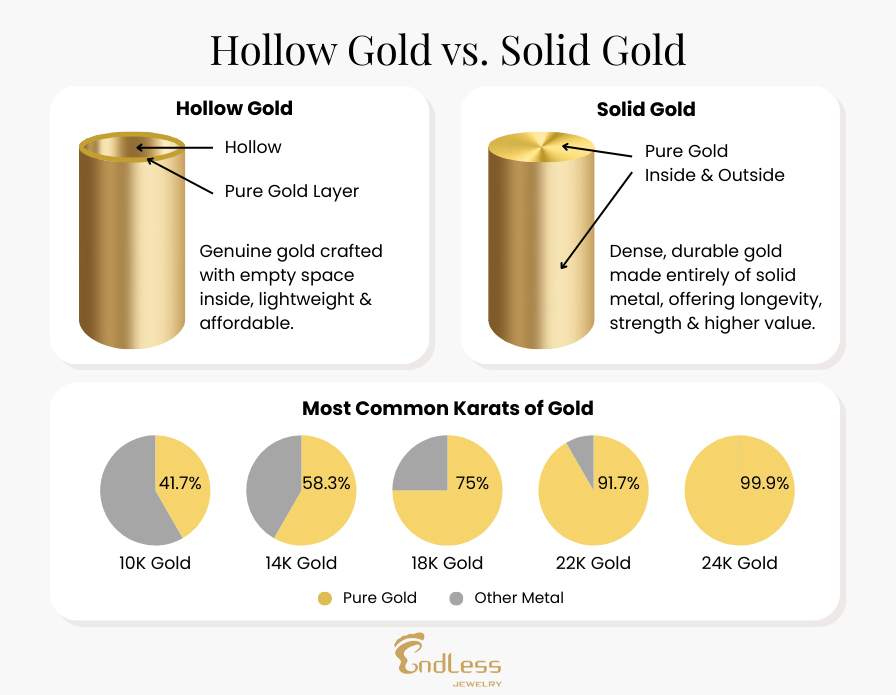
Hollow gold is exactly what the name suggests. It is genuine gold jewelry designed with empty space inside, which makes it lighter than solid gold while still being available in the same karat options such as 10K, 14K, 18K, 22K, and even 24K.
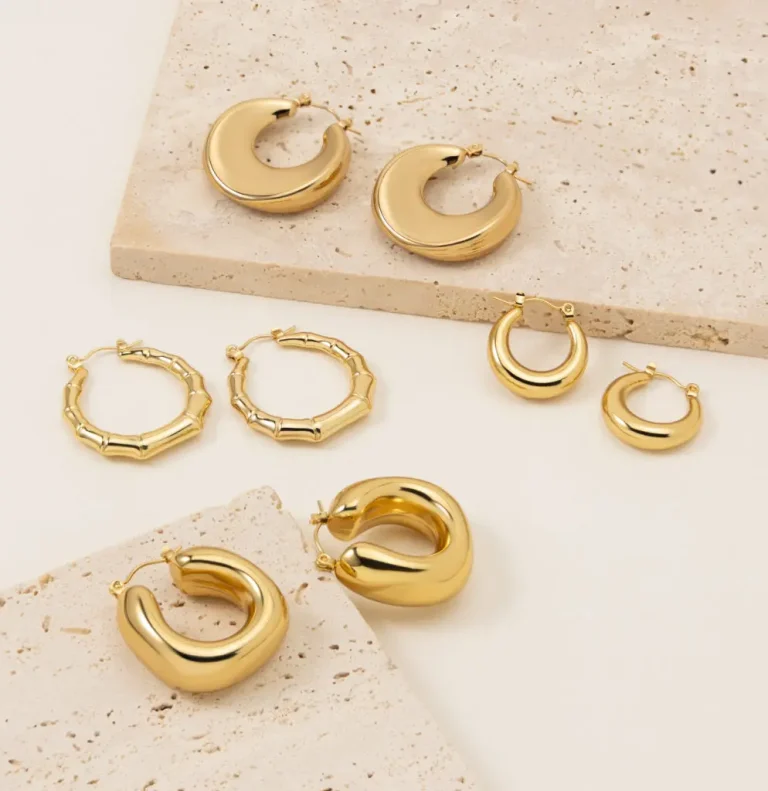
The production of hollow gold jewelry often involves electroforming, a process where gold is layered onto a mold that is later removed, or where a tube is placed inside a thick layer of gold and then taken out. This technique allows manufacturers to create larger designs like hoops, bangles, and pendants that look bold and substantial but remain comfortable to wear and more affordable than solid gold pieces.
A common question is: Is hollow gold real? The answer is yes. Hollow gold is made of authentic gold and should not be confused with gold plated jewelry, which only has a thin layer of gold over another metal. Another misconception is that hollow gold is cheap or poor quality. In reality, it uses the same gold as solid gold jewelry, just crafted in a lighter form.
There is also the belief that hollow gold cannot be repaired. This is not true. With the right expertise, hollow gold jewelry can be fixed and maintained. It is important to work with a professional gold jewelry manufacturer who has the skills and equipment to handle these repairs properly.
What is Solid Gold?
Solid gold is the direct opposite of hollow gold. It is made entirely of gold with no empty space inside, which gives it exceptional durability, density, and intrinsic value. Because of these qualities, solid gold is often used to create timeless pieces such as wedding bands, engagement rings, or heirloom jewelry that are designed to be passed down through generations.
Solid gold jewelry has a noticeably heavy and luxurious feel that reflects premium quality. Since it is crafted from a complete sheet of gold without any hollow areas, it is extremely strong and resistant to daily wear and tear. For wholesalers and retailers, solid gold remains a top choice for customers seeking long-term value and investment-worthy pieces.
Just like hollow gold, solid gold is available in different types of gold jewelry karats, ranging from 10K up to 24K, offering flexibility for various markets and customer budgets.


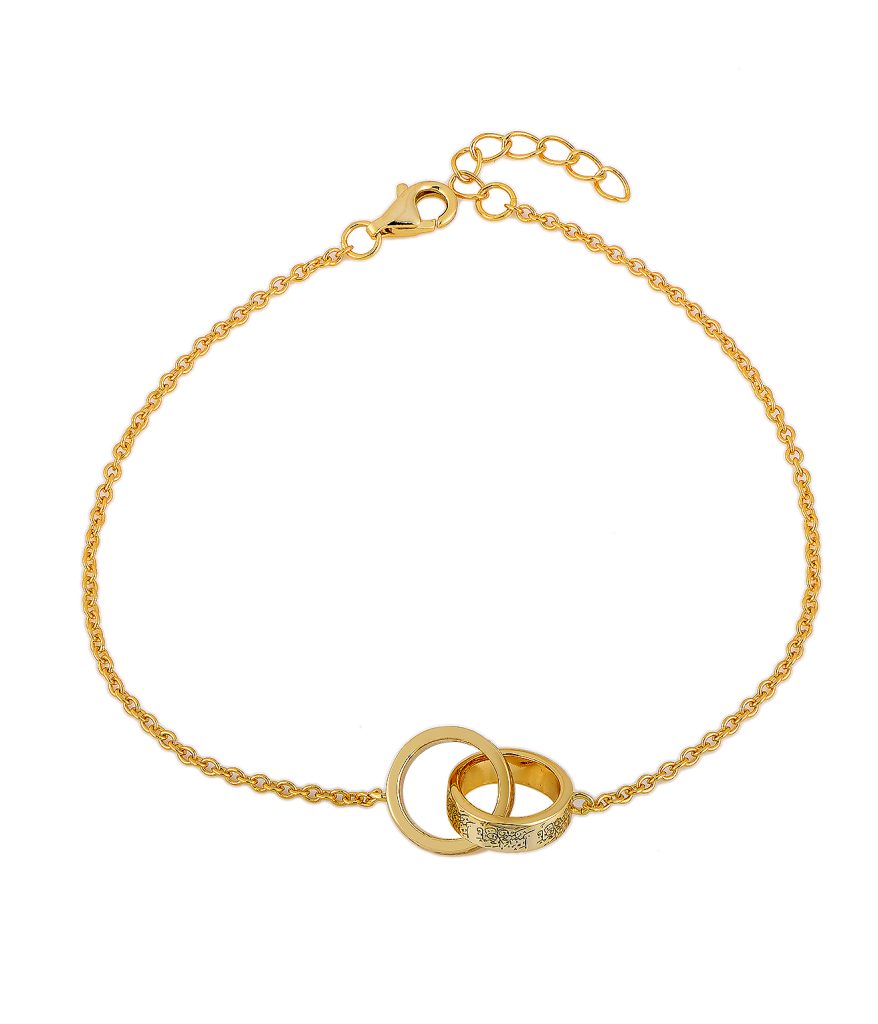
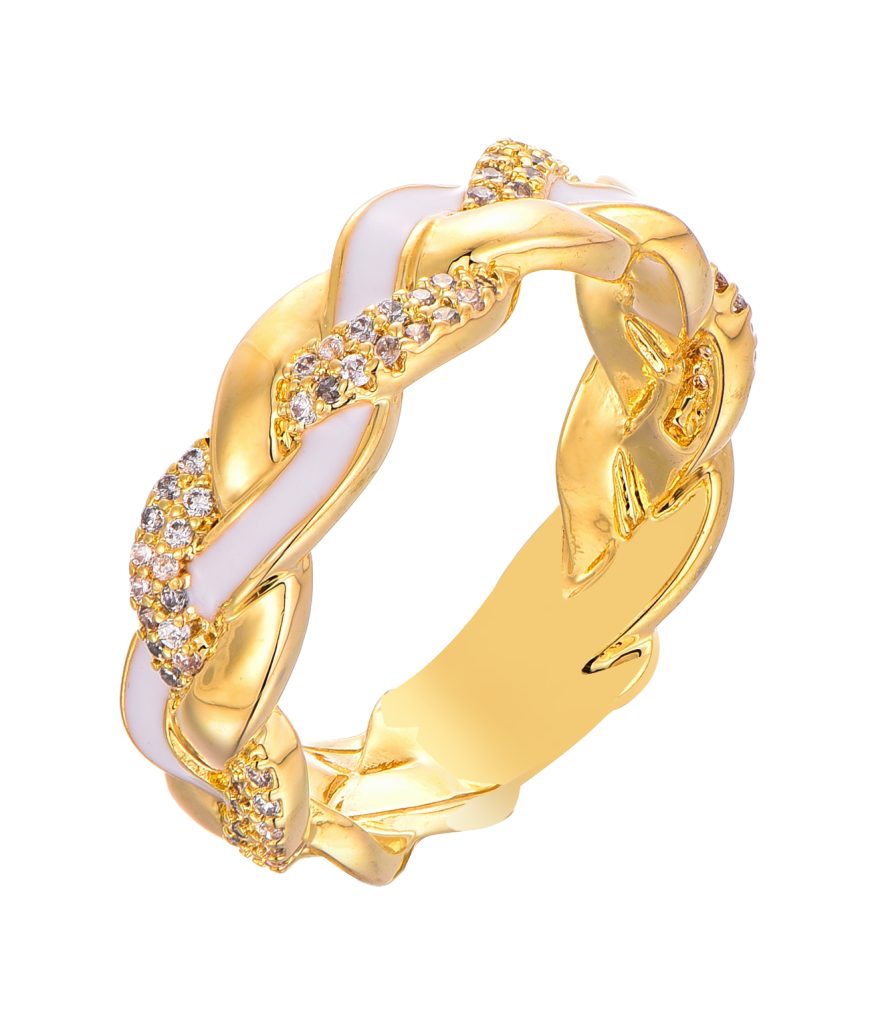
Differences between Hollow and Solid Gold
What’s the difference between hollow and solid gold? Here are some notable aspects where the gold jewelry types are largely different:
| Feature | Hollow Gold | Solid Gold |
|---|---|---|
| Weight | Lightweight, easier to wear daily | Heavier, gives premium feel |
| Durability | Fragile, prone to dents or bending | Very durable, long-lasting |
| Tarnish Resistance | Resists tarnish but thinner walls wear fast | Excellent resistance, especially in high karats |
| Cost & Resale Value | Budget-friendly and lower resale potential | Expensive but higher resale and investment value |
| Maintenance & Repair | Hard to resize or repair if damaged | Easy to resize, polish, and repair |
Weight and Feel
Solid gold is much heavier and feels more substantial compared to hollow gold. This weight gives it a sense of luxury and high quality, which is why many customers associate solid gold with premium jewelry.
Hollow gold, in contrast, is noticeably lighter. This makes it comfortable to wear, especially for larger pieces like bangles or hoops that are worn for long periods. However, because it lacks the solid weight of traditional gold, it is often misunderstood as being lower in value.
Durability and Hardness
Durability is one of the biggest differences between the two. Hollow gold has empty space inside, making it less strong and more vulnerable to dents or bending under pressure.
Solid gold, on the other hand, is dense and structurally stronger. It can withstand daily use without easily showing damage, making it the better option for long-lasting jewelry.
Water and Tarnish Resistance
Both hollow and solid gold resist tarnish if alloyed properly. However, solid gold offers better protection against corrosion and remains safe in sweat, showers, pools, and even seawater.
Hollow gold is more prone to fading and tarnishing because of its thinner walls. Frequent exposure to water, especially swimming pools with chlorine or seawater, can speed up wear and discoloration.
Cost and Resale Value Comparison
Hollow gold is more affordable since less material is used. But its resale value is generally lower because of its light weight and durability concerns.
Solid gold jewelry price is much higher due to its density and increased gold content. It also retains stronger resale value, making it a preferred option for long-term investment.
Maintenance and Repairs
Solid gold is easier to resize, polish, and repair because of its strong structure. Jewelers can work on it without requiring special equipment.
Hollow gold, however, can be tricky to repair. Resizing or fixing dents is often more complicated and may require specialized expertise, which can increase maintenance costs.
Similarities between Hollow and Solid Gold
When comparing hollow gold vs. solid gold, it is clear that both share core qualities that make them highly attractive in the jewelry market.
First, both are made from authentic gold and are available in the same karat options, including 10K, 14K, 18K, 22K, and 24K. No matter which option you select, you are purchasing genuine gold jewelry rather than fake or gold-plated jewelry.
Another similarity lies in their hypoallergenic potential. Depending on the alloys used, both hollow and solid gold can be safe for sensitive skin. For instance, nickel-free alloys ensure comfort and wearability for customers with allergies.
Lastly, both categories of gold jewelry are valued for their beauty and luxurious appearance. Whether hollow or solid, they can be crafted into elegant, fashionable, and marketable designs that appeal to a wide range of consumers in both retail and wholesale jewelry markets.
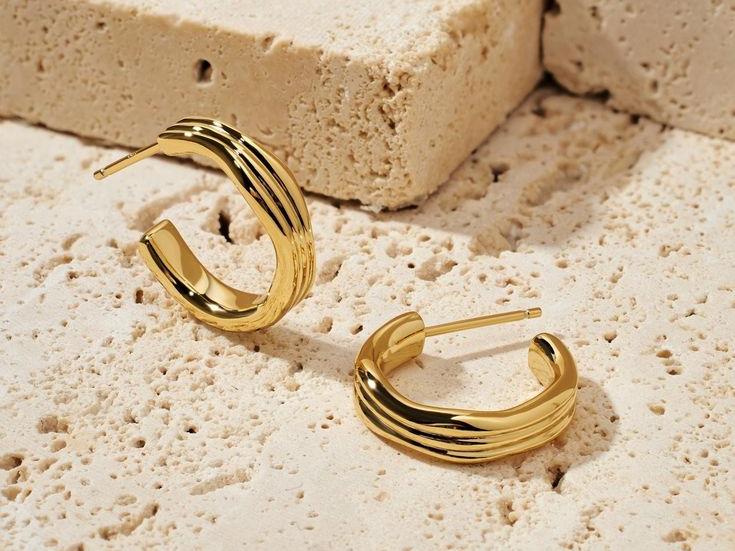
Pros and Cons of Hollow Gold Jewelry
Hollow gold offers real gold at a lighter and more affordable option, though with compromises in durability and resale value.
Pros of Hollow Gold Jewelry
- Hollow gold contains less metal, making it affordable, while still offering genuine karat options and the authentic beauty of gold.
Its reduced weight makes it easy to wear, suitable for casual or large statement pieces that would otherwise feel too heavy.
Hollow gold jewelry allows designers to experiment with bold, fashionable styles while keeping costs inexpensive for everyday buyers.
Cons of Hollow Gold Jewelry
- Its thin structure makes it more susceptible to bending, denting, or breaking, particularly under frequent wear or accidental impact.
- Fixing hollow gold jewelry can be challenging, as its delicate structure makes soldering or reshaping risky and sometimes costly.
- Hollow gold pieces typically carry less intrinsic value, making them have lower resale or inheritance worthiness.
Pros and Cons of Solid Gold Jewelry
Solid gold jewelry is valued for its strength, timelessness, and investment potential, though it comes at a higher cost and weight.
Cons of Hollow Gold Jewelry
- Solid gold withstands daily wear, resists tarnishing, and maintains its shape for a long time. This makes it a lasting piece for everyday or special occasions.
- With higher intrinsic worth, solid gold retains strong resale value and serves as a reliable long-term investment.
- Solid gold requires minimal upkeep, as it doesn’t corrode or tarnish easily.Needs occasional polishing to maintain its luster.
- Solid gold’s timelessness makes it suitable for passing down to generations or luxury brand offerings.
Cons of Solid Gold Jewelry
- Because of its dense gold content, solid gold is more expensive, often limiting accessibility for budget-conscious buyers.
The weight of solid gold makes it not suitable for larger pieces. They can be uncomfortable to wear for extended periods.
Oversized solid gold jewelry may feel cumbersome or impractical, especially for those seeking fashionable yet affordable alternatives.

Does Hollow Gold Jewelry Tarnish?
A common question is: does hollow gold tarnish? The answer is no, at least not easily. Hollow gold jewelry, when made with real karat gold, resists tarnishing. However, because it has thinner walls, signs of wear may appear sooner, especially if the gold purity is lower.
Does Solid Gold Jewelry Tarnish?
Solid gold jewelry rarely tarnishes. Lower karat options such as 10K gold jewelry or 14K gold jewelry, which contain more alloys, may show slight dullness over time. Higher purity pieces like 18K and 24K gold retain their shine much longer and require less maintenance.
How to Tell If Gold is Hollow or Solid?
Appearance and Weight: Solid gold has no hollow spaces and feels heavier, while large pieces that feel unusually light are often hollow gold jewelry.
Sound Test: Tap the jewelry lightly against a hard surface. Solid gold produces a fuller, richer sound, whereas hollow gold has a softer, dull sound.
Hallmarks and Stamps: Markings can reveal the type of gold. For example, “18K SG” stands for 18K solid gold, while “14K HG” indicates 14K hollow gold.
Professional Inspection: Jewelers can confirm using specialized tools or X-ray equipment to identify whether a gold piece is hollow or solid.
Is Hollow Gold the Same as Gold-Plated?
No, they are very different. Hollow gold is authentic gold with empty space inside, while gold-plated jewelry is usually made from a base metal that has been coated with a thin layer of gold, typically between 0.03–0.06 microns. Hollow gold has intrinsic value as real gold, while gold-plated is more affordable but less durable.
Hollow vs. Solid Gold: Which One Fits Your Jewelry Brand?
For jewelry brands targeting the affordable fashion market, hollow gold is a strong choice. It allows for bold, stylish designs at lower costs, making it appealing to budget-conscious buyers who still want genuine gold jewelry.
For brands positioned in the luxury and fine jewelry segment, solid gold is the better option. With excellent durability, higher resale value, and timeless appeal, solid gold is ideal for heirloom-quality collections, investment-worthy pieces, and premium product lines.
Conclusion
Knowing the factors that differentiate hollow gold vs solid gold is very important. While both are types of gold jewelry, solid gold stands the test of time better. Hollow gold looks like solid gold but it has an empty space on the inside, which makes it cheaper but less durable and more difficult to maintain.
FAQs
1.What is hollow gold?
Hollow gold refers to jewelry that looks like solid gold on the outside but has an empty interior. This design reduces the overall weight of the piece while maintaining the same appearance as solid gold jewelry. Hollow gold jewelry is commonly used for chains, bracelets, earrings, and larger statement pieces because it offers a more affordable and lightweight option.
2. What does hollow gold mean
Hollow gold is a type of jewelry construction where the inside of the piece is not completely solid. Instead of being made from solid metal all the way through, hollow gold jewelry is formed with a hollow center to save gold material and reduce cost. It provides the luxurious look of gold while being lighter and more comfortable for daily wear. However, compared to solid gold jewelry, hollow gold pieces may be more prone to dents if not handled carefully.
3.Is hollow gold worth less than solid gold?
More Affordable: Hollow gold typically costs less than solid gold because less material is used. This can be a great choice if you want the look of a large, luxurious piece without the higher price tag.
Have a jewelry design idea or some questions?